
By Gabriel Ameh
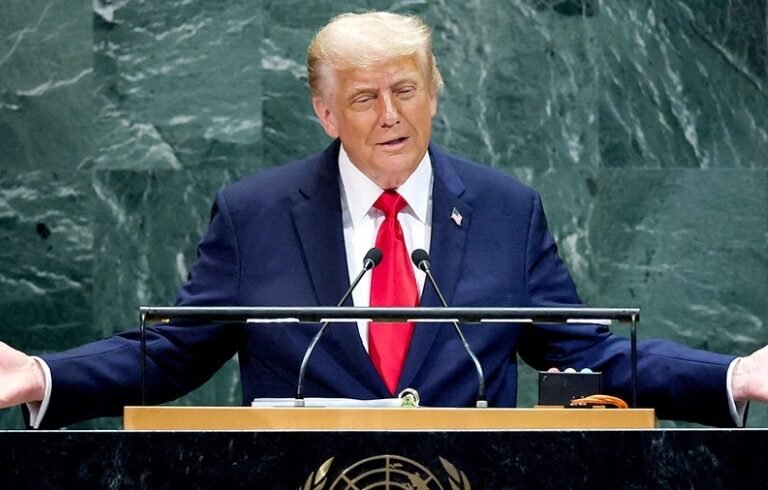
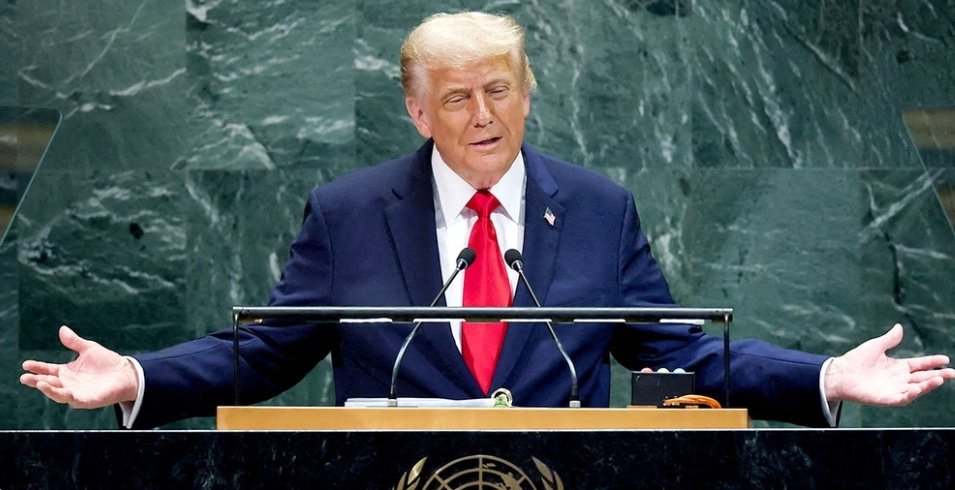
U.S. President Donald Trump has announced plans to refer to artificial intelligence (AI) as “super intelligence” in U.S. government documents, introducing a new terminology during his address to the 81st United Nations General Assembly in New York.
Trump said the word “artificial” makes the technology sound fake and argued that “super intelligence” would be a more accurate description.
“From this point forward, all of United States documents, and hopefully the world’s, will be changed to use the much more accurate term ‘Super’ as opposed to ‘Artificial,’” Trump said during his speech.
He subsequently described the proposed terminology as “Super Intelligence” and abbreviated it as “SI.”
Trump also rejected efforts to establish what he described as global controls over artificial intelligence, arguing that the United States should continue encouraging the development of the technology.
The announcement represents a proposed change in terminology rather than a change to the technology itself. Artificial intelligence remains the established technical term for computer systems capable of performing tasks associated with human intelligence.
The term “superintelligence,” meanwhile, already has a specific meaning in technology discussions. It is generally used to describe a hypothetical or future form of intelligence that could significantly exceed human cognitive abilities.
Trump’s remarks came as AI featured prominently in wider discussions at the United Nations, where governments and technology leaders are debating how to encourage technological development while addressing safety, security and governance concerns.
UN Secretary-General António Guterres has called for stronger international cooperation and safeguards around artificial intelligence, highlighting AI among the major global challenges facing governments.
Trump, however, has emphasized continued U.S. technological leadership and opposed international efforts that he believes could restrict AI development.
Whether “super intelligence” becomes widely adopted in U.S. government documents or beyond remains to be seen. For now, Trump’s announcement changes the terminology he wants the U.S. administration to use, rather than the underlying technology itself.