
0-0x0-0-0-{}-0-0#
By Gabriel Ameh
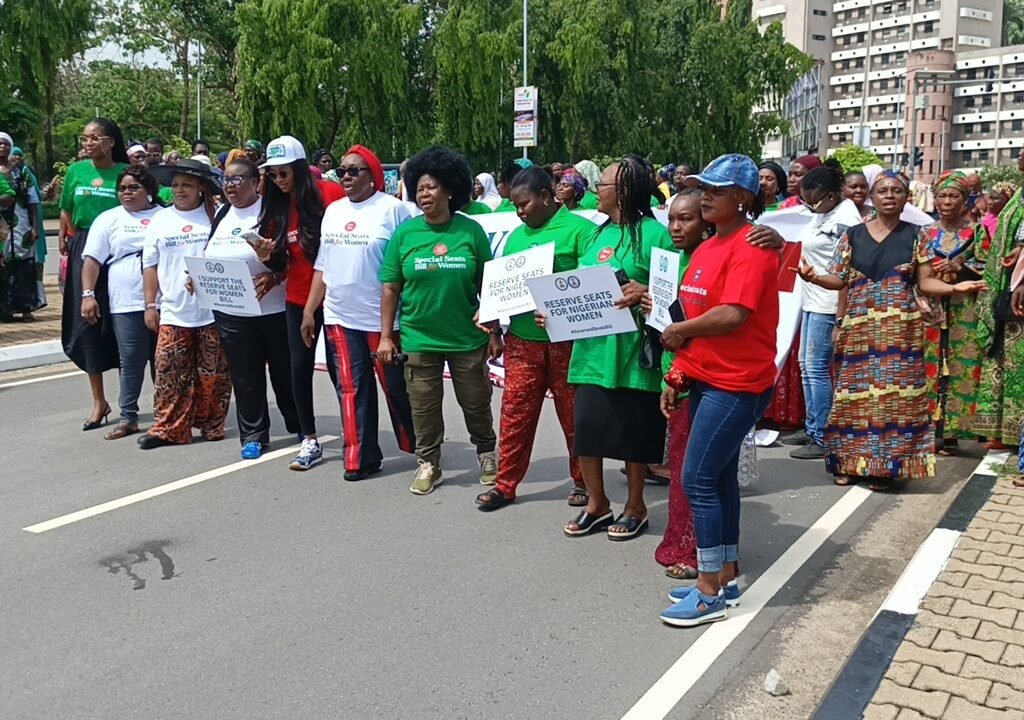
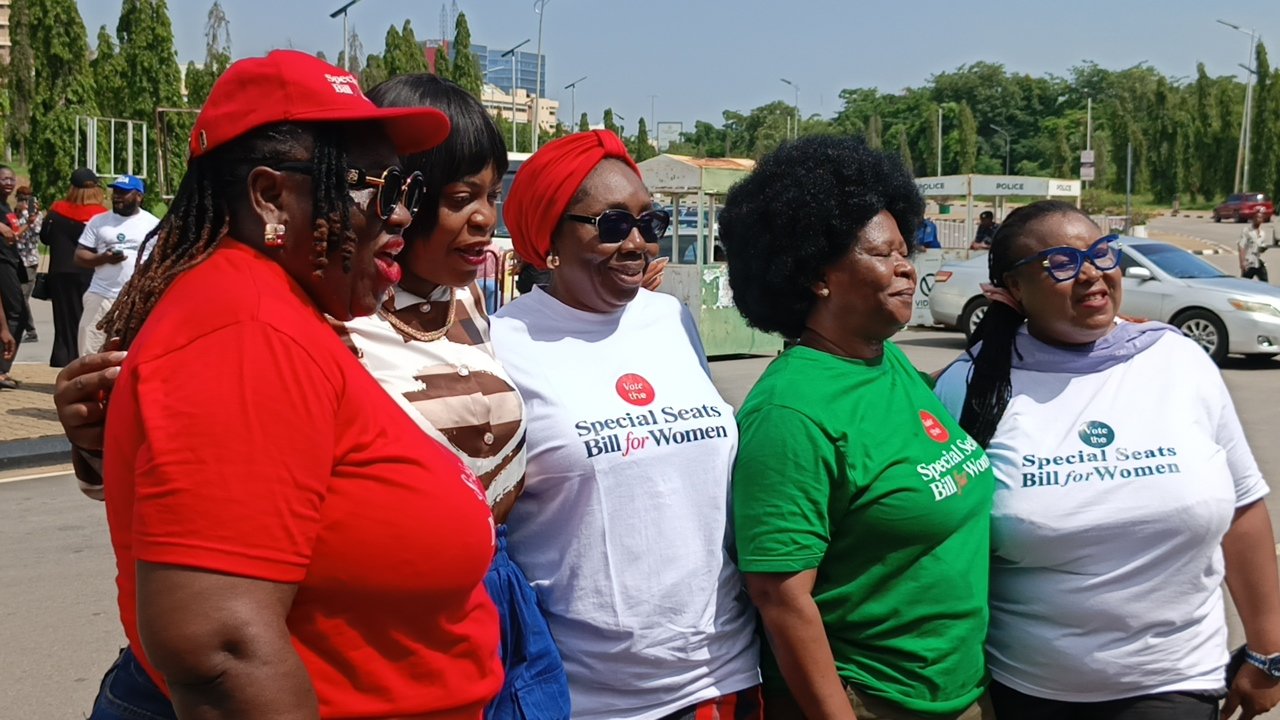
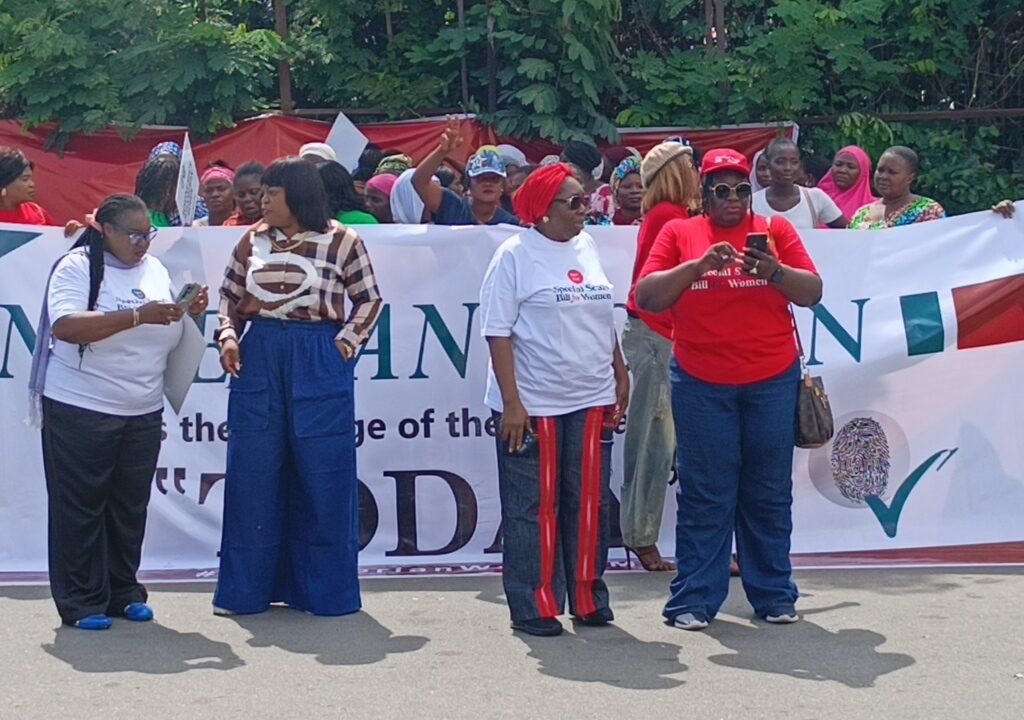
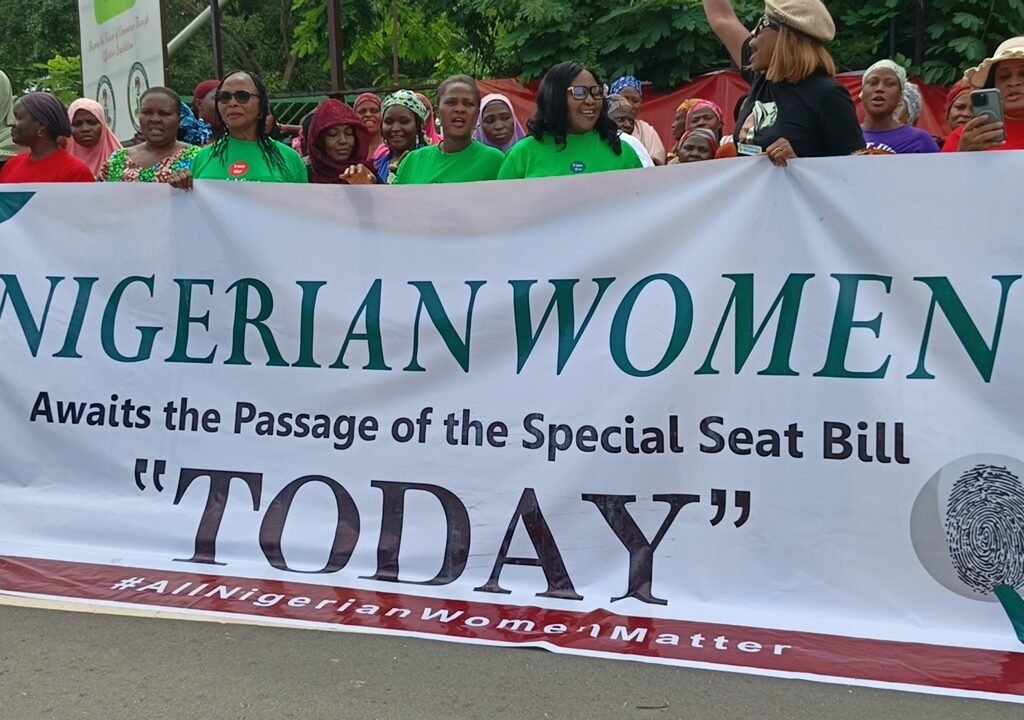
ABUJA – Women’s rights advocates and civil society groups on Thursday staged a solidarity march to the National Assembly, calling on lawmakers to pass the proposed Special Seats Bill aimed at increasing women’s representation in Nigeria’s legislative institutions.
The groups described the bill as a historic opportunity to strengthen inclusive governance, deepen democracy, and ensure that women have a stronger voice in national decision-making.
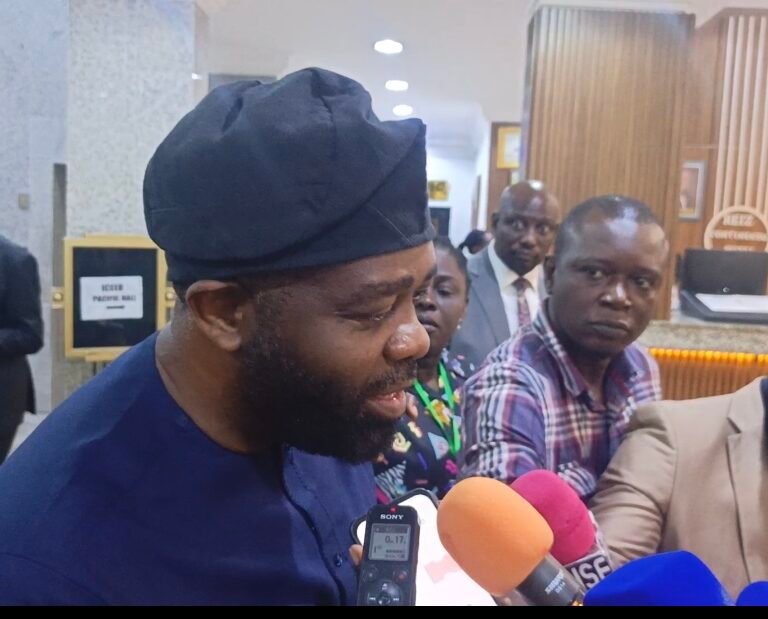
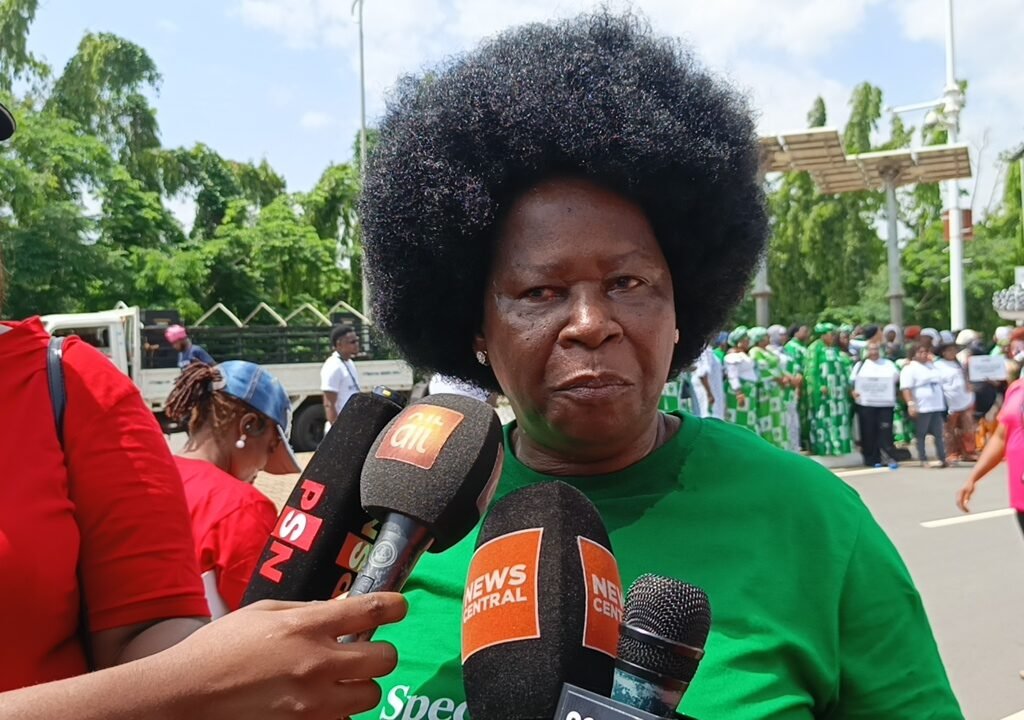
Addressing journalists at the National Assembly gate, President of the National League of Women Voters of Nigeria (NILOWV), Irene Awunah-Ikyegh, commended the 10th National Assembly for considering the bill, saying lawmakers had the opportunity to make history by advancing gender inclusion.
“The National Assembly has written its name in gold by taking a giant step towards inclusive democracy. There is no better time than now to pass this law. It will restore democratic integrity and show the world that Nigeria is ready for development through inclusive governance,” she said.
According to her, greater participation of women in parliament would lead to more people-centred policies, improved welfare programmes, and stronger attention to issues affecting families, children and vulnerable groups.
Awunah-Ikyegh noted that previous assemblies failed to pass similar legislation, expressing optimism that the current Assembly would succeed where others did not.
“We are ready to present women of integrity, capacity and proven leadership. Their presence in parliament will enrich debates, strengthen policymaking and contribute to national development,” she added.
Also speaking, President of the Women in Politics Forum (WIPF), Barrister Ebere Ifendu, said the proposed legislation would significantly improve women’s representation across Nigeria’s political institutions.
She explained that the bill seeks to create two additional Senate seats for women from each of the six geopolitical zones, amounting to 12 additional female senators. It also proposes one reserved seat for women in the House of Representatives from each of the 36 states and the Federal Capital Territory.
Ifendu described the bill as a major breakthrough in the struggle for women’s political participation.
“This is a special bill that will bring Nigeria back to the global map of countries promoting gender inclusion. We lost ground over the years, but this legislation will help us regain our space,” she said.
She praised the National Assembly leadership for listening to women’s groups and giving the bill attention during the constitutional amendment process.
“We are optimistic because the lawmakers have shown that they are listening. Their decision to list the bill for consideration demonstrates sensitivity to the demands of Nigerian women,” she stated.
Ifendu further argued that increased female representation would strengthen governance and bring greater attention to issues such as insecurity, violence against women, child welfare and social protection.
Also lending her voice to the campaign, women’s rights activist Ene Obi said the bill was fundamentally about inclusivity and ensuring that women, who constitute nearly half of Nigeria’s population, are adequately represented in governance.
“What we have today is largely a male-dominated parliament. We are asking for more women in decision-making spaces because women account for about 50 per cent of the population. We vote, we participate, but we are not adequately represented where decisions are made,” she said.
Obi dismissed concerns that women elected through reserved seats could compromise the system, insisting that increased female representation would strengthen governance rather than weaken it.
“It is a game of numbers. The more women we have in parliament, the stronger our voices become. Women understand the issues affecting families, children and communities, and they will advocate for policies that address those challenges,” she said.
The protesters maintained that the passage of the Special Seats Bill would mark a significant milestone for Nigeria’s democracy and improve the country’s global standing on gender inclusion.
They urged lawmakers to support the bill, describing it as a necessary step toward building a more representative, equitable and inclusive political system ahead of the 2027 general elections.