
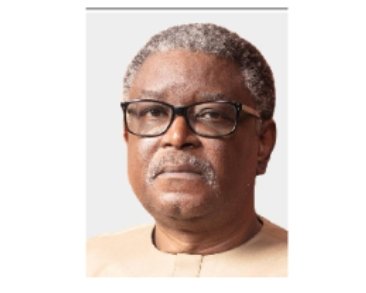
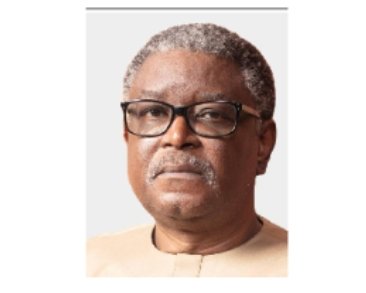
By Omadachi Oklobia, PhD, Former Commissioner of Finance, Benue State, and Resident Faculty, African University of Science and Technology
There is a quiet deadline approaching in Nigeria’s public service, and it does not appear in any budget or medium-term framework. By 2030, the last officers trained by the men and women of the independence generation will have taken their bows.
The civil servant who joined the service in 1965 has been gone for decades. What remained until recently was the generation he mentored, but those officers are also retiring under the 35-year service rule.
What will be left is memory passed down through generations: stories told in canteens and at send-off parties about how things were once done. These stories are precious, but they are not a system.
I say this as someone who has sat on both sides of the desk. As a Commissioner for Finance in Benue State, I watched files move and watched them stall. I learnt that the difference was rarely the rulebook. It was whether the officer handling the file had ever been shown, by someone who cared, what the rulebook was for.
Now, as an academic at the African University of Science and Technology, I teach graduates who will eventually fill those desks. I am struck by how little the public service does to prepare for their arrival.
THE 2030 REALITY CHECK
Every institution operates on two kinds of knowledge. The first is written: the Public Service Rules, Financial Regulations and official circulars.
The second is tacit knowledge: knowing which minute to write, how to protect a permanent secretary from a bad decision without embarrassing a minister, and when a memo should move forward or wait.
This second kind of knowledge is not contained in any manual. It passes from one person to another, and only when someone deliberately takes the time to pass it on.
For much of our history, we relied on this informal transfer of knowledge, and it worked reasonably well because the public service was small and stable enough for apprenticeship to happen naturally.
That world is gone.
Recruitment now comes in waves, often timed politically. Postings are frequent, and senior officers who could mentor new entrants are themselves overstretched.
Where mentoring happens, it often happens by chance. A service that depends on luck to preserve and transfer its own values is not a dependable institution; it is a lottery.
The consequence is what I have elsewhere described as the permanent state losing its permanence.
The bureaucracy survives every change of government, but increasingly as a structure rather than a culture. Officers know the procedures, but fewer understand their purpose.
When purpose disappears, procedure becomes a ritual, and rituals can easily be manipulated.
THE CASE FOR STRUCTURED ONBOARDING
Consider how a new graduate enters a well-run bank.
Before being allowed to handle a customer’s account, the graduate spends months in a structured training programme covering the institution’s values, systems and ethics. The programme includes supervised rotations, examinations and a final assessment that determines whether the graduate can be confirmed.
Banks do not do this merely out of generosity. They understand that an untrained officer is a liability.
Now consider how a new graduate enters a ministry.
Typically, the graduate receives a letter of appointment, gets posted to a desk and hopes that someone nearby is both knowledgeable and willing to help.
Where induction exists, it often consists of just a few days of talks. There is no supervised rotation, no assessment of understanding and no clear point at which the service tells the new officer: you are now one of us, and this is what that means.
I propose that no one should be confirmed in the Nigerian public service without completing a mandatory graduate trainee programme lasting at least 12 months, with a level of rigour comparable to the best private-sector training schemes.
The curriculum should rest on four pillars.
First, public service values and ethics, taught through real-life cases rather than moral lectures.
Second, systems thinking and policy implementation, enabling young officers to understand how a budget line becomes a borehole and where the process commonly fails.
Third, practical administration and citizen-centred service delivery, including time spent working at an actual service window.
Fourth, leadership and professional conduct, because the officer of 2030 will be the director of 2050.
OPEN THE PIPELINE EARLIER
Preparing new officers should begin before their appointment. If the first time a young Nigerian enters a ministry is on the day of employment, the preparation has started too late.
Students of Political Science, Public Policy and Public Administration graduate in their thousands every year after studying the state almost entirely from the outside.
Universities and the public service share responsibility for this gap.
I would like to see structured internships that carry academic credit, are properly supervised and place students inside real public institutions for a full semester.
Let them sit in on a budget call meeting. Let them observe a procurement committee. Let them draft a memo and have it returned with corrections.
Some will discover that public service is their vocation. Others will discover that it is not.
Both discoveries are valuable, and both are less costly when made at 20 than at 35.
PUBLIC SERVICE AS A PROFESSION
Underlying all these proposals is a necessary shift in how we think about the public service.
We speak of it as employment. We should speak of it as a profession, with everything that the word implies: selective entry, structured training, continuous professional development, a performance culture and an enforceable code of conduct.
Talent management in the public service cannot mean promotion based on seniority alone.
It must involve deliberate decisions about whom we recruit, how we train them, how we develop their capabilities and how we hold them accountable.
Values, skills and attitudes are not automatically inherited. They must be cultivated, or they will be lost.
WE ALREADY KNOW HOW TO DO THIS
The encouraging news is that Nigeria does not need to start from scratch.
The Aig-Imoukhuede Public Leaders Programme has demonstrated that a values-driven programme built around competitive selection and intensive training can produce public leaders who approach their work differently.
The Office of the Head of the Civil Service of the Federation has also demonstrated the value of structured training through initiatives such as the Mandatory Training Programme for newly appointed chief executives, the Leadership Enhancement and Development Programme, and the Structured Mandatory Assessment-Based Training Programme.
These initiatives provide proof that structured and assessed training can improve performance.
However, what these programmes have in common is that they target senior and middle-level officers.
The gap is at the entry level, where the future of the public service is ultimately determined.
The principles are already established: mandatory participation, a clear curriculum, assessments with consequences and a direct connection between training and career progression.
These principles should be adapted to entry-level officers and implemented on a wider scale.
The first year of a public servant’s career should be the most formative year of that career, not the most neglected.
URGENT AND ACHIEVABLE
None of these proposals requires a constitutional amendment or the creation of a new agency.
What is needed is a directive from the Head of the Civil Service, a curriculum developed in collaboration with universities, partnerships with institutions that have already demonstrated what works, and a modest budget allocation defended with the same seriousness given to capital projects.
The public service is the one capital asset every government inherits and every government passes on.
We would not hand over a dam without maintaining it. We should not hand over a bureaucracy without properly preparing the people who will run it.
By 2030, the stories may be all that remain.
The question is whether we will have built a system capable of preserving and passing on the lessons those stories were trying to teach us.