
By Nankpak Cirfat
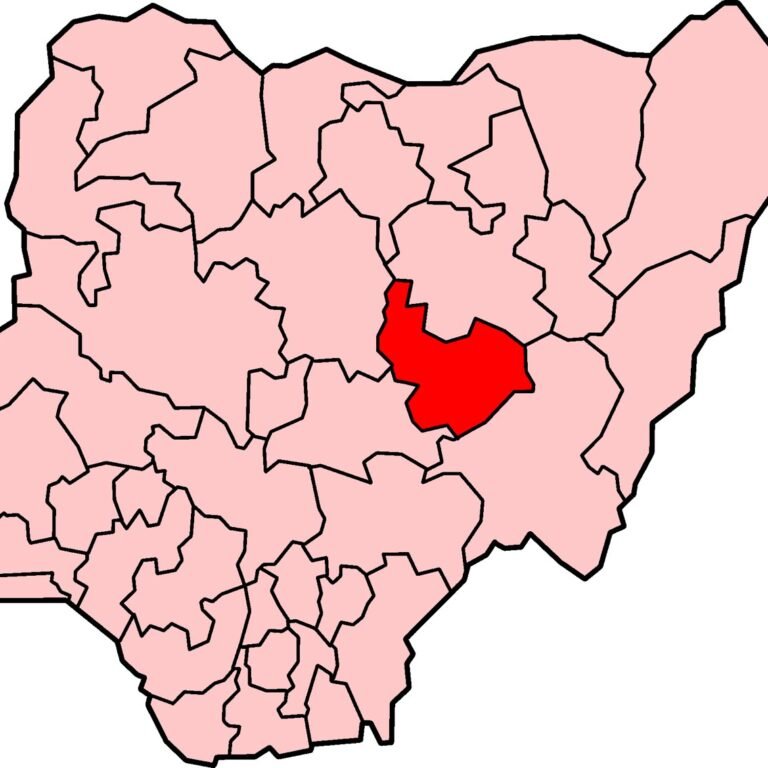
Danladi was displaced from his village of Dogo in 2012, due to terror attacks. Fourteen years later, he still lives with his family in a rented apartment in Barkin Ladi town, in Plateau State, because he is unable to return to his village. He told me that someone initially helped him find accommodation. Today, he pays for it himself.
He is not alone. The International Organization for Migration registered approximately 55,000 internally displaced persons in Plateau State as of early 2025. Some estimates say the numbers are higher, as attacks have continued to displace several rural communities in the state.
Another reason the actual number may be higher is that people like Danladi, despite being displaced, do not live in formal displacement camps and are often not included in official counts.
Nationally, Nigeria has more than 3.6 million internally displaced persons, among the largest internal displacement populations in the world, according to the same agency. Between January 2024 and August 2025 alone, Plateau recorded 282 security incidents and 737 fatalities, according to data compiled by the Armed Conflict Location and Event Data Project.
Regardless, these people have continued to ask when they will return to their ancestral homes to rebuild their livelihoods and continue living instead of depending on relief packages that are not sufficient.
The Resettlement Plan that Never Happened
On March 25, 2024, the Plateau State government inaugurated a task force on the resettlement of internally displaced persons, covering Barkin Ladi, Bokkos, Riyom, Mangu, and Bassa. Its responsibilities included identifying displaced communities, establishing resettlement requirements, and ensuring security measures were put in place. It was given eight weeks to complete its assignment.
Following assessment visits, the task force in May 2025 submitted a report to Caleb Mutfwang, the state governor, which recommended phased return, security arrangements, and reconstruction materials.
Mutfwang reportedly intended to seek federal support for implementation.
While those steps deserve acknowledgement, they also create a clear basis for scrutiny. More than two years after the task force’s inauguration, affected families should be able to find out which recommendations have been approved, what has been funded, which communities have benefited, andwhat remains outstanding. That is why I sought the records.
Zang Apollos, Chairperson of the Plateau Youth Council in Barkin Ladi, told me that as far as he is aware,no community in the local government area has received the tractors, housing support, or economic empowerment the task force was created to help deliver.
His is a broader vantage point than any single household’s, though it is also, by his own account, an impression rather than a verified count of every community, which is precisely the kind of figure the task force’s own report could settle.
His account sits alongside the governor’s own. Mutfwang has said publicly, including in an interview on Channels Television, that no fewer than 64 communities across Bokkos, Barkin Ladi and Riyom have been taken over by armed groups, renamed, and are now occupied by people who displaced the original residents.
If that account is accurate, resettlement in parts of these three local government areas may not simply be delayed. It may currently be impossible without first reclaiming land the state itself says remains under occupation, a complication the task force’s public statements have not addressed directly.
Authorities Keep Mum
In a Freedom of Information request dated August 27, 2026, addressed to the Director of Press and Public Affairs, in the state, I requested the task force’s submitted report, the land administration committee’s report, relevant budgets, and current resettlement figures.
A related agricultural intervention the government announced around the same period, under the Agro-Climatic Resilience in Semi-Arid Landscapes project, ACReSAL, is a separate World Bank-financed climate resilience programme and not a resettlement fund, a distinction that matters and should not be conflated with the task force’s specific mandate. The letter’s acknowledgement copy in my possession bears the office’s official stamp.
The response I received in a text message acknowledged the letter and asked me to contact “the respective offices in charge of the designated document”. It did not provide the documents or identify the particular office responsible for each record.
Nor did that message indicate that the request had been formally transferred. As of October 15, I had received no substantive response, and the records sought had not been supplied to me.
Danladi was careful about the limits of his knowledge on the assistance he has received so far. He described assistance from NGOs, including food, roofing materials and clothing.
He also said some displaced residents had received roofing sheets through a distribution associated with the local government, although the interview did not establish the identity of the agency involved.
He said he had not personally received any government assistance tied to resettlement, but could not rule out support reaching others while he was away from the village. While his experience cannot speak for every household, it does, however, describe a displaced resident still struggling to secure accommodation and rebuild his life.
He also described community efforts to seek help with returning home. According to him, requests had been submitted through the Gashish Community Association of Barkin Ladi, but local authorities said they needed support from the state and federal governments.
I have not independently verified that exchange. It nonetheless identifies questions worth putting to each tier of government: who is responsible for the next step, and how can affected families track it?
Ezekiel, a youth leader in the same Dogo community under the Gashish ward, described a support system so thin it barely functions as one. He recalled a single distribution of relief items, five bundles shared among roughly sixty people, and a food measure he said amounted to only half of what a full share should have been.
He could not say with certainty who had provided it, government, NGO, or otherwise. He mentioned a registration exercise underway for some form of assistance, but said that as of our conversation, no one in his community had received anything through it.
What he wanted, when asked directly, was not abstract. Returning to the village, he said, is better than any support received elsewhere, because a home with land to farm and security to stay on it produces more than any relief bundle ever will.
Jerry Pam, from Gana Ropp community in Barkin Ladi who now resides in the Niger-Delta, was
displaced more recently. He told me the attack on his community took place between June 23 and 24,2018, and that both his family house and his father’s house were partly burned.
He is not aware of any intervention by the state government since then. Returning home, he said, has been an in-and-out affair for him and his community, because pockets of killing have continued and most of their farmlands areboccupied by the attackers. “Their illegal settlements are spreading like wildfire,” he said.
Asked what he needs most, his answer was one word: security. He also wants the government to reclaim the farmlands that are being occupied. His account lines up with the governor’s own description of communities taken over and renamed, and it shows what that looks like for one family: a burned home, a farm they cannot safely reach, and a return that never quite becomes permanent.
Martha, who sought anonymity, lost everyone in the displacement. She now lives with a relative in Jos town. When I asked what she wanted, her answer had nothing to do with tractors, cash or housing. All she wants is to be able to visit the place she once called home and relive the beautiful memories she has of it.
It is a modest wish, and a reminder that for many displaced people, the loss is not only of property and income but of a place that holds a life.
It is also worth asking what kind of return the task force is actually planning. Other states offer two different models.
In Borno, displaced families who returned after years in camps found some resettlement sites built on land never intended for that purpose, including one camp that had originally been constructed as a civil servants’ housing estate. Human Rights Watch found that authorities gave displaced people inadequate time and information to decide whether to leave, and that many resettlement sites did not meet basic living and security standards. Within months, families began fleeing again, driven out a second time by renewed attacks and a lack of protection, according to reporting by HumAngle in 2025.
Benue State has taken a different approach, with its governor describing efforts to acquire land
specifically close to displaced people’s ancestral local government areas, so that return means walking back into one’s own community rather than into a resettlement estate built elsewhere. Plateau’s task force has said publicly that the goal is to return people to their ancestral homes. Whether that commitment survives contact with implementation, or drifts toward a more generic estate-style settlement model, is exactly the kind of detail the task force’s own report would make clear, if it were available to the public.
Displacement itself is not merely a humanitarian setback. It is the loss of a citizen’s claim to land and residence that the government has an obligation to protect, and which no relief package can substitute for restoring. For farming households, that loss disrupts much more than shelter. Losing access to land can interrupt food production, income, savings and the ability to plan.
Assistance matters, but so does the
freedom to rebuild a livelihood without indefinite dependence on relief. Return must be voluntary, safe and sustainable, with meaningful choices for those who cannot return or do not wish to do so.
An unanswered request does not prove that money was diverted or that nothing was done. It leaves a gap
in the evidence needed to assess what was done. When that gap concerns people who have already spent years waiting, the failure to explain progress has consequences of its own.
Plateau’s government can address it by making the resettlement report available, subject to justified protection of sensitive information, and publishing an implementation update by the community. That update should distinguish assessments from completed returns, budget allocations from actual expenditure, and announced assistance from confirmed delivery.
Personal banking details and information
that could expose vulnerable households need not be made public to demonstrate results.
The case for this openness is rooted in dignity and freedom. Citizens should be able to question decisions made in their name, understand how public resources are used and participate in plans affecting their homes and livelihoods.
For Danladi, Ezekiel, Jerry, Martha, and others still displaced, the road home requires security, resources and coordination. It also requires an answer they can use: what has been done, what happens next, and who will be accountable for making it happen?
_____
This story was produced as part of the Liberalist Centre’s Journalism for Liberty Fellowship,
with funding from Liberty International.