

By Gabriel Ameh
The 2026 Ekiti State Governorship Election recorded significant improvements in election-day logistics and operational efficiency, but widespread vote buying, discrepancies in voter turnout calculations, BVAS-related challenges, and inconsistencies in sensitive election materials undermined the overall integrity of the process, according to election observer group Yiaga Africa.
Presenting its post-election assessment, Yiaga Africa said the election witnessed early deployment of electoral officials and materials, prompt commencement of accreditation and voting, and generally peaceful conduct across the state.
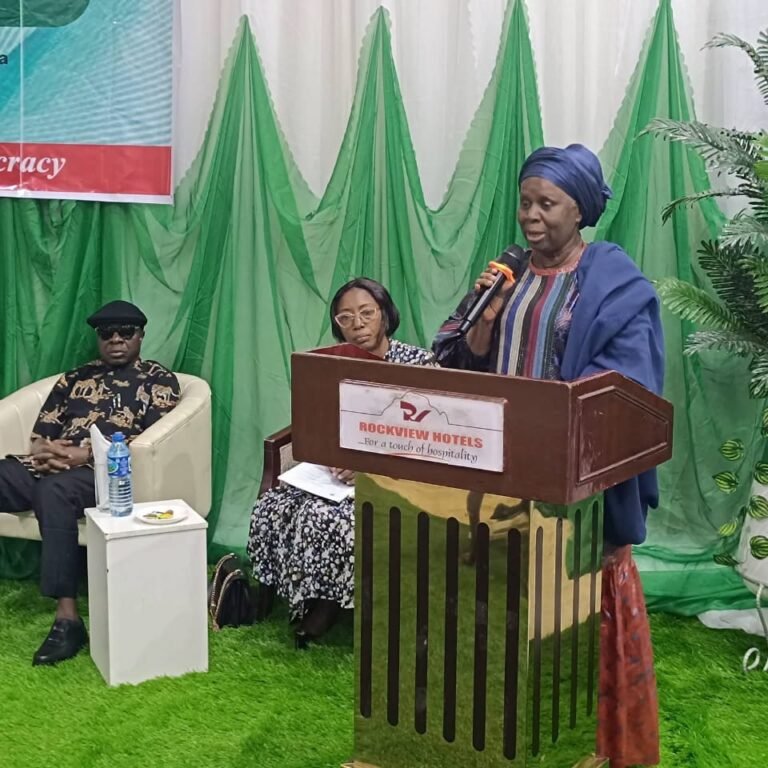
The organization, which deployed 250 stationary observers, 22 mobile observers, and 16 collation observers across all local government areas of Ekiti State under its Process and Results Verification for Transparency (PRVT) methodology, said election administration improved considerably when compared to previous governorship elections in the state.
According to the report, 75 percent of polling units had received INEC officials and materials by 7:30 a.m., rising to 99 percent by 8:30 a.m. Similarly, accreditation and voting commenced in 70 percent of polling units by 8:30 a.m. and increased to 98 percent by 9:30 a.m.
Despite these improvements, Yiaga Africa identified several issues that raised concerns about the credibility and transparency of the electoral process.
The group reported that while BVAS devices were deployed to all polling units, about 13 percent experienced technical failures before being fixed. In addition, 10 percent of polling units recorded cases where eligible voters were denied accreditation because the BVAS could not verify their Permanent Voter Cards or authenticate their biometrics.
More significantly, Yiaga Africa observed that in 14 percent of polling units, voters were accredited and allowed to vote using printed slips containing their voter information without presenting physical PVCs, raising concerns about the clarity and implementation of electoral guidelines.
The report further revealed that ballot secrecy was compromised in some locations, with observers reporting that it was possible to see how voters marked their ballots in 17 percent of polling units. Polling officials were also crowded by voters in 11 percent of polling units, potentially creating opportunities for undue influence and voter intimidation.
While Yiaga Africa’s statistical verification confirmed that INEC’s officially declared election results were consistent with results recorded at polling units, the organization warned that the widespread incidence of vote buying and voter inducement posed a serious threat to democratic choice.
According to the report, the official results announced by INEC fell within the estimated ranges generated through Yiaga Africa’s PRVT methodology, indicating that polling-unit results were not significantly altered during collation.
However, the group stressed that the credibility of the election cannot be measured solely by accurate result tabulation when voter choices may have been influenced through inducement.
The observer group also questioned INEC’s voter turnout computation, highlighting discrepancies in the number of registered voters used to calculate turnout.
Yiaga Africa estimated voter turnout at between 34.1 percent and 38.2 percent, while INEC announced an official turnout figure of 38.7 percent. According to the organization, INEC used a registered voter figure of 988,251 during collation, which corresponds to the 2022 voter register rather than the updated 2026 register containing 1,059,360 registered voters.
The discrepancy, Yiaga Africa noted, contributed to the variance in turnout calculations and raises concerns about the consistency and accuracy of election data management.
The group also urged INEC to improve quality assurance processes for sensitive election materials, noting that ballot papers, result sheets and related forms should accurately reflect the final list of legally recognised political parties participating in elections.
Beyond electoral administration, Yiaga Africa called on security agencies to intensify efforts against vote buying by extending enforcement activities beyond polling units to surrounding areas where inducement and voter coercion increasingly occur.
It also urged political parties to strengthen the training of polling agents on electoral laws and procedures while calling for stricter regulation of incumbency advantages and the use of state resources during elections.
Yiaga Africa concluded that while the Ekiti governorship election demonstrated progress in operational readiness and logistics, significant reforms are still required to address vote buying, improve transparency, strengthen voter confidence, and safeguard the integrity of future elections, particularly ahead of the 2027 General Election.