
By Gabriel Ameh
China has expressed its readiness to share its governance experience with Nigeria and other African countries as part of efforts to strengthen development cooperation, modernization, poverty reduction, and sustainable growth across the continent.
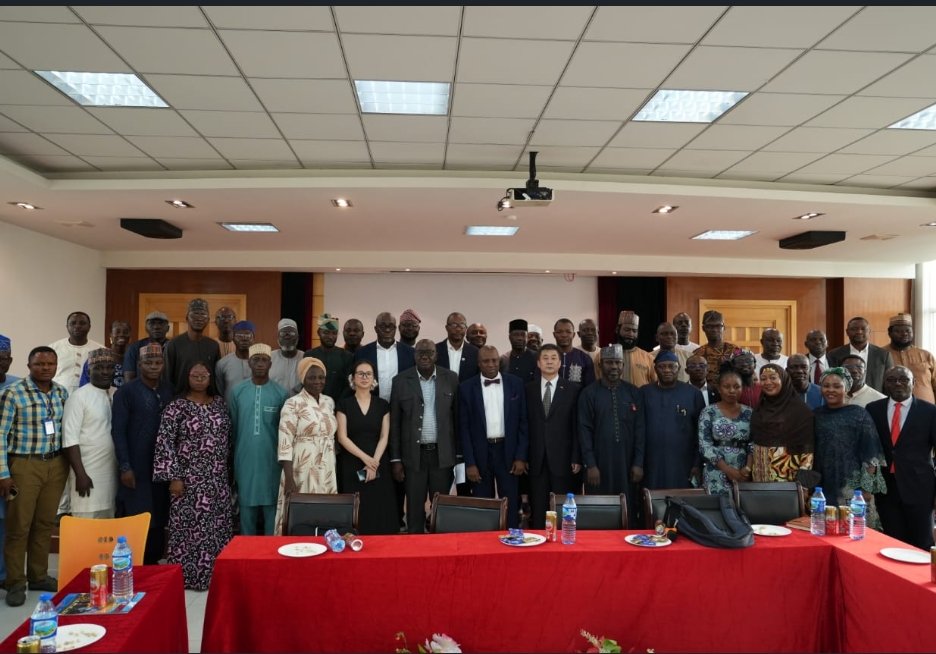
The commitment was highlighted during a high-level dialogue held in Abuja under the theme, “The Governance of China and Knowledge Sharing in Nigeria–China Cooperation: Implications for Mutual Learning.”
The event, organized by the Centre for China Studies at the China Chamber of Commerce in Nigeria, brought together diplomats, academics, and policy experts to examine China’s development journey and explore lessons that may be relevant to Nigeria’s governance and reform agenda.
Speaking at the event, Chinese Embassy Counselor Wang Jun described the “Xi Jinping: The Governance of China” series as a comprehensive guide to China’s governance philosophy and development strategy.
According to him, the publication outlines China’s approaches to poverty reduction, environmental sustainability, economic planning, and national development, offering valuable insights for countries pursuing inclusive growth.
Wang noted that China’s success in lifting hundreds of millions of people out of poverty demonstrates the effectiveness of a people-centered development model.
He also highlighted China’s environmental policy framework, emphasizing the principle that economic growth and environmental protection should advance together.
The diplomat stressed that while China is willing to share its experiences, every country must adopt development strategies that reflect its unique realities and national priorities.
He added that cooperation between China and African countries continues to grow under a shared vision of mutual development and a stronger future partnership.
In his presentation, the Provost of the Anti-Corruption Academy of Nigeria and Director of the Centre for Contemporary China-Africa Research, Prof. Sheriff Ghali Ibrahim, encouraged participants to approach governance discussions with an open mind and a willingness to learn from different experiences.
He described “The Governance of China” as a collection of speeches and policy writings by Chinese President Xi Jinping, covering key issues such as modernization, governance reforms, rule of law, ecological sustainability, poverty alleviation, and national development.
Prof. Ibrahim explained that China’s modernization model focuses on people-centered development, shared prosperity, cultural advancement, environmental sustainability, and peaceful growth.
According to him, China’s development strategy differs from historical models based on colonial expansion, emphasizing cooperation, innovation, and domestic transformation instead.
He also discussed the Belt and Road Initiative, describing it as a broad development framework that goes beyond infrastructure projects to include policy coordination, trade, finance, digital connectivity, and people-to-people exchanges.
The scholar further highlighted China’s concept of holistic national security, which integrates economic, political, social, and environmental stability into national development planning.
On bilateral relations, Prof. Ibrahim noted that Nigeria and China have upgraded their relationship to a comprehensive strategic partnership, resulting in expanded cooperation in infrastructure, energy, media, technology, and capacity development.
He revealed that trade between both countries has surpassed $28 billion, reflecting the growing economic ties between Africa’s most populous nation and the world’s second-largest economy.
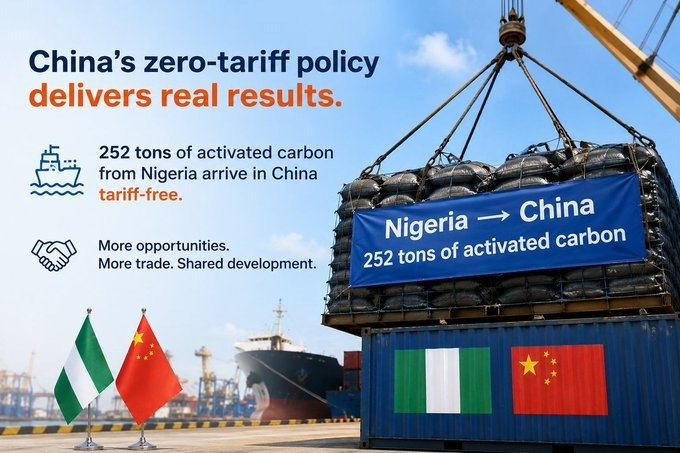
Prof. Ibrahim also urged African countries to take advantage of China’s tariff reductions on selected African exports by increasing local manufacturing, industrial processing, and value addition rather than relying solely on raw material exports.
Participants at the dialogue called for deeper policy engagement, stronger knowledge exchange, and sustained cooperation between Nigeria and China in areas such as governance innovation, modernization, economic development, and sustainable growth.
The meeting concluded with renewed commitments to strengthen collaboration and mutual learning between both countries as they seek new pathways to development and shared prosperity.