
By Gabriel Ameh
China has showcased its artificial intelligence-powered meteorological early warning technology to international weather officials, including the Director-General and Chief Executive Officer of the Nigerian Meteorological Agency (NiMet), Prof. Charles Anosike.
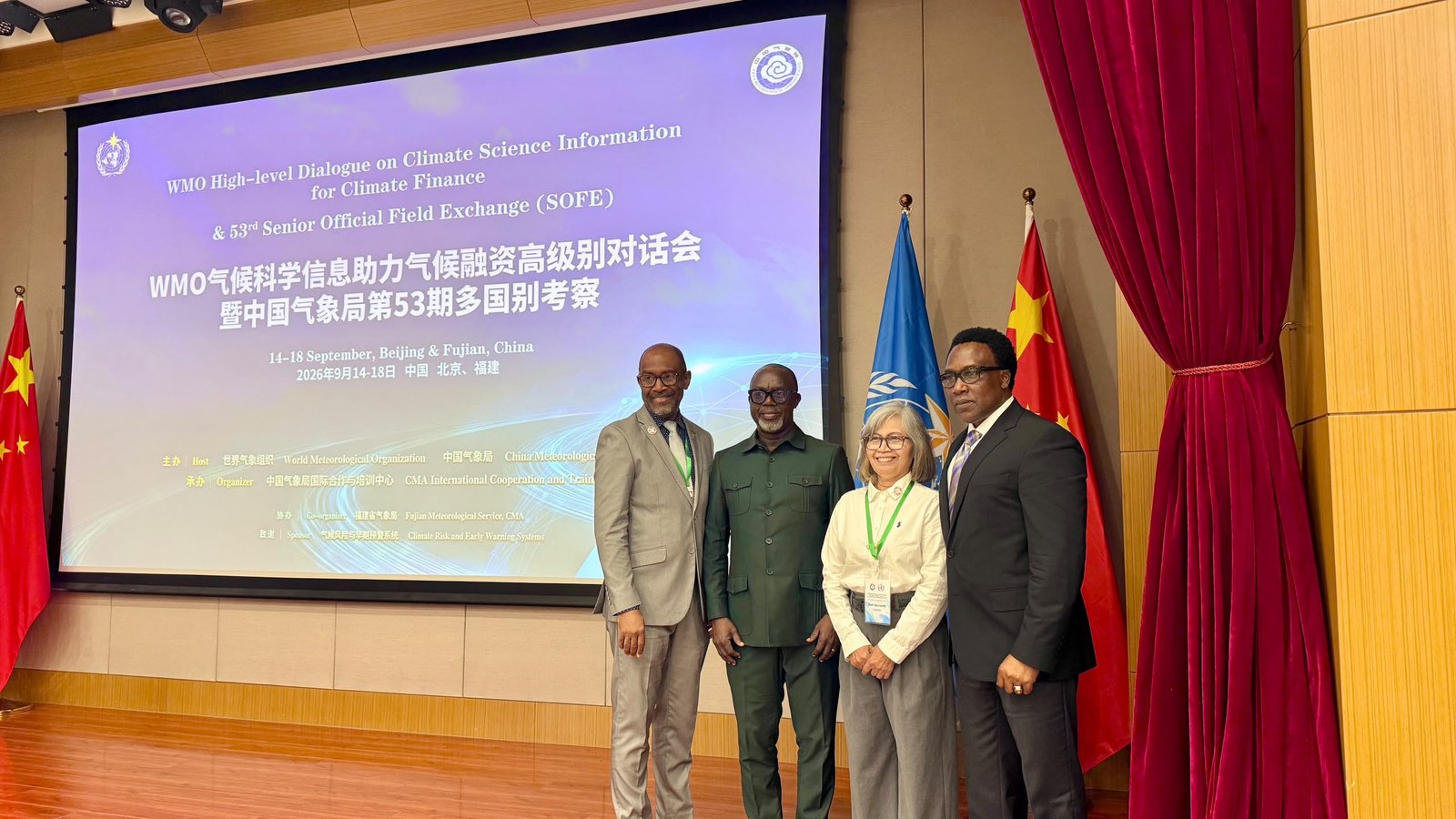
The demonstration formed part of the 53rd Senior Official Field Exchange (SOFE), held alongside the World Meteorological Organization (WMO) High-level Dialogue on Climate Science Information for Climate Finance from September 14 to 18, 2026.
The engagements took place in Beijing and Fujian Province, China, bringing together senior officials from National Meteorological and Hydrological Services (NMHSs) and other stakeholders.
A major highlight of the field exchange was exposure to China’s Multi-hazard, Alert, Zero-gap and Universal (MAZU) platform, an AI-driven meteorological early warning solution developed to support the Early Warnings for All (EW4All) initiative.
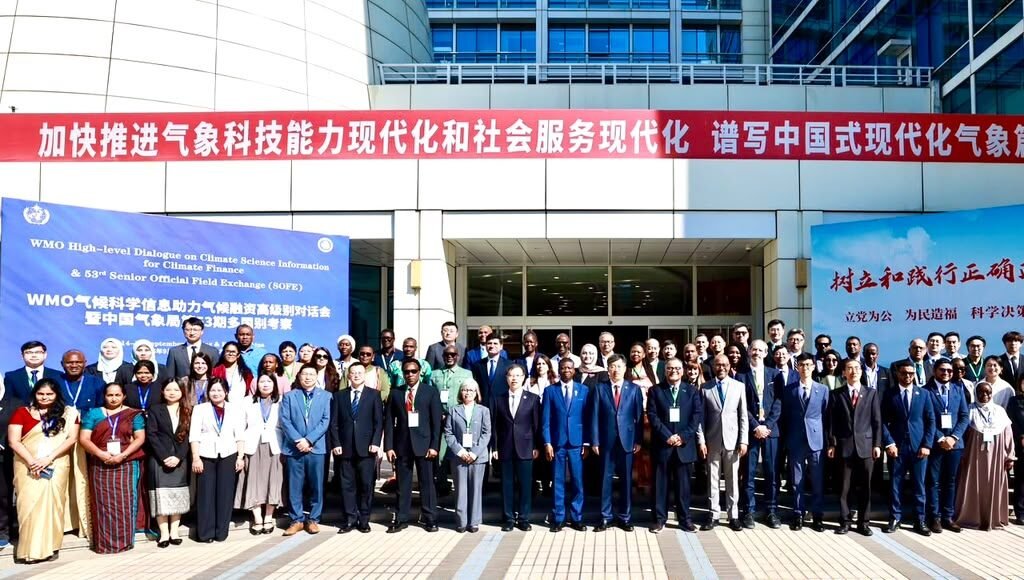
The field exchange in Fujian provided participating officials with first-hand exposure to how technology is being applied to strengthen multi-hazard early warning systems and disaster risk reduction.
The programme included technical exchanges, field visits and peer-learning sessions focused on China’s experience in using meteorological technology to improve early warning and preparedness.
For Anosike and NiMet, the engagement provided an opportunity to examine China’s approach to integrating artificial intelligence and meteorological services while exchanging knowledge with international counterparts.
The China field exchange was part of a broader WMO programme focused on strengthening the capacity of National Meteorological and Hydrological Services to provide reliable climate information and support climate resilience.
The accompanying high-level dialogue in Beijing focused on improving access to climate finance and strengthening the strategic leadership of NMHSs.
Participants discussed ways to align scientific and technical capabilities with risk-informed, people-centred early warning systems, while also exploring stronger partnerships between meteorological institutions and multilateral financing organisations.
The discussions further examined the need to move from conventional technical assistance towards sustainable investment in weather, climate and hydrological services.
The WMO said stronger cooperation among NMHSs, development partners, financing institutions and other stakeholders is essential to translating climate science into practical investments that can strengthen resilience and protect communities.
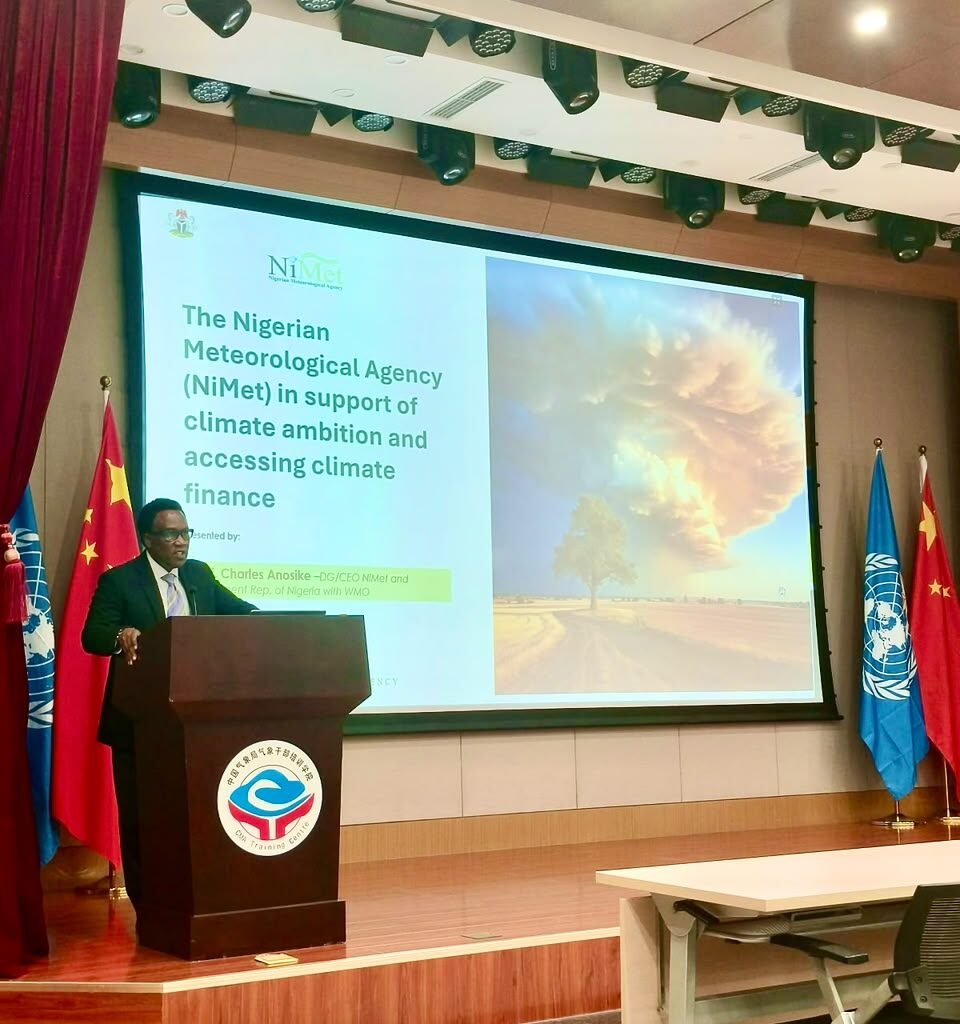
China’s MAZU platform was therefore a key practical component of the field exchange, giving participating officials an opportunity to observe an AI-based approach to delivering multi-hazard alerts.
For Nigeria, Anosike’s participation places NiMet within the wider international conversation on the use of emerging technology, climate science and sustainable financing to strengthen early warning services.
The engagement also highlights the growing importance of international knowledge exchange as meteorological agencies seek to modernise weather services and improve the timely delivery of information to communities facing weather and climate-related risks.