
By Gabriel Ameh
China’s ruling Communist Party has reaffirmed its commitment to strengthening internal discipline, tackling corruption and tightening oversight of public officials as preparations begin for its 21st National Congress scheduled for the second half of 2027.
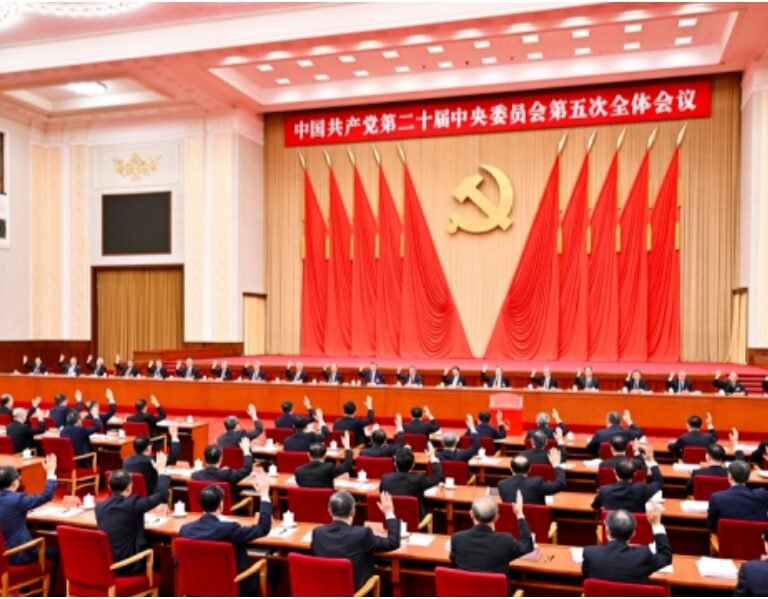
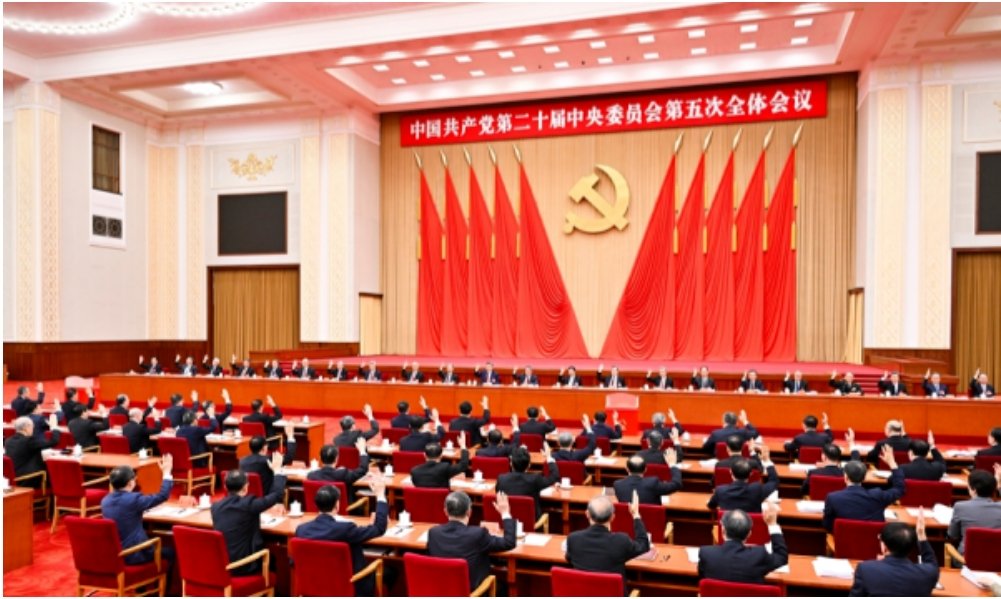
The decisions followed the Fifth Plenary Session of the 20th Central Committee of the Communist Party of China (CPC), which concluded in Beijing on October 29, 2026, after four days of deliberations chaired by President Xi Jinping.
At the meeting, senior party leaders adopted a resolution on strengthening what the party describes as full and rigorous self-governance, with renewed emphasis on accountability, institutional supervision and stricter enforcement of party regulations.
The resolution also outlined measures to improve oversight mechanisms, strengthen discipline inspection and ensure that officials are held accountable for misconduct.
According to the communiqué released after the meeting, the party considers internal discipline and effective supervision essential to achieving China’s long-term economic, security and modernisation objectives.
The plenum also formally confirmed that the CPC’s 21st National Congress will take place in Beijing in the second half of 2027.
The forthcoming congress is expected to be a major political event, providing an opportunity for the party to assess its leadership, governance priorities and development direction.
The meeting reaffirmed Xi Jinping Thought on Party Building as a guiding framework for strengthening party leadership and improving internal governance.
It also reviewed investigations and disciplinary actions involving several senior civilian and military officials accused of serious violations of party discipline and state laws.
In another significant development, Zhang Shengmin was elected to the Communist Party’s Political Bureau, one of China’s most influential political decision-making bodies.
The decisions reflect the leadership’s continued emphasis on strengthening party cohesion, institutional accountability and political discipline amid growing domestic and international challenges.
China is currently navigating economic pressures, geopolitical uncertainties and increasing demands for effective governance.
Against this background, the latest plenum signals that the leadership intends to make stronger internal supervision and anti-corruption enforcement central to its governing strategy ahead of the 2027 congress.
With the next national party congress now formally scheduled, attention is expected to turn to how the Communist Party implements its renewed governance commitments and prepares for the next phase of China’s political and economic development.