

By Gabriel Ameh
Abuja | Media Report
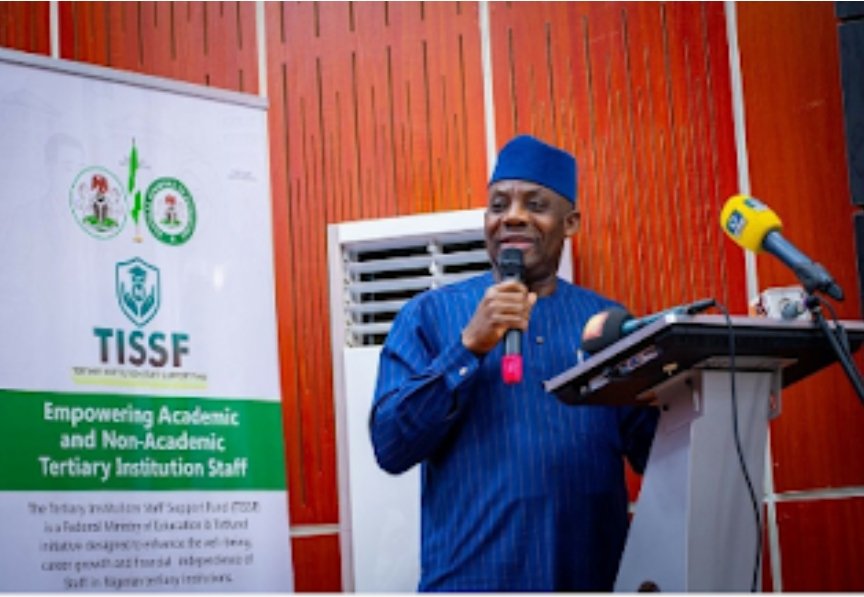
Nigeria’s Minister of Education, Maruf Tunji Alausa, has been named Most Innovative Cabinet Minister of the Year 2025 by Independent Newspapers Limited.
The award was presented at the organisation’s Silver Jubilee Awards held in Lagos, following a competitive selection process involving cabinet members across various sectors.
According to the organisers, the selection combined nationwide public voting, independent jury assessment, and editorial board review, recognising excellence in leadership, innovation, and measurable impact in governance.
The Federal Ministry of Education, in a statement signed by its Director of Press and Public Relations, Folasade Boriowo, described the honour as a reflection of ongoing reforms within the education sector.
Central to these reforms is the Nigeria Education Sector Renewal Initiative (NESRI), a broad policy framework focused on expanding access, improving quality, promoting equity, and aligning education with national development priorities.
Under the initiative, the ministry has intensified the revitalisation of Technical and Vocational Education and Training (TVET), equipping students with practical skills to boost employability and entrepreneurship.
Significant investments have also been made in Science, Technology, Engineering, Mathematics, and Medical Sciences (STEMM), including the rehabilitation of medical schools and engineering faculties in federal universities across the six geopolitical zones.
Other flagship programmes include the Student Venture Capital Grant (S-VCG), which supports student-led innovations, and Diaspora Bridge, an initiative connecting Nigerian professionals abroad with local universities to enhance knowledge exchange.
Efforts to reduce the number of out-of-school children have also been strengthened through inclusive education strategies, particularly in underserved communities, while targeted programmes continue to support girls’ education through scholarships, mentorship, and safer learning environments.
Digital transformation remains a key pillar, with the introduction of the Nigerian Education Data Infrastructure (NEDI), designed to enhance real-time tracking of students, schools, and resources, improving planning and accountability across the system.
The ministry also highlighted ongoing investments in teacher training, welfare, and infrastructure upgrades aimed at improving the overall quality of education delivery nationwide.
Reacting to the award, Alausa expressed appreciation to Nigerians and the organisers, noting that the recognition reflects collective efforts to reposition the sector.
He reaffirmed the government’s commitment under the Renewed Hope Agenda of President Bola Ahmed Tinubu to sustain reforms and build a resilient, future-ready education system.