

By Clara Innocent
Yagba is witnessing more than isolated political disputes. What is unfolding are two defining incidents that, when carefully examined, reveal a deeper and more troubling shift in the culture of leadership, one where dissent is no longer tolerated, and accountability is increasingly treated as an offence.
The first incident sits at the federal level, involving Hon. Leke Abejide. The second plays out locally in Mopamuro under Chairman Ademola Bello. Different offices, same pattern.
Let us start with the Abejide episode.
Abayomi Oloke is not an outsider. He is not a political opponent who suddenly emerged to discredit a sitting lawmaker. He was, by all records, a trusted ally, Director-General of campaign operations in Mopamuro and a public voice who once defended and projected the lawmaker.
His “crime” was a shift in position.
After publicly opposing what he described as a third-term ambition and reminding the lawmaker of a widely held belief that there was a prior understanding on rotational representation, Oloke found himself arrested, detained, and arraigned on charges bordering on defamation and threat to life.
Before this, there had already been a pattern of legal threats against critics, including Jesse Oloke, and warnings directed at others who questioned the same ambition.
That pattern became even more explicit in a direct public response from the lawmaker to some youths in the constituency who raised questions around accountability. In that address, Hon. Abejide singled out individuals such as Gboyega, Femi Adeleye from Ilai, and Omolade Ejiwumi from Igbagun, describing their criticisms as baseless and warning that they would be made to “face the music” legally. He went further to state that he would “never listen to any plea this time” and that such individuals could be used as scapegoats in court to prove his position.
The language was not merely defensive; it carried a tone of intimidation. The implication was clear: questioning the lawmaker, particularly on issues of public spending and project accountability, could attract legal consequences.
Taken together, the message is clear: dissent will come at a cost.
But beyond the individual case, the larger issue is what it represents. The Yagba Federal Constituency has long operated, formally or informally, on a principle of balance. Yagba East and Yagba West have each had extended periods of representation, while Mopamuro has had significantly less. The expectation of rotation is therefore not just political rhetoric; it is rooted in a sense of fairness.
When that expectation is challenged, debate is inevitable. What should follow is engagement, explanations, persuasion, negotiation. Instead, what is being witnessed is something else: pressure.
And that is where the second incident becomes even more instructive.
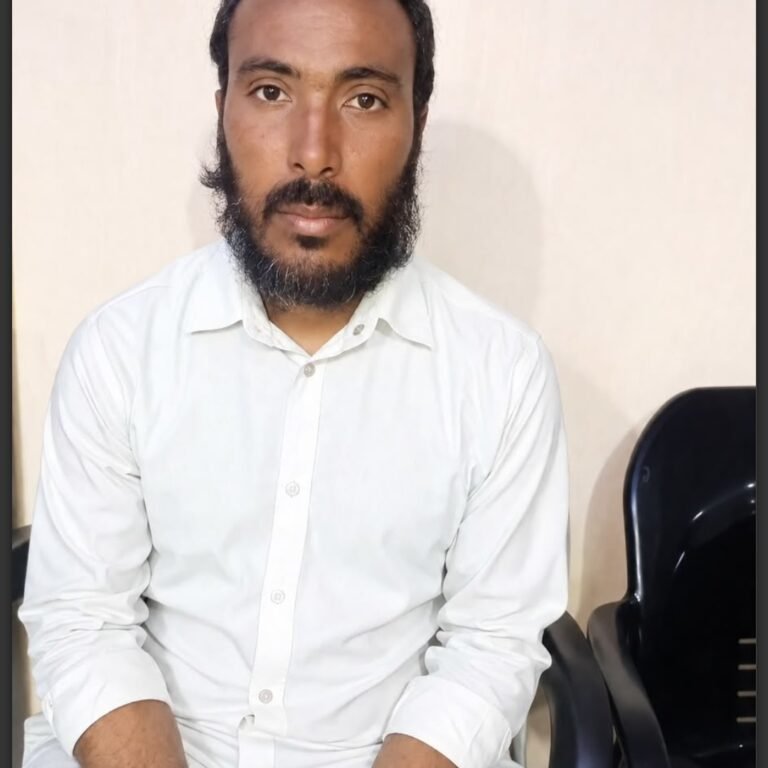
In Mopamuro, Anjorin Abiodun’s case strips the issue down to its barest form.
Here is a citizen whose primary engagement with leadership has been through persistent questioning, raising concerns about public funds, appointments, empowerment programmes, and the general direction of governance. His tone may be blunt, even provocative at times, but the substance of his intervention revolves around accountability.
Yet, reports indicate that he was allegedly beaten and taken into custody by armed police officers, said to be acting on the directive of Chairman Ademola Bello.
This is not a matter of political alignment or electoral rivalry. It is a direct confrontation between authority and a questioning citizen.
And the response, again, follows a familiar script: silence the voice.
What makes the Mopamuro case even more significant is its proximity to the people. Local government is the closest tier of governance. It is where citizens expect to be heard most easily, where access to leadership should be least restricted. If accountability cannot be tolerated at that level, then the problem runs deep.
Now, when both incidents are placed side by side, the similarities are too strong to ignore.
In both cases, critics are not engaged, they are confronted.
In both cases, the issues raised, third-term ambition in one, governance and accountability in the other, are legitimate subjects of public discourse.
In both cases, the reaction leans towards intimidation, whether through legal instruments or alleged physical enforcement.
And perhaps most importantly, both actors, Abejide and Ademola, are politically aligned.
This alliance introduces a new layer to the conversation. Chairman Ademola Bello is not just a local administrator; he is reportedly one of the prominent voices supporting Abejide’s continuation bid. At the same time, he has secured his own political future with a second-term ticket at the local level.
What emerges, therefore, is not just coincidence, but convergence of interests.
A federal ambition seeking continuity.
A local leadership consolidating its hold.
And between them, a shrinking space for dissent.
It begins to explain why criticism, whether from a former insider like Oloke or a persistent local voice like Anjorin, is treated with such urgency and force. When political fortunes are interconnected, criticism of one can destabilise the other. The instinct then becomes defensive, sometimes aggressively so.
But this approach carries serious consequences.
First, it erodes trust. Citizens may tolerate poor performance longer than they will tolerate being silenced. Once people begin to feel that their voices do not matter, or worse, that speaking up is dangerous, the relationship between leaders and the led begins to fracture.
Second, it weakens institutions. Law enforcement agencies, when drawn into political or civic disputes in ways that appear partisan, risk losing public confidence. The perception alone can be damaging, regardless of internal justifications.
Third, it distorts leadership itself. Leaders who are shielded from criticism are often deprived of the very feedback that could help them govern better. Over time, this creates a bubble, one where only praise is heard, and reality is filtered.
And finally, it sets a precedent. If today’s critics are silenced, tomorrow’s leaders may adopt the same methods. What begins as a strategy becomes a culture.
This is the real danger facing Yagba, not just who holds power, but how that power is exercised.
It is important to say this clearly: no public official is beyond scrutiny. No ambition is above questioning. No office grants immunity from accountability.
The proper response to criticism is not arrest. It is not intimidation. It is explanation.
If funds have been used appropriately, show the records. If decisions were made in the public interest, defend them openly. If promises have changed, explain why.
That is leadership.
Anything else begins to resemble control.
The cases of Abayomi Oloke and Anjorin Abiodun may appear separate on the surface, but together they tell a single story, a story of a political environment where dissent is increasingly unwelcome.
Yagba still has a choice.
It can insist on accountability, protect the right to question, and demand better from those in power. Or it can allow a culture of silence to take root, where fear replaces dialogue and authority goes unchallenged.
One path strengthens democracy.
The other diminishes it.
The direction taken now will define not just the politics of 2027, but the character of leadership in Yagba for years to come.
Clara Innocent is a Civil Rights Activist and A Political Observer.
Wrote in from Kogi state.