

By Gabriel Ameh
Abuja — Public health advocates have cautioned the Federal Government against using ultra-processed foods as vehicles for food fortification, warning that such an approach could worsen Nigeria’s growing burden of non-communicable diseases (NCDs).
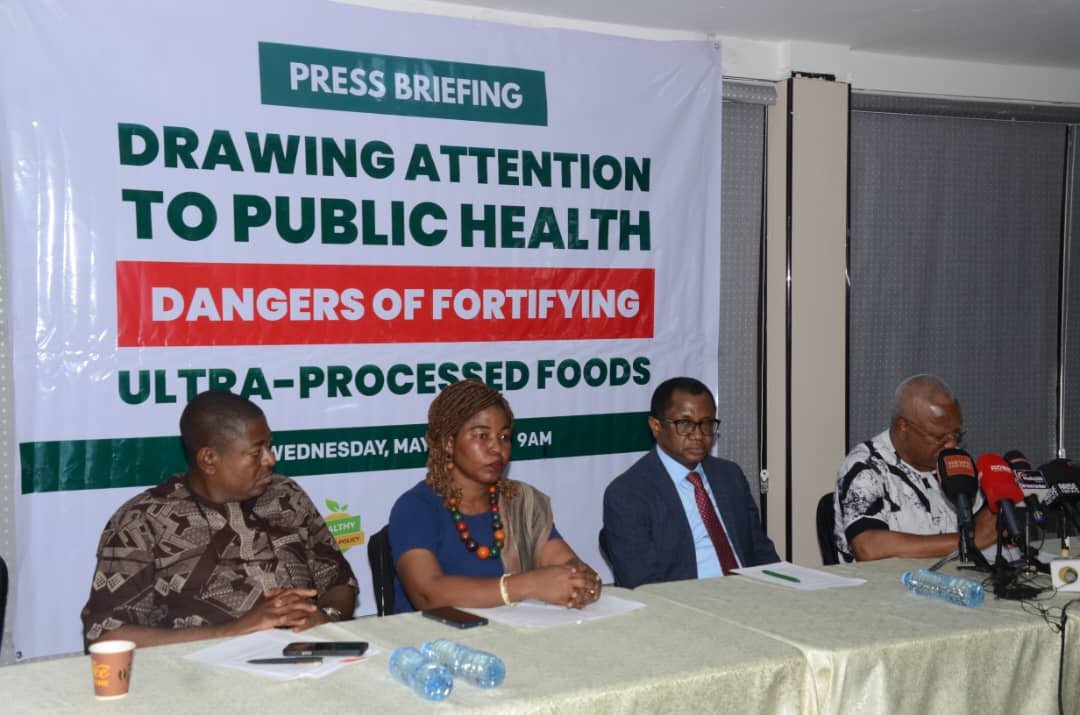
The warning was issued on Wednesday in Abuja during a press conference themed “Drawing Attention to Public Health Dangers of Fortifying Ultra-Processed Foods,” organised by the Coalition for Healthy Food Advocacy and the National Sugar-Sweetened Beverages Tax Coalition (NSSBTC).

The coalition urged authorities to urgently review the country’s food fortification strategy to ensure nutrition policies do not inadvertently promote unhealthy consumption patterns.
Dr. Jerome Mafeni, Technical Advisor at the Network for Health Equity and Development (NHED), highlighted concerns over the fortification of high-sodium products such as seasoning cubes, which are widely consumed in Nigerian households.
According to him, Nigeria already exceeds recommended daily sodium intake levels, and positioning such products as part of the nutrition solution presents a contradiction.
“A fortified cube is still a high-sodium risk. Adding micronutrients does not remove its core health danger,” Mafeni said, warning that fortification could increase consumption and worsen health outcomes.
The coalition cited growing evidence linking Nigeria’s changing food environment to a surge in diet-related illnesses, including Type 2 diabetes, hypertension, stroke, and cardiovascular diseases.

Prof. Dike Ojji of the University of Abuja noted that cardiovascular diseases account for about 10 to 11 percent of deaths in Nigeria, while hypertension affects between 25 and 30 percent of the population largely driven by diet and high salt intake.
He warned that the country’s healthcare system may struggle to cope with the long-term cost of managing these chronic conditions.
While acknowledging that food fortification remains a useful tool in addressing micronutrient deficiencies, the coalition stressed that its success depends on appropriate food choices.
Akinbode Oluwafemi, Executive Director of Corporate Accountability and Public Participation Africa (CAPPA), warned that fortifying ultra-processed foods such as instant noodles, sugary cereals, and refined products could mislead consumers.
He described the phenomenon as a “health halo,” where unhealthy foods appear beneficial due to added nutrients, potentially encouraging overconsumption.
“Adding vitamins to a poor-quality product does not make it healthy,” the coalition stated, describing the strategy as a “double-edged sword” that may solve one problem while creating another.
The group also raised concerns about the broader impact on Nigeria’s food system, warning that reliance on industrial food products could undermine local agriculture and traditional diets.
They called on key regulatory bodies including the Federal Ministry of Health and Social Welfare, NAFDAC, and the Standards Organisation of Nigeria—to review current policies and align them with public health goals.
The coalition emphasised the need to reduce sodium intake by 30 percent by 2030 and highlighted the disproportionate burden of NCDs on women, particularly in low-income households where caregiving responsibilities often fall on them.
Josephine Alabi of Keen & Care Initiative noted that chronic illnesses place significant social and economic strain on families, limiting opportunities for women and girls.

To address these challenges, the coalition recommended prioritising the fortification of safe staple foods, promoting access to nutritious local diets, introducing front-of-pack warning labels, restricting misleading health claims, and strengthening taxes on sugar-sweetened beverages.
It also urged greater policy coherence, warning against promoting sodium reduction while endorsing high-sodium food products.
“Public health policy must reduce risk, not repackage it,” Mafeni said.
The coalition concluded by calling for sustainable, locally driven nutrition strategies, stressing that “fortifying harmful products does not make them healthy.”