0-0x0-0-0-{}-0-0#
📍 Abuja | Media360Impact Report
Senatorial candidate of the Social Democratic Party (SDP) for the Federal Capital Territory (FCT), Hon. Olanrewaju Osho, has unveiled a four-point “You First” agenda, promising to prioritise effective representation, citizen engagement, efficient legislation and ethical oversight if elected to the Senate.
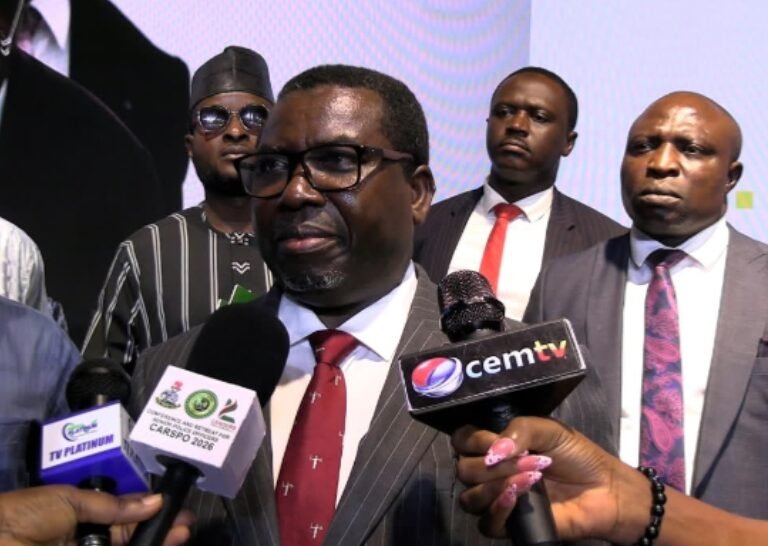
Osho made the commitments during a media roundtable in Abuja, where he outlined his vision for improving representation and addressing some of the socio-economic challenges confronting residents of the FCT.
According to him, his decision to enter the FCT Senate race was driven by his belief that residents deserve effective political representation capable of translating their concerns into policies, legislation and development.
He said his proposed “You First” manifesto would be anchored on four pillars: Representation, Engagement, Legislation and Oversight.
Representation
Osho pledged to make the voices and interests of FCT residents the centre of his legislative activities, promising to take constituency concerns to the National Assembly with “clarity and conviction.”
He said his administration would seek to attract development projects, opportunities and policies that would improve living conditions across the territory.

He also promised to ensure that representation cuts across communities and backgrounds, arguing that no community should be left behind in the development process.
Citizen Engagement
The SDP candidate said he would maintain regular communication with constituents through town hall meetings, community visits and accessible communication platforms.
Osho described his proposed approach as governance “with you, not above you,” stressing that elected representatives should remain connected to the people they represent.
He said the proposed engagement structure would allow residents and stakeholders to participate in discussions that affect their communities and the wider FCT.
Legislation
On legislation, Osho promised to sponsor and support laws aimed at improving the lives of FCT residents, promoting development and creating economic opportunities.
He said his legislative priorities would include reviewing outdated laws that hinder development and supporting policies capable of promoting sustainable growth.
“Every law I back will be guided by its impact on your daily life,” he said.
Oversight and Accountability
Osho also pledged to use the oversight responsibilities of the Senate to monitor government activities, spending and project implementation affecting the FCT.
He promised to demand accountability from ministries, departments and agencies responsible for projects and programmes in the territory.
According to him, he would stand against waste, corruption and inefficiency while ensuring that funds allocated for constituency development are used effectively.
Agriculture: FCT as a Potential Food-Producing Hub
Beyond his four-point agenda, Osho proposed the establishment of what he described as an FCT Research and Development Council, which he said would be used to drive agricultural development across the territory.
He argued that the FCT has significant land resources and should be positioned to produce enough agricultural commodities for local consumption while developing the capacity to export surplus.
Osho said his proposed model would involve working with the six area councils to identify crops and agricultural products best suited to different locations.
Under the proposed framework, farmers would be encouraged to concentrate a significant portion of their production on identified crops, while receiving support such as mechanisation, fertiliser and other agricultural inputs.
He further proposed partnerships with companies that could process agricultural produce into finished products for markets within Nigeria and internationally.
According to him, linking production with processing and markets would help move agriculture in the FCT from subsistence activity towards a more commercially driven sector.

Affordable Housing Proposal
Osho also identified housing affordability as one of the major challenges facing young people and low- and middle-income residents in Abuja.
He criticised what he described as the high cost of renting accommodation in the FCT, particularly for young people entering the workforce or starting families.
As part of his proposed solution, he said he would work with the six area councils to establish what he called “council flats”—affordable housing units designed to provide residents with access to accommodation at a fraction of prevailing market costs.
He proposed a minimum of 20 flats in each of the six area councils as an initial target, with the programme potentially expanding in subsequent years.
Osho said the proposed housing model could also provide temporary support for people who lose their jobs or face circumstances that could leave them homeless.
He said the initiative would require collaboration among the area councils, investors and other relevant stakeholders, with land, designs, financing and construction forming part of the proposed partnership framework.
‘I Am a Technotician’
Defending his preparedness for public office, Osho said he was approaching the Senate race from a problem-solving perspective rather than merely as a conventional politician.
“I’m not a politician. I’m a technotician,” he said, while stressing that his focus was on developing practical solutions to the challenges confronting FCT residents.
Osho said his manifesto was already prepared and runs to almost 40 pages, adding that it contains detailed proposals for addressing the challenges facing the territory.
He also referred participants to his campaign initiative, Fix FCT, where he said residents could learn more about his proposed programmes and participate in the campaign.

The SDP candidate’s proposals will now face scrutiny as the political contest for the FCT Senate seat gathers momentum, with questions around funding, legislative powers, implementation mechanisms and coordination with the FCT Administration and the six area councils likely to be central to evaluating the feasibility of the promises.
For Osho, however, the central message of his campaign remains a commitment to put residents first through stronger representation, citizen engagement, legislation and oversight.