

By Gabriel Ameh
The Independent National Electoral Commission (INEC) has appealed recent court judgments affecting aspects of its timetable and schedule of activities for the 2027 General Election, while also expressing concern over the increasing number of court cases arising from leadership disputes within political parties.
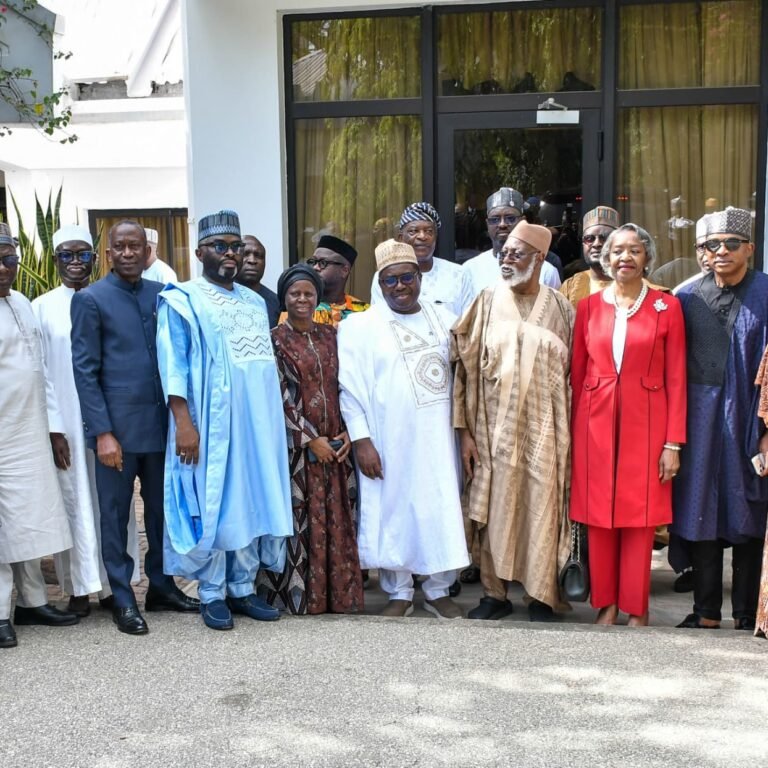
INEC Chairman, Prof. Joash O. Amupitan (SAN), disclosed this on Tuesday during the Commission’s Second Quarterly Consultative Meeting with leaders of political parties held at the INEC headquarters in Abuja.
Amupitan stated that although the Commission respects judicial decisions, the conflicting rulings have created important legal questions regarding INEC’s constitutional and statutory powers to coordinate electoral activities and maintain an orderly election calendar ahead of the 2027 polls.
He lamented the growing number of internal party crises currently before the courts, describing them as unnecessary distractions capable of affecting Nigeria’s democratic process.
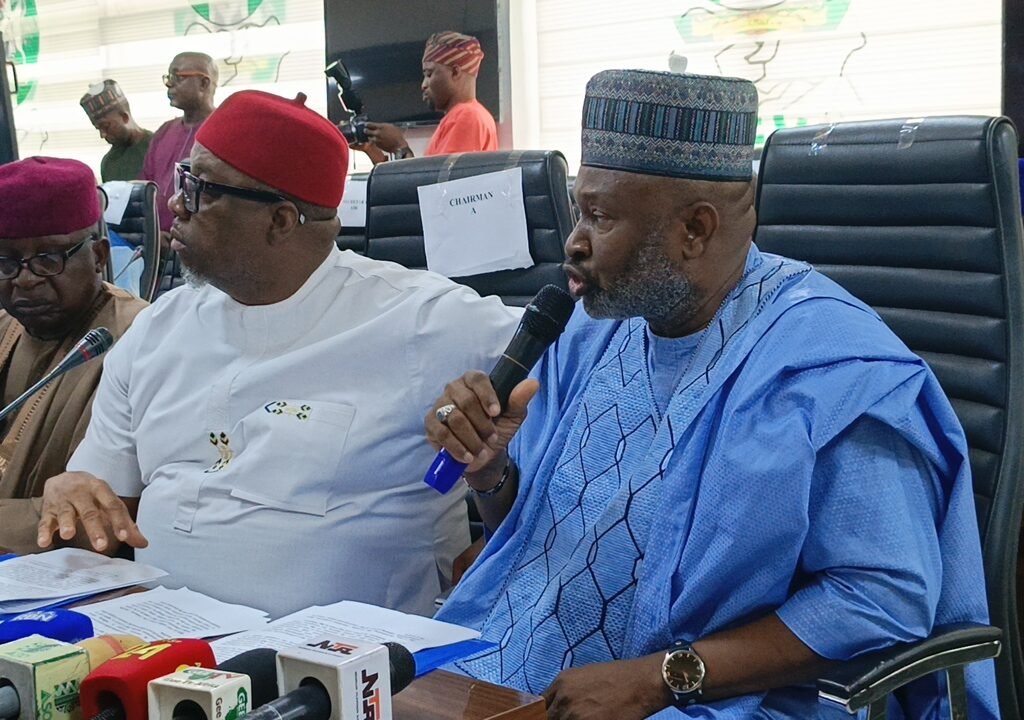
“I must not fail to express the concern of the Commission over several cases that are still pending in several courts, most of which still bother on leadership of the parties. We consider this an unnecessary distraction and wish all the issues are resolved without further delay,” he said.
Speaking on the legal challenge surrounding the electoral timetable, the INEC chairman explained that the Commission reviewed two recent Federal High Court judgments which delivered differing positions on INEC’s authority to prescribe timelines for electoral activities.
According to him, while one judgment questioned aspects of the Commission’s timetable for the 2027 General Election, another ruling upheld INEC’s authority to issue electoral schedules but nullified some timelines relating to the nomination and substitution of candidates.
“In view of the differing conclusions reached in the judgments and in order to ensure certainty and stability in preparations for the 2027 General Election, the Commission has filed appeals against the decisions and has taken the necessary legal steps to obtain authoritative pronouncements from the Appellate Courts,” Amupitan said.

He stressed that electoral activities are interconnected operational processes that require carefully coordinated timelines to ensure transparency, administrative efficiency and equal treatment for all political parties.
The INEC chairman noted that activities requiring structured scheduling include verification of party membership registers, monitoring of party primaries, candidate nominations, printing and deployment of election materials, BVAS configuration, voter education and compliance with statutory requirements.
On preparations for the Ekiti State governorship election scheduled for June 20, 2026, Amupitan expressed confidence in the Commission’s readiness.
He revealed that the voter register for the election currently stands at 1,059,360 registered voters, including 66,664 newly registered voters added through the Continuous Voter Registration exercise, while 2,103 cases of double registration had been invalidated.

According to him, logistics, election technology deployment, training of officials and stakeholder engagements are progressing smoothly to ensure the simultaneous opening of all 2,445 polling units across the state’s 16 local government areas by 8:30 a.m. on election day.
He also commended political parties in Ekiti State for signing a Peace Accord and urged them to sustain peaceful, issue-based campaigns throughout the election period.
The Commission further announced that bye-elections would also take place on June 20 in Enugu North Senatorial District, Nasarawa North Senatorial District, Rivers South East Senatorial District, Ondo South Senatorial District, Dawakin Kudu/Warawa Federal Constituency in Kano State and Zuru State Constituency in Kebbi State.
Looking ahead to the Osun State governorship election scheduled for August 15, 2026, Amupitan urged political parties to strictly comply with electoral guidelines and timelines.

He further disclosed that INEC would issue official access codes to political parties on June 26 to enable designated national officers upload candidate details through the Candidate Nomination Portal ahead of future elections.
The INEC chairman reaffirmed the Commission’s commitment to independence, impartiality and strict compliance with the Constitution and the Electoral Act, while urging political parties to conduct transparent primaries, reject violence and vote buying, and promote issue-based campaigns.