
By Gabriel Ameh. Media360Impact
ABUJA — More than 87,000 children received treatment for acute malnutrition at Médecins Sans Frontières (MSF)-run outpatient centres in Katsina State between January and August 2026, as the humanitarian organisation called for sustained funding to tackle the persistent nutrition crisis in northern Nigeria.
Although the number represents a decline from more than 95,000 children treated during the same period in 2025, MSF says the figure remains alarmingly high and exceeds the level recorded two years ago.
The organisation also reported that nearly 15,500 children required hospitalisation for severe or complicated malnutrition during the first eight months of 2026, compared with approximately 16,500 during the corresponding period in 2025.
MSF said the figures show that, despite some improvements, thousands of children remain at risk and require urgent access to lifesaving nutrition services.
CHILDREN BATTLE SEVERE FORMS OF MALNUTRITION
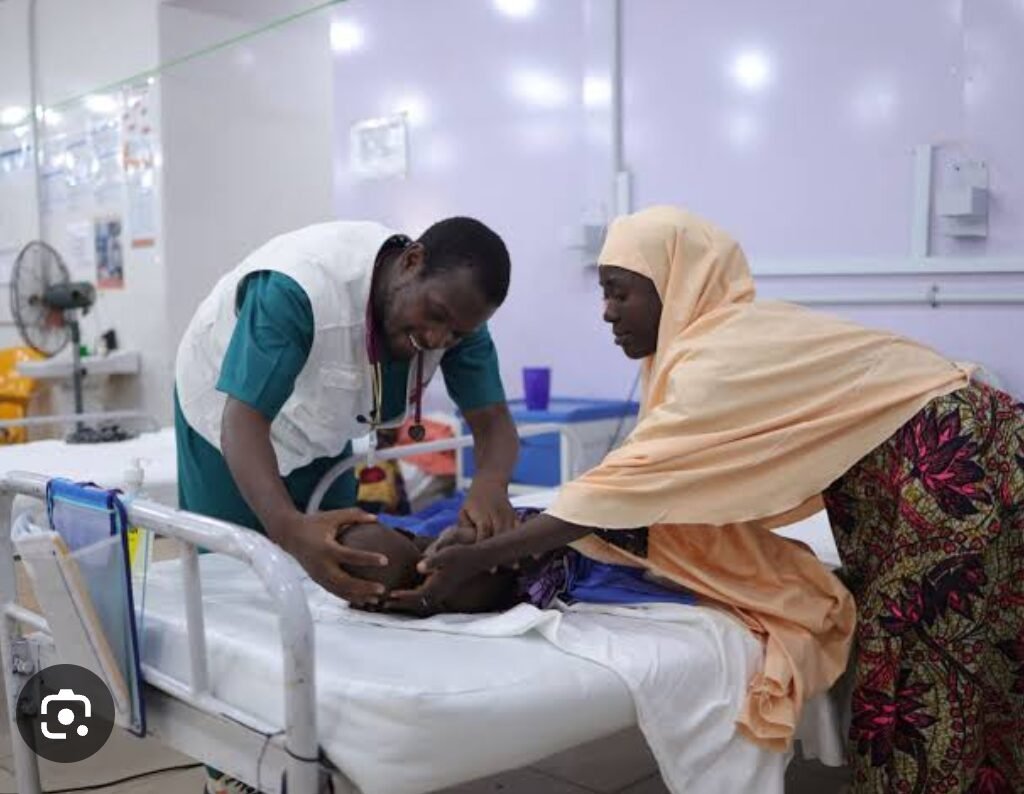
One of the major concerns in Katsina is the prevalence of kwashiorkor, a severe form of malnutrition associated with swelling of the body and skin lesions.
To improve treatment for affected children, MSF established a specialised unit within its inpatient therapeutic feeding centre in Katsina.
Badiyya Shafi’u, whose child received treatment for kwashiorkor in Katsina city, described the improvement in her child’s condition.
She said she initially did not recognise the illness as malnutrition, explaining that her child had been unable to sit independently and would fall backwards when helped into a sitting position.
Following treatment, she said the child could sit without assistance, remain standing when supported and had started attempting to walk again.
Her experience highlights the importance of early recognition, timely treatment and access to specialised nutrition care for children suffering from severe malnutrition.
POVERTY, INSECURITY WORSEN NUTRITION CRISIS
According to MSF, the persistent malnutrition crisis across northern Nigeria is driven by several interconnected factors, including poverty, rising living costs, armed conflict, population displacement, disease outbreaks and extreme weather events such as droughts and floods.
Insecurity linked to armed banditry and jihadist groups has disrupted farming and displaced communities, reducing access to food and livelihoods.
However, improved security and better harvests in Katsina in 2025 contributed to some relief this year.
Jean-Clément Ishimwe, MSF’s partnership coordinator, said some residents who had fled insecurity in Jibia and Batsari local government areas were able to return home and resume farming.
He explained that the returns had improved food access for some households and contributed to fewer displaced families seeking treatment at MSF facilities.
GOVERNMENT EXPANDS NUTRITION RESPONSE
MSF said its public warnings about the severity of malnutrition in 2025 helped draw greater attention to the crisis.
In 2026, more humanitarian organisations began operating in the area, while the Katsina State Government opened additional outpatient and inpatient treatment centres for several months.
MSF supported the expansion by training and assisting healthcare workers at the new facilities, an intervention the organisation said likely helped reduce hospital admissions ahead of the peak malnutrition season.
The state has also significantly expanded its network of outpatient nutrition treatment centres, from only a few in 2021 to approximately 400 today.
Despite these developments, MSF said inadequate funding and limited access to ready-to-use therapeutic food continue to undermine efforts to control malnutrition.
The organisation identified ready-to-use therapeutic food as a critical component of treatment for children with acute malnutrition.
MSF CALLS FOR SUSTAINED FUNDING
Ishimwe said the Katsina State Government had committed ₦1 billion to tackling malnutrition, doubling its previous allocation, with particular attention to procuring ready-to-use therapeutic food.
UNICEF has also pledged to mobilise a matching ₦1 billion through its Child Nutrition Fund.
MSF said fulfilling these commitments would be an encouraging step that should be sustained and expanded across Katsina and other parts of northern Nigeria.
However, the organisation warned that international aid cuts by the United States and several European countries, including France, Germany and the United Kingdom, had further complicated efforts to secure adequate nutrition funding.
MILLIONS OF CHILDREN STILL LACK TREATMENT
MSF cited UNICEF figures indicating that fewer than half of children with severe acute malnutrition worldwide receive treatment, despite the availability of interventions that can prevent deaths and reduce the risk of lasting developmental harm.
In Nigeria, the Nutrition Society of Nigeria has also raised concerns about the scale of the crisis, reporting that nearly two million children are affected by severe acute malnutrition, while only about two in every ten receive treatment.
Across its nutrition projects in seven northern Nigerian states, MSF said its teams treated 57,999 children for malnutrition in inpatient facilities and another 225,778 through outpatient programmes between January and August 2026.
The organisation stressed that reversing the crisis requires sustained, large-scale financial commitments from federal and state governments, international donors and humanitarian partners.
While the decline in Katsina’s treatment figures offers some encouragement, MSF warned that the gains must be strengthened through reliable funding, improved access to therapeutic food and expanded treatment services to prevent avoidable child deaths.
Source: Médecins Sans Frontières (MSF).