
By Gabriel Ameh
ABUJA — The Independent National Electoral Commission (INEC) has stepped up efforts to increase the participation of Persons with Disabilities (PWDs) in the 2027 General Election through targeted sensitisation, mobilisation and stakeholder engagement.
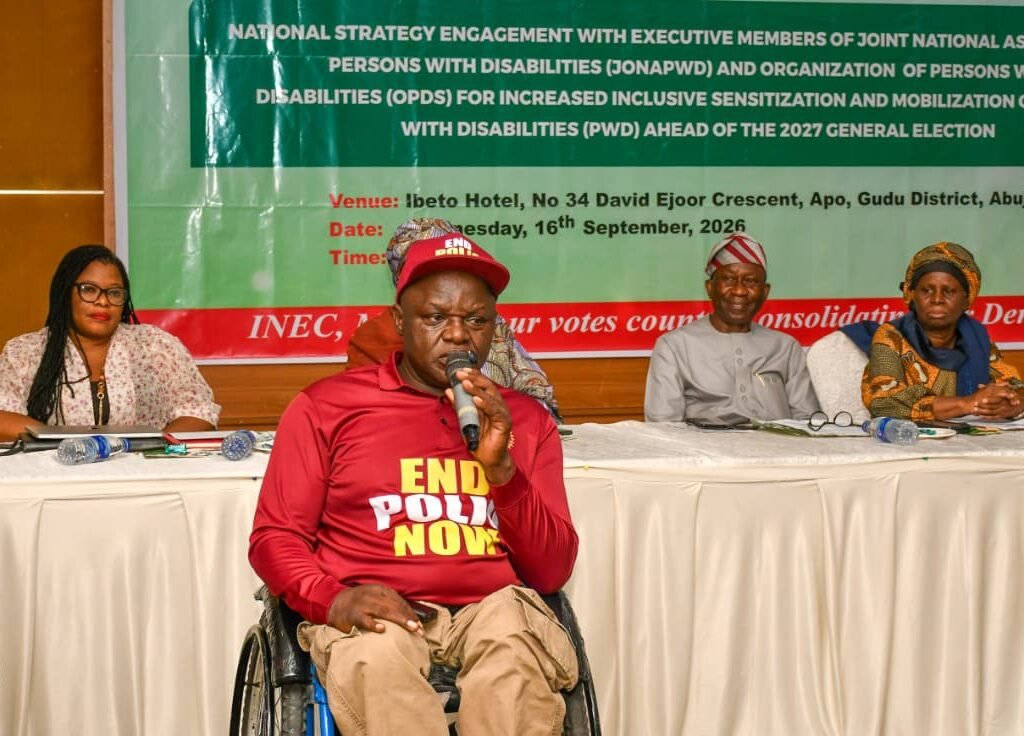
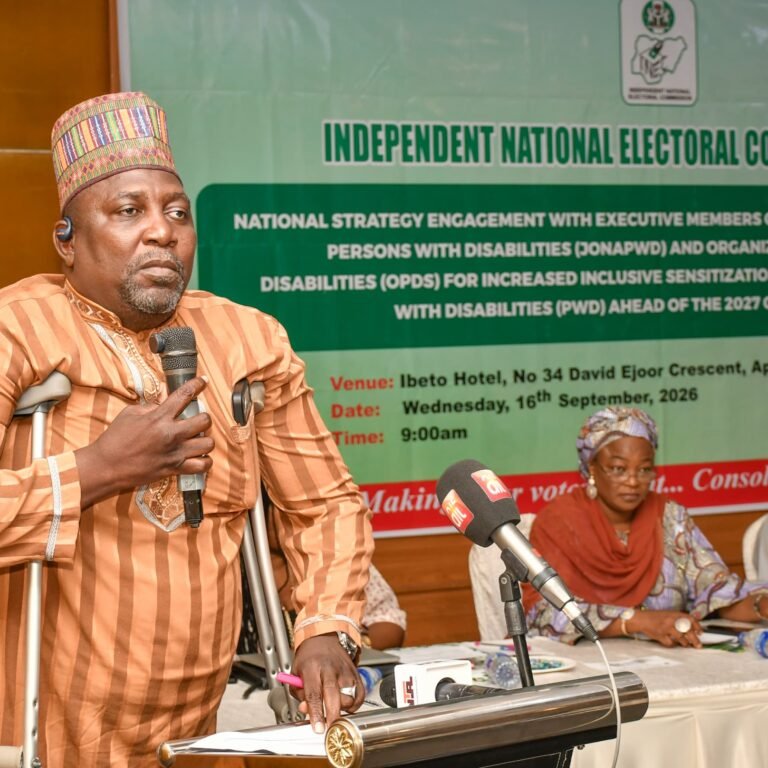
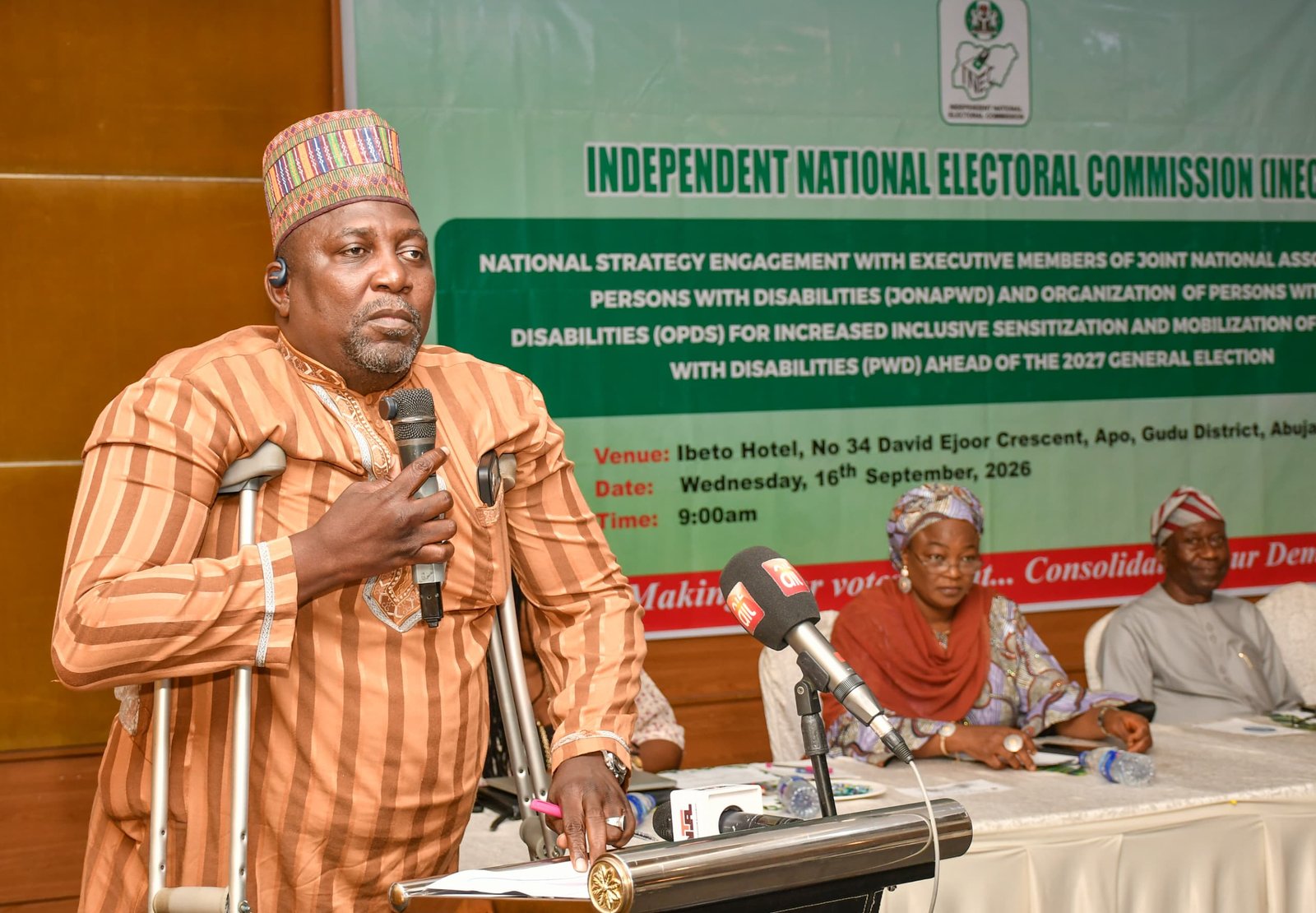
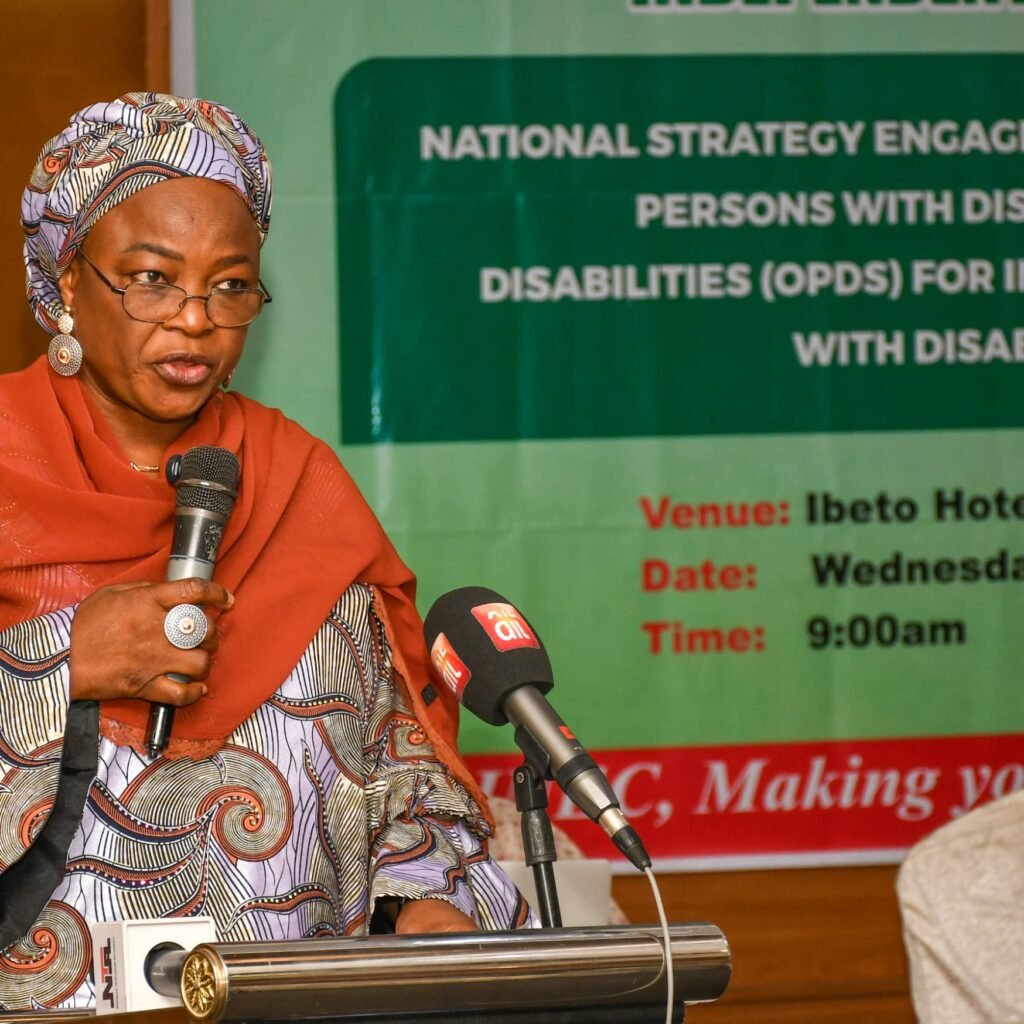
The Commission held a National Strategy Engagement with the Joint National Association of Persons with Disabilities (JONAPWD), Organisations of Persons with Disabilities (OPDs) and cluster heads in Abuja on Wednesday.
The engagement focused on developing practical strategies to improve voter education, mobilisation, Permanent Voter Card collection and turnout among PWDs ahead of the 2027 polls.
The meeting brought together representatives of disability organisations, development partners and INEC officials.
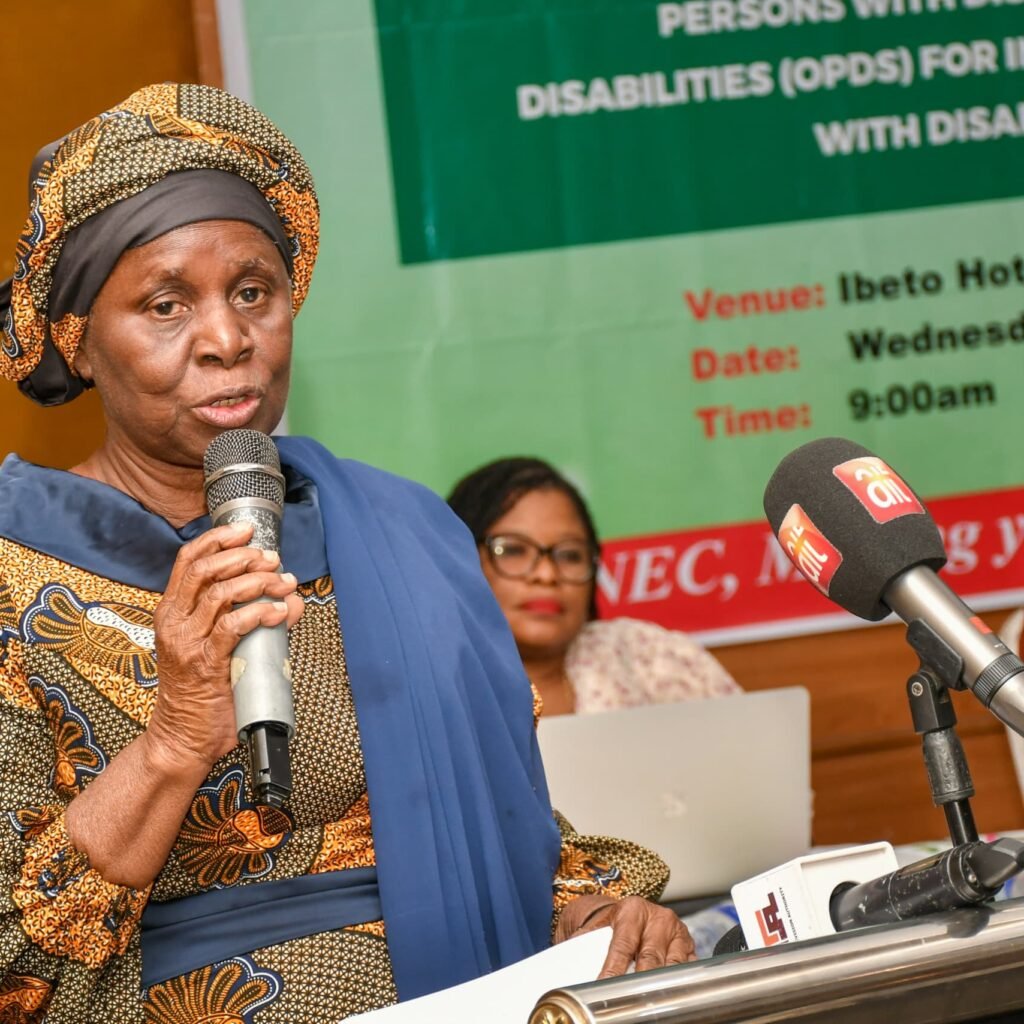
Representing INEC Chairman, Prof. Joash Amupitan, SAN, at the event, Acting Chairman and National Commissioner, Prof. Rhoda Gumus, said the Commission remained committed to an electoral process that is inclusive, accessible and responsive to the needs of eligible voters with disabilities.
She said stronger collaboration with JONAPWD, OPDs and other stakeholders was necessary to ensure that eligible voters with disabilities were not left behind in the electoral process.
According to INEC, the participation of PWDs is supported by relevant provisions of the Electoral Act, the Discrimination Against Persons with Disabilities (Prohibition) Act and the Commission’s framework on access and participation of PWDs in elections.
INEC records 137,487 PWDs
The Commission said its data, obtained before the Automated Fingerprint Identification System (AFIS) exercise, showed that 137,487 Persons with Disabilities had been captured.
The figure comprises 13,080 visually impaired persons, 9,299 hearing-impaired persons, 30,561 persons with albinism, 19,430 persons with physical impairment and 54,941 persons in other disability categories.
INEC said the figures underline the need for sustained and targeted engagement to ensure that PWDs receive relevant electoral information and are supported throughout the electoral process.
The Commission said the strategies developed at the national engagement would also be taken to the state level through Resident Electoral Commissioners, Electoral Officers and other relevant officials.
INEC urged JONAPWD and OPDs to take ownership of sensitisation and mobilisation efforts within their respective disability clusters.
Stakeholders identify barriers to participation
The Director of INEC’s Gender and Inclusivity Department, Mrs Lakunuya Dorothy Bello, said PWDs remained an important constituency whose participation was essential to an inclusive democratic process.
She identified access to voter information, voter education, mobilisation and accessibility of electoral facilities among the challenges requiring attention ahead of the 2027 elections.
The Deputy Director in charge of Inclusivity, Mrs Habiba Abdulkareem Jatto, said the engagement was designed to strengthen collaboration between INEC and disability organisations, develop practical mobilisation strategies and improve the dissemination of voter education in accessible formats.
Delivering the keynote address, the Executive Director of Inclusive Friends Association (IFA), Grace Jerry, called for a mobilisation strategy that would map PWD networks and identify priority gaps.
She advocated voter education through accessible media and OPD networks, support for registration and referrals, documentation of barriers and continued engagement through Election Day.
Jerry said sensitisation should extend beyond formal meetings to communities, wards, Local Government Areas, markets, campuses, faith-based spaces and digital platforms.
JONAPWD seeks more frequent engagement
The National President of JONAPWD, Comrade Abdullahi Aliyu Usman, commended INEC for its disability-inclusion policies but called for more regular strategic engagements.
He argued that a single national engagement would not be sufficient to ensure full participation of Persons with Disabilities in the 2027 election.
Also speaking, the Executive Secretary of the National Commission for Persons with Disabilities (NCPWD), Barrister Ayuba Gufwan Burki, highlighted mobility challenges, access to assistive devices and restrictions affecting movement during elections.
He stressed the importance of fully engaging PWDs in the electoral process, noting the potential influence of their collective participation.
The Founder and CEO of TAF Africa, Jake Epelle, also commended INEC’s priority voting measures for PWDs but called for improved accessibility at polling units and stronger grassroots mobilisation through OPD cluster heads across the 36 states and the Federal Capital Territory.
Communique adopted
The engagement ended with the reading and adoption of a communique containing commitments and action points agreed by stakeholders.
The communique, adopted by JONAPWD National Secretary Mr Ishaku Adamu, is expected to guide further sensitisation and mobilisation activities ahead of the 2027 General Election.
The initiative comes as INEC continues preparations for the 2027 polls, with the Commission’s broader electoral planning already underway.