
By media360impact
Imagine a primary health centre in Yola that should not look the way it does. The building is there, the signboard is there, the gate is there, but before 7 pm, the gate is padlocked. The security guard, earning §%10,000 a month, has made a quiet calculation that most of us would make in his position: there is only so much you can protect for that kind of money.
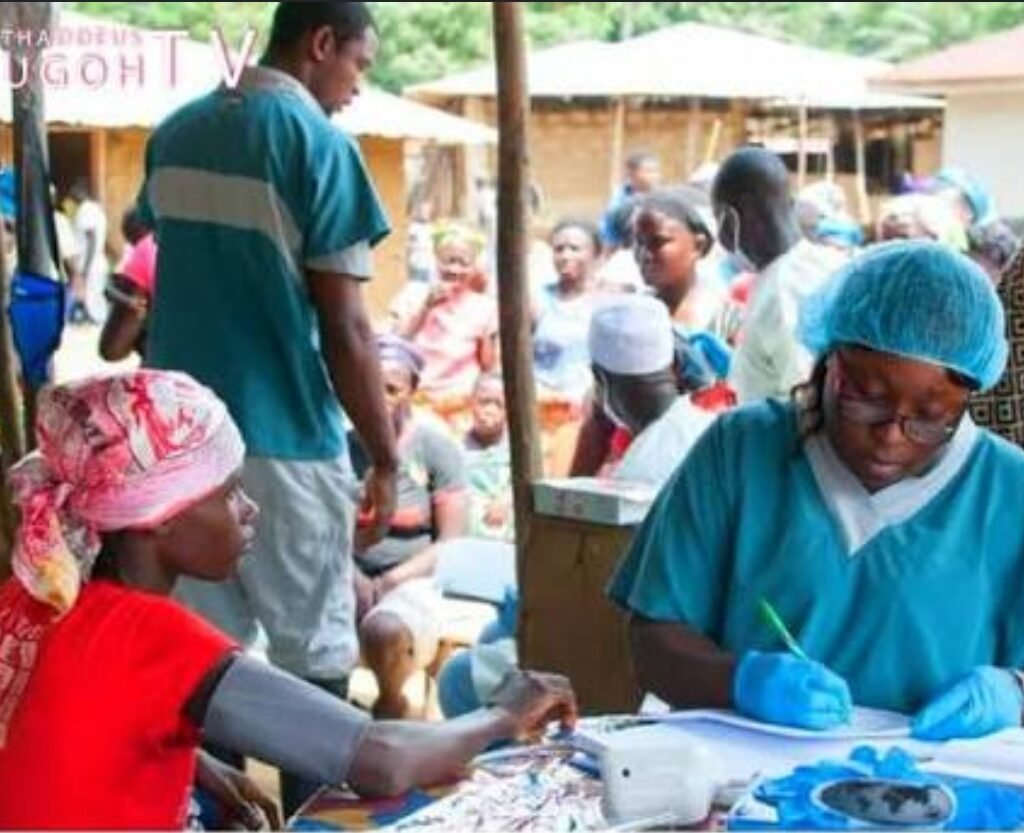
Inside, some drugs are available, but not all of them. A pregnant woman who walked for 40 minutes from her compound to reach this facility will be told that the commodity she needs is out of stock today. She will turn around, walk back, and she may not return.
| want to be precise about what this story is and what it is not. This is not a story about a forgotten facility.
This is a reality for a facility that was funded, governed, and failed, not by the absence of policy, but by the deliberate or negligent paralysis of the very structures created to protect it. The distinction matters enormously because when we misdiagnose the problem, we prescribe the wrong cure.
Nigeria’s Basic Health Care Provision Fund (BHCPF) is, on paper, one of the most thoughtfully designed community health financing frameworks this country has produced. Anchored in the National Health Act, it channels federal resources through a series of gateways to primary health care facilities, with one structural safeguard built into its core: Ward Development Committees (WDCs), elected by the communities they serve, are mandated as co-signatories on facility accounts.
These are community watchdogs with legal standing. The idea is that if the community holds the pen alongside the facility manager, the money is less likely to disappear quietly.
When | examined the findings from Connected Development’s (CODE) sub-national assessment of BHCPF 2.0 implementation across Yola North Local Government Area (LGA) in Adamawa State, conducted in April 2026 under the Follow The Money initiative, | was not surprised by what the data revealed. | was, however, struck by the precision with which the evidence dismantles the comfortable fiction that accountability structures are functioning simply because they exist.
Some WDCs in Yola North had gone nearly two consecutive years without a formal inauguration. In that legal and administrative limbo, their signatures carry no enforceable weight. Their oversight role is constitutionally ambiguous.
Their presence at any meeting or document review is, at best, a courtesy extended by a facility manager who may just as easily withdraw it. And in several wards, that withdrawal had already happened.
Facility managers were submitting financial reports and documents without WDC consent, sometimes manufacturing urgency to coerce signatures on documents committee members had not reviewed, and sometimes bypassing them entirely.
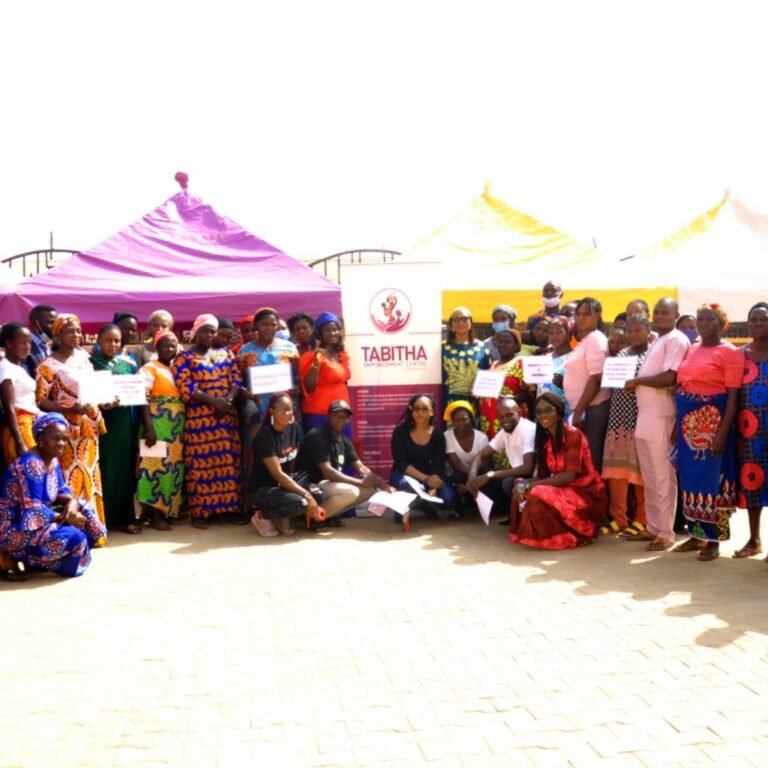
According to a WDC Chairman who wants to remain anonymous, he confirmed that despite being elected, his committee had not been inaugurated. Another told assessors that his committee understood perfectly well how quarterly BHCPF funding flows work, yet WDCs as account signatories were being systematically excluded from financial decision making.
Aslo in another ward, they described primary health care management submitting reports without committee consent, sometimes with fabricated deadlines designed to force compliance.
What compounds this failure is what ! found further upstream in the accountability chain. A Key Informant Interview with the Adamawa State Budget Officer, who is himself a member of the State Oversight Committee (SOC), produced what | consider the most structurally alarming finding in the entire assessment. BHCPF funds do not pass through the state treasury. They do not appear in state budget performance reports, neither on intake nor on expenditure.
They are fiscally invisible. The state budget framework has a column explicitly designated “other sources,” designed to capture external fund flows of precisely this kind. That column has never been used for the BHCPF since the fund began operating.
The consequences are plethora in nature: state legislators cannot track these funds, auditors have no line to examine, journalists have no public document to cite, and civil society organisations cannot build accountability pressure against a budget figure that does not exist.
The Budget Officer himself attends quarterly SOC meetings but reviews only activity outputs, never financial flows. He could not provide a cumulative disbursement figure because that information does not pass through his office. He formally recommended that BHCPF integration into the state budget architecture be tabled as a national structural priority.
| would go further: that recommendation should become a non-negotiable demand from every civil society organisation working in this space.
Meanwhile, epidemic preparedness money that was supposed to reach Adamawa through the Nigeria Centre for Disease Control (NCDC) Gateway spent years sitting untouched in a Central Bank Treasury Single Account (TSA). A 13.2 million disbursement from the 2021 to 2022 BHCPF 1.0 allocation was only accessed and utilised in 2025, three to four years after it was credited, because of a ministerial committee review process that no one streamlined or expedited.
In Kano State, the picture is grimmer still. The state has received only one quarter of NCDC Gateway funding since the programme’s inception, not because the money was not allocated, but because the bureaucratic process of updating account signatories each time the State Epidemiologist position changes has brought the entire mechanism to a standstill. An entire epidemic preparedness financing system has been grounded by administrative inertia.
The victims of this failure are predominantly women and children, the populations that the BHCPF was specifically designed to protect. They are the pregnant woman who walked forty minutes and found a padiocked gate, and the child whose fever worsens through a night when the facility’s free drug supply has run out.
No one can say when the next disbursement will arrive, leaving citizens to bear the cost of a system that is technically operational but functionally inert.
| work in communications and governance. | have spent enough time tracking public funds to know that the loudest form of corruption is often not the stolen money. It is the money that was never
stolen, just quietly rendered untrackable, and we have seen this too many times. That is the story of the BHCPF in these two states, and it is a story that deserves the same civic outrage we reserve for more dramatic forms of public finance failure.
The State Governments must, as a matter of urgency, inaugurate all Ward Development Committees immediately. Furthermore, facility-level financial documents must be made accessible to WDC members as a matter of enforceable policy, not at the discretion of facility managers who may find transparency inconvenient.
The “other sources” column in the state budget must be activated for the BHCPF immediately, so that every disbursement and expenditure appears in a public document that legislators, auditors, and citizens can scrutinise. Equally vital, a comprehensive, updated BHCPF 2.0 financial management training for all WOC members and facility managers must be delivered before the end of the third quarter (Q3) 2026.
At the federal level, the signatory bottleneck that has locked Kano out of NCDC Gateway funding for four years must be resolved architecturally, not case by case. No public health emergency financing system should be stalled because the bureaucracy cannot process a personnel transition in time.
Finally, civil society must stop treating the BHCPF as too technical for public pressure. It is not complicated. Federal money was allocated to reach your community’s health centre. In ward after ward, it cannot be traced, and the people elected to trace it have been sidelined for two years. That is a story every Nigerian should be asking their representative about, loudly and repeatedly.