
By Media360Impact | Abuja
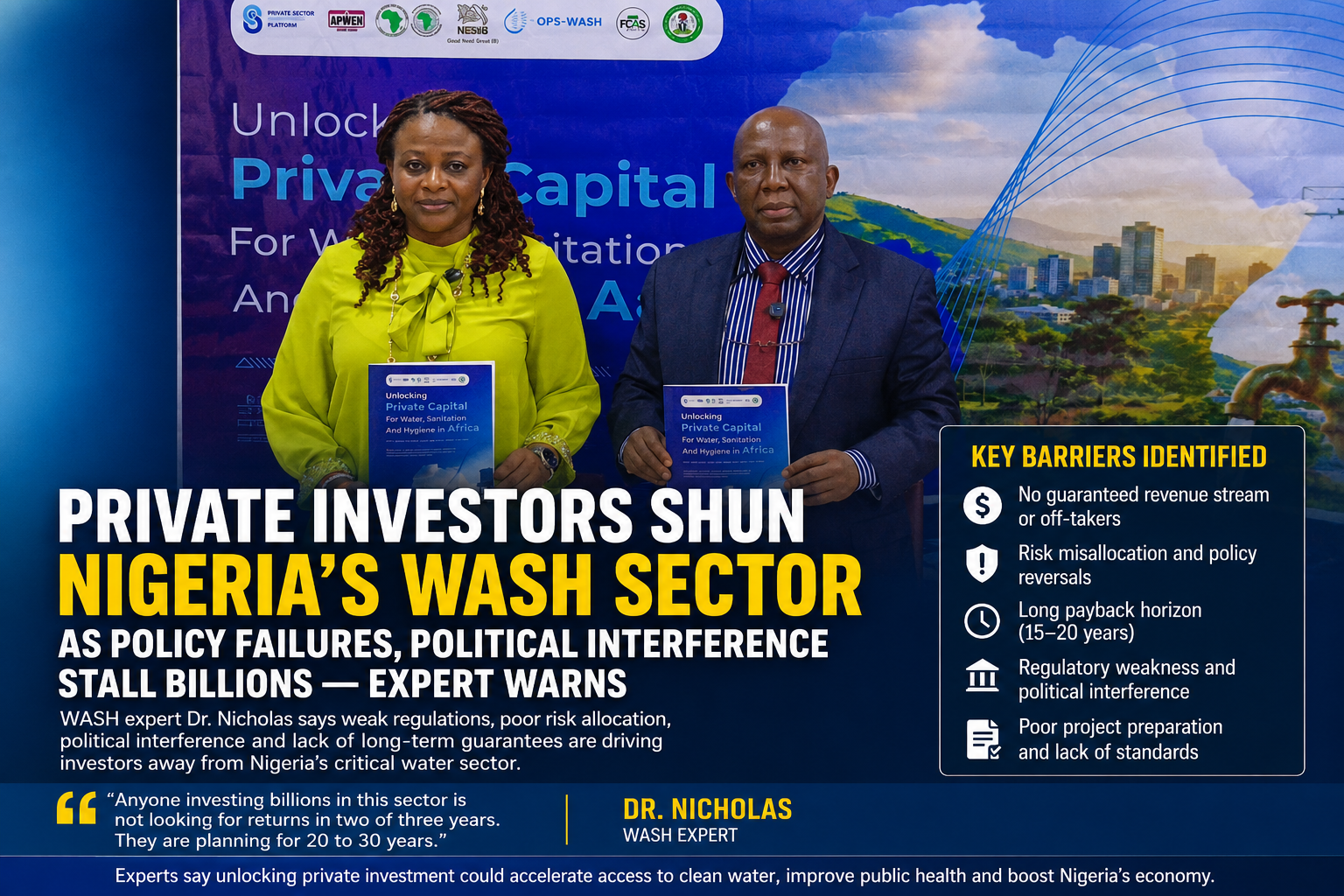
Nigeria’s water, sanitation and hygiene (WASH) sector is losing billions of dollars in private investment due to weak regulations, political interference, poor project planning and the absence of long-term policy guarantees, according to WASH expert Dr. Nicholas.
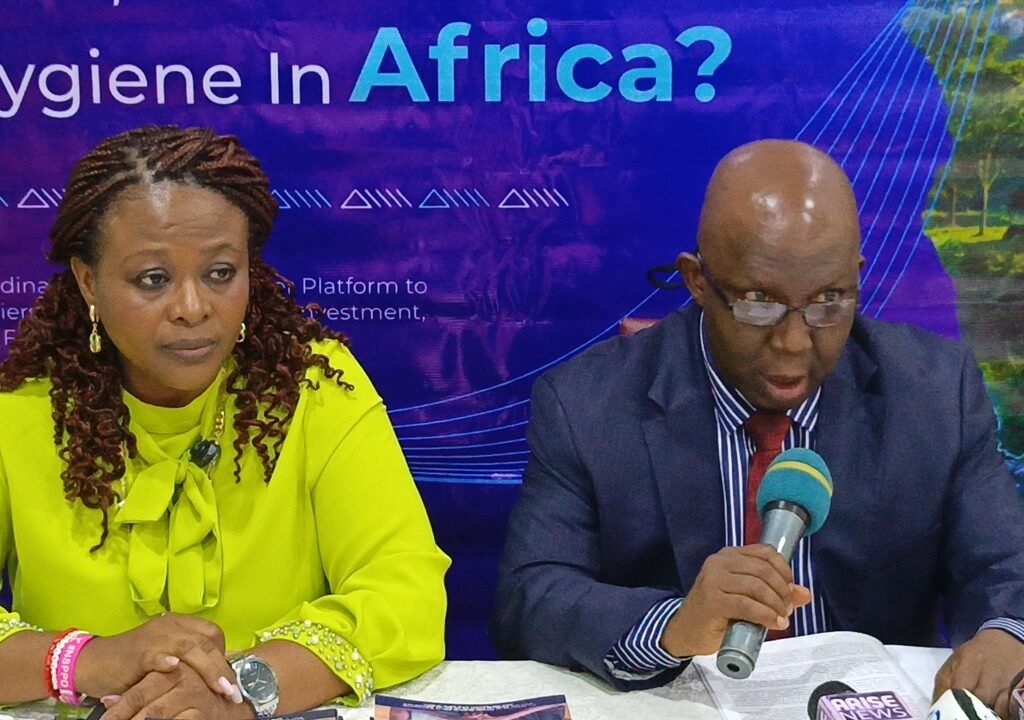
Speaking at a stakeholders’ engagement on financing the WASH sector, Dr. Nicholas painted a grim picture of why investors continue to avoid a sector critical to public health and economic development, despite its enormous market potential.
Drawing comparisons with South Africa, he explained that countries with strong regulatory systems and guaranteed revenue streams have successfully attracted private capital into water infrastructure.
“In South Africa, sewage water is treated and supplied back to homes. Private investors are willing to finance such projects because they know there is guaranteed revenue and long-term off-takers,” he said.
According to him, industries such as paper manufacturers in South Africa enter into concessions lasting between 20 and 30 years to purchase treated water, creating predictable income that makes investments bankable.
He argued that Nigeria has failed to establish similar financial structures, leaving investors uncertain about recovering their investments.
“When there is no sustainable revenue stream and no guaranteed off-takers, it becomes difficult for the private sector to come in,” he stated.
Dr. Nicholas identified poor risk allocation as another major obstacle discouraging investment.
He warned that investors fear abrupt policy reversals whenever governments change, saying administrations often fail to provide legal assurances that long-term contracts will survive political transitions.
“A government may have the political will today, but another administration can simply ask the investor to pack up and leave,” he said.
He noted that while Nigeria has largely resolved similar investment concerns in sectors such as telecommunications, energy, housing and parts of healthcare, the WASH sector remains without adequate safeguards.
The expert also highlighted what he described as the sector’s lengthy investment recovery period.
Unlike telecommunications or energy projects that can begin generating returns within a few years, water infrastructure often requires between 15 and 20 years before investors recover their capital.
He said government must recognise this reality and develop policies that reduce long-term investment risks.
“Anyone putting billions of dollars into the sector is not expecting returns in two or three years. They are planning for 20 to 30 years, and government must understand the risks involved.”
Dr. Nicholas further blamed weak regulatory institutions and excessive political influence for discouraging investors.
He argued that regulators appointed and controlled by political office holders often struggle to enforce transparent rules, creating uncertainty for businesses willing to invest.
“When regulators are subject to political interference, private investors become reluctant to commit millions of dollars because they cannot be certain the rules will remain consistent.
He also criticised inadequate project preparation across the sector.
According to him, many projects reach investors without proper legal documentation, feasibility studies, risk assessments or implementation frameworks, making them unattractive for financing.
Without thorough preparation, he warned, investors simply walk away.
Dr. Nicholas further identified the absence of standardised legal, technological and contractual frameworks as another critical barrier.
He stressed that long-term infrastructure projects require agreements capable of surviving multiple administrations and providing certainty throughout their lifespan.
Without such institutional guarantees, he said, attracting serious private capital would remain a challenge.
He called for stronger collaboration between government, regulators, development partners and private investors to establish transparent policies, fair risk-sharing mechanisms and independent regulatory institutions capable of restoring investor confidence.
The WASH sector remains one of Nigeria’s most underfunded infrastructure segments despite persistent challenges surrounding access to clean water, sanitation services and hygiene facilities across many communities.
Industry experts believe unlocking private investment could significantly accelerate progress towards universal access, improve public health outcomes and reduce the country’s infrastructure deficit.