
By Gabriel Ameh
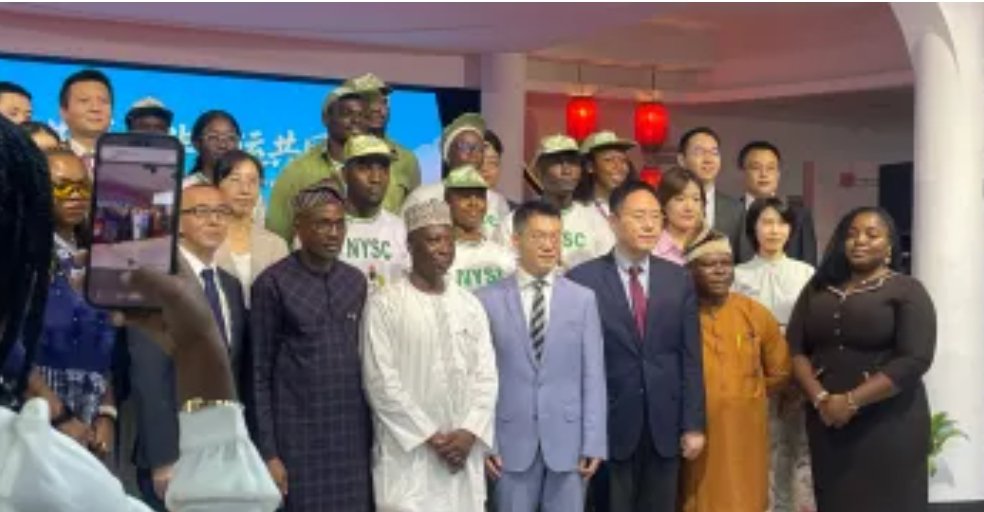
China and Nigeria have reaffirmed their commitment to strengthening bilateral relations through youth engagement, cultural exchange, technology transfer, and people-to-people cooperation at the China-Nigeria Youth Exchange Seminar held in Abuja.
Speaking at the seminar, the Chinese Ambassador to Nigeria, Zhou Hongyou, urged young people from both countries to take the lead in advancing the vision of a stronger China-Africa partnership built on mutual respect and shared development.
The event, organised in collaboration with Nigeria’s Federal Ministry of Youth Development, brought together young representatives from Nigeria and China to explore opportunities for deeper cooperation and improved cultural understanding.
Ambassador Zhou described the gathering as a significant platform for young people to contribute meaningfully to the growing relationship between China and Nigeria.
“This year marks the 70th anniversary of China-Africa diplomatic relations and the China-Africa Year of People-to-People Exchanges,” he said. “It also marks 55 years of diplomatic relations between China and Nigeria. Our friendship has grown stronger over the decades.”
The ambassador reaffirmed China’s commitment to Africa, noting that the continent remains a major priority in Beijing’s foreign policy.
He highlighted recent efforts to strengthen economic cooperation, including China’s decision to introduce zero tariffs on imports from 53 African countries that maintain diplomatic ties with China.
According to Zhou, the initiative is expected to expand market access for African products and create new opportunities for economic growth across the continent.
Quoting Chinese President Xi Jinping, the ambassador stressed the importance of youth participation in shaping global cooperation and building a better future.
He encouraged young people to embrace intercultural dialogue, promote mutual understanding, and build lasting friendships through educational and cultural exchanges.
Zhou outlined three major expectations for youths from both countries.
First, he urged them to promote dialogue, inclusiveness, and cooperation in order to strengthen support for the China-Africa community with a shared future.
“In today’s interconnected world, no country can tackle global challenges alone,” he said.
Second, he encouraged young people to become ambassadors of China-Nigeria and China-Africa cooperation by sharing positive and objective narratives about the partnership.
“The more turbulent the world becomes, the more China remains committed to Africa,” Zhou added.
Third, the envoy called on participants to transform discussions into practical outcomes through collaboration in education, technology, sports, culture, and innovation.
He assured participants that the Chinese Embassy would continue to work closely with Nigeria’s Ministry of Youth Development to create more opportunities for youth engagement and cooperation.
Speaking with journalists at the event, Director of Education and Youth Development at the Federal Ministry of Youth Development, Despan Kwardem, described the seminar as an important step toward strengthening relations between young people in both countries.
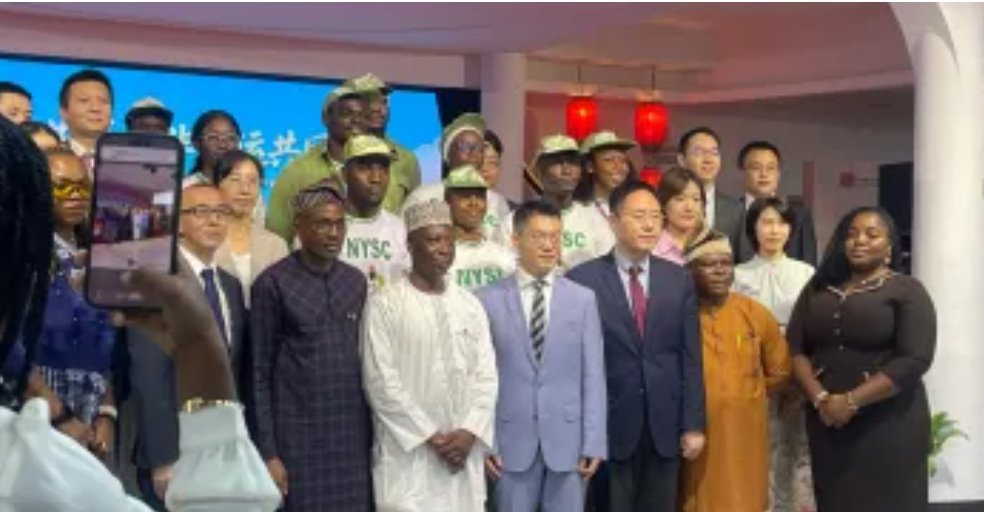
According to him, the programme was organised to commemorate 55 years of diplomatic relations between Nigeria and China while exploring ways to deepen youth-focused cooperation.
“The seminar is about celebrating 55 years of Nigeria-China relations with a special focus on expanding youth development and exchanges between young people of both countries,” he said.
Kwardem noted that Nigeria and China both have vibrant youth populations that are increasingly connected through technology and digital innovation.
He explained that Nigeria stands to benefit significantly from enhanced cooperation, particularly in technology transfer and innovation.
“Most of what we use here are technologies from China. With deeper cooperation, our young people should not only use these technologies but also gain the knowledge behind them,” he stated.
He added that innovation exchanges, technical training, and educational partnerships could help equip Nigerian youths with advanced technological skills capable of driving national development.
Kwardem said discussions are ongoing around expanding cooperation into areas such as education, science and technology, culture, and healthcare.
However, he clarified that engagements remain at an exploratory stage, with both countries currently gathering recommendations and ideas from participants before developing concrete programmes.
The seminar highlighted the growing importance both Nigeria and China place on youth engagement as a key pillar of bilateral relations.
Participants expressed optimism that stronger youth-to-youth connections would further deepen cooperation in trade, technology, education, culture, and innovation for future generations.
“Young people are the future of our nations and of China-Nigeria relations,” Ambassador Zhou said. “Our friendship will grow stronger because you respect each other, work together, and learn from one another.”