
By Gabriel Ameh
For years, China and the United States have built their relationship around a difficult mix of economic dependence, strategic rivalry and geopolitical suspicion.
Tariffs have been imposed. Technology restrictions have expanded. Military tensions have grown. Critical minerals and rare earths have become bargaining tools, while Taiwan remains one of the most sensitive issues between Washington and Beijing.
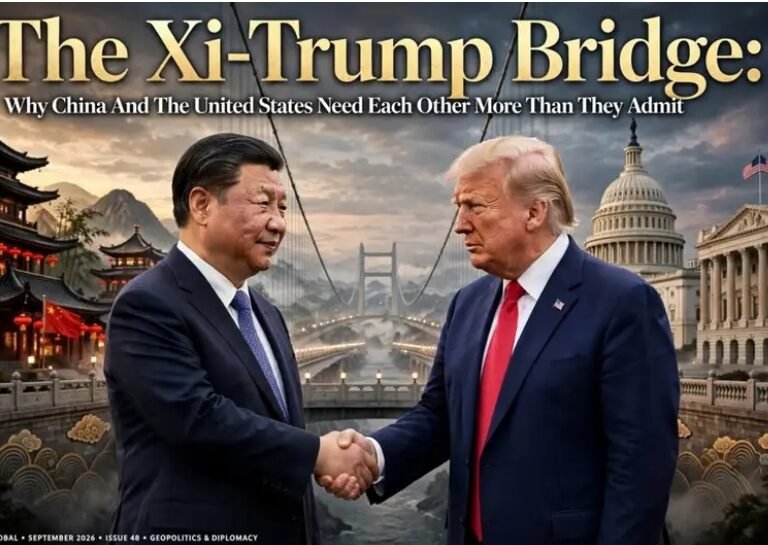
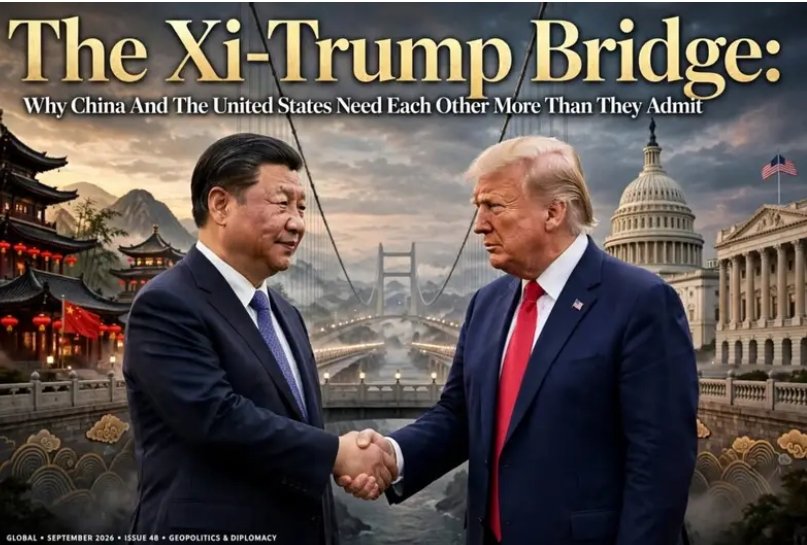
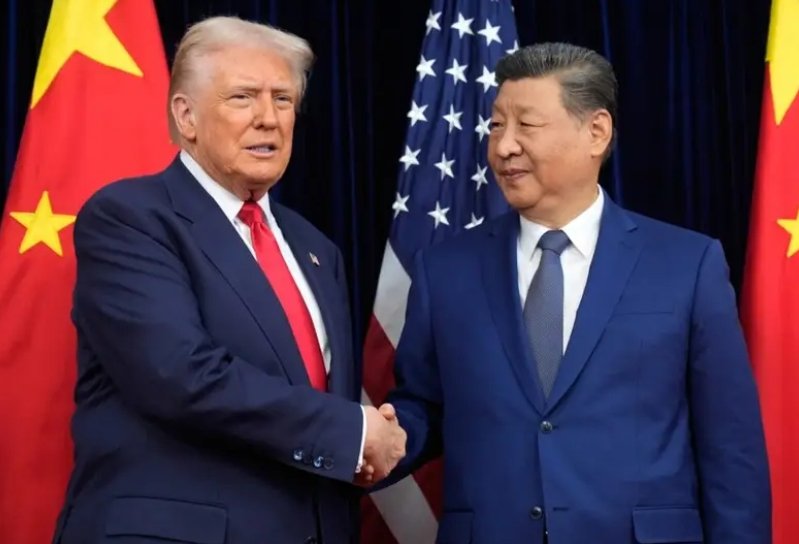
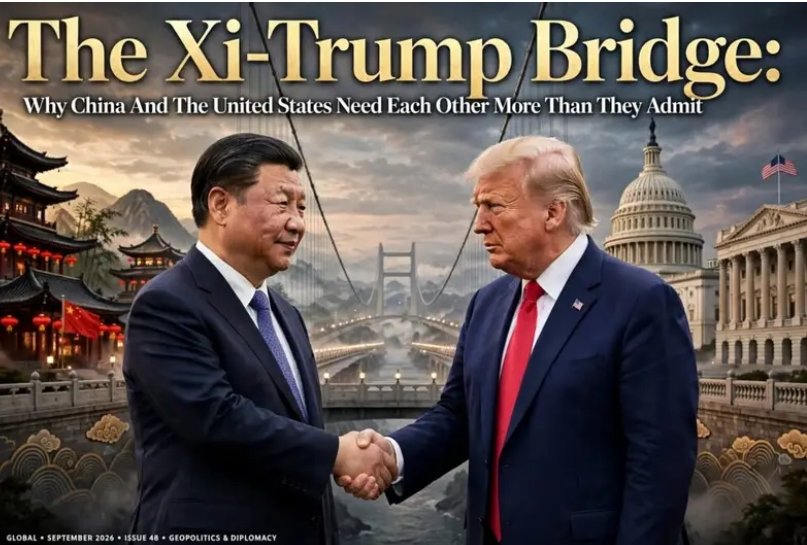
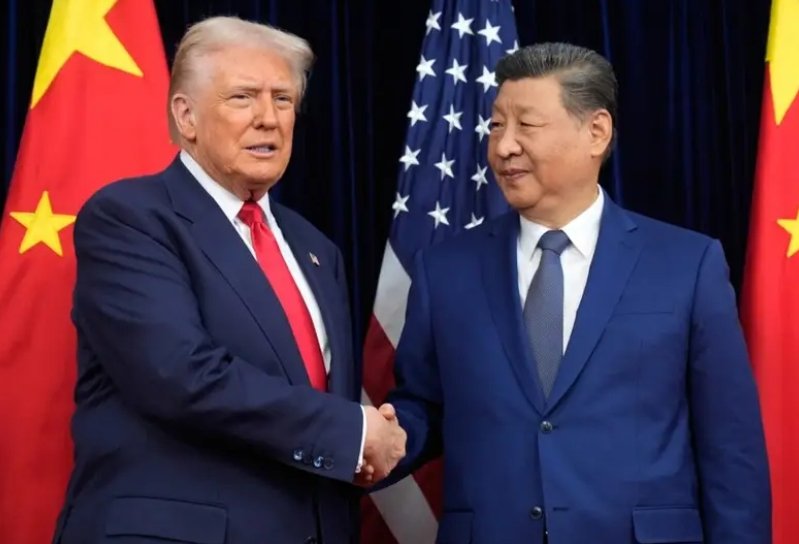
Yet the arrival of Chinese President Xi Jinping in Washington carries a different message: despite their differences, the world’s two largest economies still need to find a way to work with each other.
Xi is receiving the full treatment of a state visit, including a formal welcome, military honours and a state dinner. US President Donald Trump is also expected to personally receive the Chinese leader at Joint Base Andrews before the State Arrival Ceremony.
But beyond the ceremony lies a much bigger question.
Can China and the United States manage their rivalry without allowing it to damage the global economy, disrupt supply chains or trigger a wider security crisis?
A Relationship Too Important to Break
China and the United States occupy an unusual position in the global system.
Both are economic and technological powers, nuclear-armed states and permanent members of the United Nations Security Council. Decisions made in Washington and Beijing affect trade, investment, technology, energy, security and financial markets around the world.
That makes their relationship difficult to manage but impossible for other countries to ignore.
For years, the two countries have been caught between interdependence and competition.
American companies remain connected to Chinese manufacturing and the Chinese market, while China remains deeply integrated into global trade and continues to depend on access to international markets, investment and technology.
The tariff battles of recent years have shown the economic cost of confrontation.
Beginning in 2025, Washington and Beijing repeatedly introduced tariffs and countermeasures. China tightened measures affecting critical minerals and rare earths, while the United States expanded restrictions targeting Chinese technology and strategic industries.
Temporary agreements helped prevent further escalation, but the fundamental disagreements remained.
The May 2026 Trump-Xi summit in Beijing subsequently produced commitments aimed at stabilising economic relations, including proposals for US-China Boards of Trade and Investment and Chinese commitments involving agricultural products, Boeing aircraft and critical minerals.
However, implementation has not always moved as quickly as expected.
That makes the Washington meeting another test of whether a fragile truce can become a more predictable relationship.
Why Xi Needs Stability With Washington
For Beijing, greater stability with Washington would provide economic and strategic breathing space.
China continues to have major strengths in manufacturing, exports, electric vehicles, batteries, telecommunications and other strategic industries.
At the same time, its economy faces challenges, including weak domestic consumption, a prolonged property-sector downturn and growing trade barriers in important overseas markets.
A period of more predictable relations with the United States could give Beijing greater room to concentrate on domestic economic priorities while continuing its push for technological and industrial self-reliance.
Access to international markets also remains important.
Chinese companies have become major players in industries ranging from electric vehicles and batteries to solar technology and telecommunications.
Beijing therefore has an interest in managing competition with Washington rather than allowing it to become an uncontrolled economic confrontation.
What Trump Wants From China
Washington also has concrete interests.
The United States wants greater access to the Chinese market for American farmers, manufacturers and businesses. It also wants Beijing to fulfil commitments involving agricultural purchases, Boeing aircraft and critical minerals.
The May agreement included a Chinese commitment to purchase at least $17 billion annually in US agricultural products in 2026, 2027 and 2028, alongside other market-access measures.
It also included an initial commitment involving 200 Boeing aircraft and Chinese action concerning rare earths and other critical minerals.
The challenge for Trump is turning those commitments into measurable results without reopening a damaging tariff confrontation.
For Washington, the critical-minerals issue is particularly important.
Why Rare Earths Matter
Rare earth elements are essential to modern manufacturing, electronics, electric vehicles, renewable energy systems and defence technologies.
China occupies a dominant position in the global rare-earth supply chain, particularly in processing and refining.
That gives Beijing significant leverage.
The United States is seeking to reduce its dependence on Chinese supplies by developing alternative sources and domestic processing capacity.
But building a resilient alternative supply chain requires time and significant investment.
China, meanwhile, can use its position as leverage, but restrictions could also encourage the United States and its allies to accelerate efforts to develop alternative sources.
The result is a complicated form of mutual dependence.
Neither side can quickly eliminate the other from the global economic equation.
Technology and the AI Race
The same tension is visible in technology.
The United States maintains major advantages in advanced semiconductor technology and high-end computing, while China has built enormous manufacturing capacity and expanded rapidly in artificial intelligence, electric vehicles, batteries and telecommunications.
Artificial intelligence has therefore emerged as another major area of competition.
Both countries want technological leadership, but they also face risks that cannot easily be contained within national borders.
If AI becomes increasingly integrated into military systems, intelligence operations and critical infrastructure, communication between Washington and Beijing could become increasingly important.
The objective would not necessarily be to end technological competition.
Instead, both sides could seek mechanisms to prevent competition from producing dangerous misunderstandings or uncontrolled escalation.
That could become one of the most important areas of dialogue between the two powers.
Taiwan Remains the Biggest Security Test
Taiwan remains one of the most sensitive issues in China-US relations.
Beijing considers Taiwan part of China and opposes moves towards formal independence. Washington maintains longstanding security ties with Taiwan while maintaining diplomatic relations with Beijing under its own established framework.
The issue has become increasingly connected to US arms sales to Taiwan, Chinese military activity around the island and the broader balance of power in the Indo-Pacific.
A serious military confrontation over Taiwan could have consequences far beyond the region.
Shipping routes, semiconductor production, financial markets and international trade could all be affected.
The summit is unlikely to resolve the Taiwan dispute.
However, direct communication between the two governments could help reduce the risk of miscalculation during periods of heightened tension.
The Human Bridge Between China and America
Beyond tariffs, semiconductors and military strategy, another aspect of the relationship deserves attention: people-to-people exchanges.
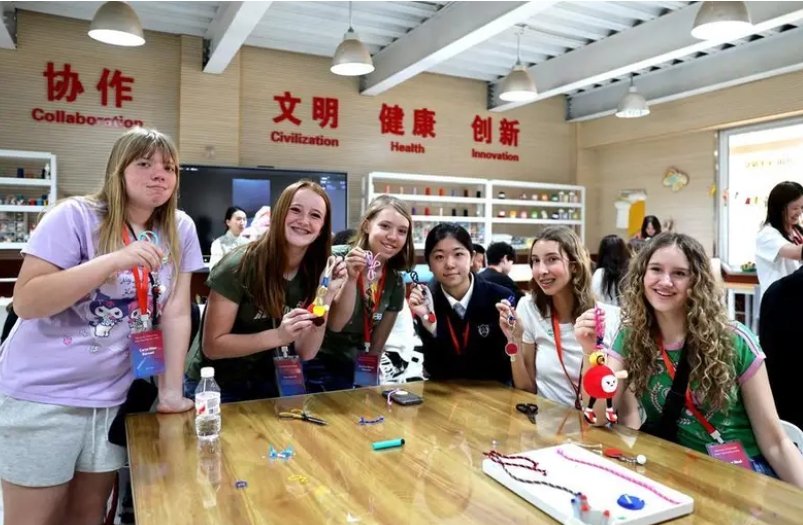
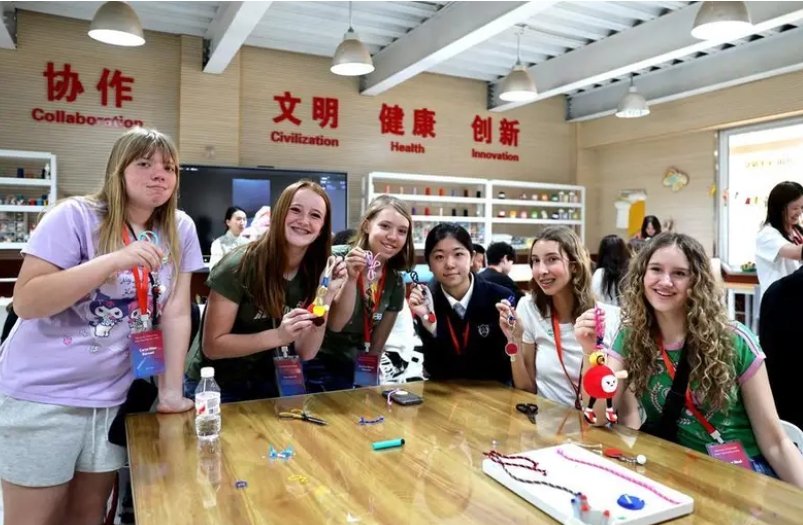
Chinese official reports highlight an initiative announced by Xi in 2023 to invite 50,000 young Americans to China over five years for exchanges and study.
According to Chinese official reports, that target was reached by May 2026, ahead of schedule.
Young Americans have travelled across China, interacted with Chinese students and participated in language, cultural, sporting and academic programmes.
Such exchanges matter because international relationships are not built only by presidents and diplomats.
They are also shaped by students, researchers, entrepreneurs, journalists, scientists, artists and ordinary families.
People who have experienced another country directly can develop a more complicated understanding of it than those whose knowledge comes entirely from political headlines.
Xi has repeatedly emphasised this people-to-people dimension, including relationships dating back to his 1985 visit to Iowa.
One example is the relationship between American teacher Ronald Sakolsky and Chinese environmentalist Yin Yuzhen.
According to the official account, Sakolsky donated $5,000 in 1999 to support Yin’s tree-planting work against desertification in Inner Mongolia. The project eventually contributed to the cultivation of a forest of more than 50,000 trees.
When the two reunited in August 2026, Sakolsky described what he hoped the Xi-Trump meeting could achieve with one word: “Bridge.”
That word captures a dimension of diplomacy that official communiqués often struggle to convey.
What China Could Gain
A more stable relationship with Washington could provide China with several benefits.
First, it could reduce uncertainty for exporters, manufacturers and investors.
Second, it could preserve access to important international markets.

Third, it could give Beijing greater strategic space to concentrate on domestic economic priorities and relations with other regions.
Finally, continued dialogue could help prevent competition with Washington from developing into a broader confrontation.
China does not need the United States to agree with its worldview for both sides to recognise the cost of uncontrolled conflict.
What America Could Gain
Washington also has practical interests at stake.
More predictable access to Chinese rare earths and critical minerals could reduce supply-chain uncertainty.
Greater Chinese purchases of American agricultural products could benefit US farmers, while aircraft orders and other industrial purchases could support American manufacturers.
A functioning bilateral investment mechanism could also provide additional channels for addressing commercial disputes.
AI dialogue could create communication between two of the world’s leading AI powers at a time when the technology is becoming increasingly important to national security and economic competition.
Perhaps most importantly, avoiding another major tariff escalation could provide greater certainty for American companies, consumers and global supply chains.
But the key issue remains implementation.
Previous agreements have demonstrated that announcements do not automatically translate into results.
Why the Rest of the World Is Watching
For other countries, the most important outcome of the Washington meeting may not be a historic China-US agreement.
It may simply be the avoidance of another escalation.
When Washington and Beijing impose tariffs, export controls or other restrictions, the effects rarely stop at their borders.
Companies change supply chains.
Commodity prices can move.
Shipping and manufacturing plans can be disrupted.
Investors face greater uncertainty.
Smaller economies can then find themselves adjusting to rules they did not create.
For Africa, the stakes are particularly significant.
China is a major trading partner, infrastructure financier and source of manufactured goods across the continent. The United States remains an important investor, technology partner, market and development partner.
A more stable China-US relationship could give African economies greater room to deepen economic ties with both powers without being forced into a rigid geopolitical choice.
The relationship could also affect the availability and cost of technologies such as solar panels, batteries, electric vehicles and energy-storage systems, all of which are increasingly important to the global energy transition.
The World Does Not Need a Perfect Friendship
Expectations surrounding the Xi-Trump meeting should therefore remain realistic.
China and the United States are unlikely to resolve their fundamental strategic differences in a single summit.
Their competition will continue.
Disagreements over Taiwan, technology, trade and national security will remain.
But diplomacy does not require friendship.
Sometimes, it requires something more basic: the ability to communicate before acting.
A limited and pragmatic outcome could include an extension of the trade truce, progress on agricultural and energy purchases, movement on AI dialogue and efforts to stabilise the wider relationship.
Such outcomes may appear modest.
But between two nuclear-armed powers with enormous economic influence, even modest stability can have significant global consequences.
Beyond the 21-Gun Salute
The military honours, state ceremony and diplomatic pageantry will dominate the television pictures.
But the real test of Xi’s Washington visit will come later.
It will be seen in whether American farmers receive the market access they were promised.
It will be seen in whether rare-earth supplies become more predictable.
It will be seen in whether businesses can invest with greater certainty.
It will be seen in whether Washington and Beijing establish meaningful guardrails around artificial intelligence.
It will be seen in whether disagreements over Taiwan can be managed without dangerous escalation.
And it will be seen in whether Chinese and American citizens continue to meet, study, work and build relationships across the Pacific.
For Xi, the visit offers an opportunity to reinforce China’s preference for engagement and development while managing competition with Washington.
For Trump, it offers an opportunity to pursue tangible economic commitments while managing a relationship that affects American workers, businesses and national security.
For the rest of the world, the stakes are even broader.
The world does not require China and the United States to become friends.
It needs them to remain capable of talking.
Because when the world’s two largest powers build bridges, even imperfect ones, other countries have more room to breathe.
And when those bridges collapse, the consequences rarely stop at the Pacific.
The Xi-Trump meeting is therefore about more than two leaders.
It is about whether China and the United States can find a workable way to compete, cooperate and coexist without making the rest of the world pay the price for their rivalry.