

By Gabriel Ameh
Abuja | Media Report
Nigeria has reaffirmed its commitment to building a resilient health system and strengthening international partnerships, particularly with China, as part of efforts to prevent future pandemics.
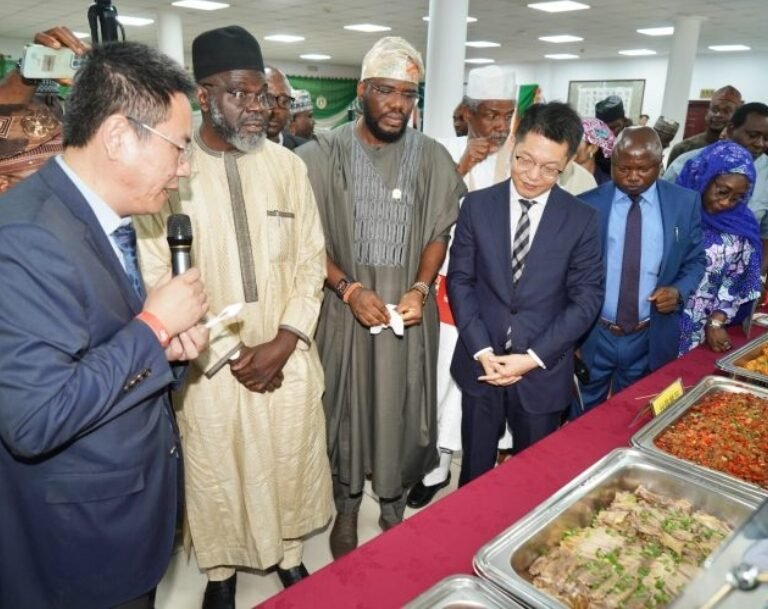
This position was reiterated on Monday in Abuja at the end of a high-level public health symposium on pandemic preparedness. Key stakeholders at the event included the Coordinating Minister of Health and Social Welfare, Prof. Ali Pate, Minister of State for Health, Dr. Adekunle Salako, and former Director-General of the China Centre for Disease Control and Prevention, Prof. George Gao.
Speaking at the symposium, Pate stressed that strengthening public health systems remains central to preventing outbreaks, epidemics, and potential pandemics. He noted that Nigeria continues to draw critical lessons from past health crises, including Ebola and COVID-19.
“At the core of resilience is a strong public health system capable of preventing outbreaks and responding effectively when they occur,” he said.
Pate highlighted the importance of Nigeria’s growing engagement with China, describing it as a pathway for knowledge exchange, research collaboration, and workforce development.
He emphasized that building capacity in areas such as microbiology, genomics, and laboratory systems would be a major focus of the partnership.
The Minister also pointed to ongoing collaboration in tackling priority infectious diseases such as Lassa fever and mpox, noting that Nigeria aims to contribute to global scientific knowledge while benefiting from international expertise.
He disclosed plans to deepen institutional cooperation, including visits to key infectious disease facilities such as the Irrua Specialist Teaching Hospital in Edo State, which serves as a centre of excellence.
Pate further acknowledged the contributions of Nigerian scientists, including Christian Happi, whose work in genome sequencing and antibody development for Lassa fever is gaining global recognition.
According to him, sustained dialogue between countries is essential for effective technology transfer and long-term collaboration.
“Technology transfer is not a transaction; it is built on relationships and mutual respect among nations,” he said.
He stressed that global health security depends on collective action, warning that no country can operate in isolation.
“We are only as strong as the weakest link. If one country is vulnerable, it becomes a risk for all,” Pate added.
Also speaking, Prof. Gao emphasized the critical role of data sharing in managing global health threats, warning that failure to share information could worsen outbreaks.
“If we don’t share the data, the virus will share the data,” he said, referencing the rapid spread of COVID-19 variants.
He also highlighted the importance of basic public health infrastructure, particularly water supply and sanitation, urging Nigeria to prioritize improvements in these areas.
On his part, Minister of State for Health, Salako, underscored the importance of diagnostics in disease control, noting that effective testing systems are vital for timely response.
“Without accurate diagnosis, it is impossible to effectively manage any health challenge,” he said.
Salako expressed confidence that Nigeria’s collaboration with China would significantly strengthen diagnostic capacity and improve health security across West Africa.
The symposium aligns with Nigeria’s broader health sector reforms and signals the country’s readiness to partner with nations across Africa, Asia, Europe, and North America to build a science-driven, resilient healthcare system.