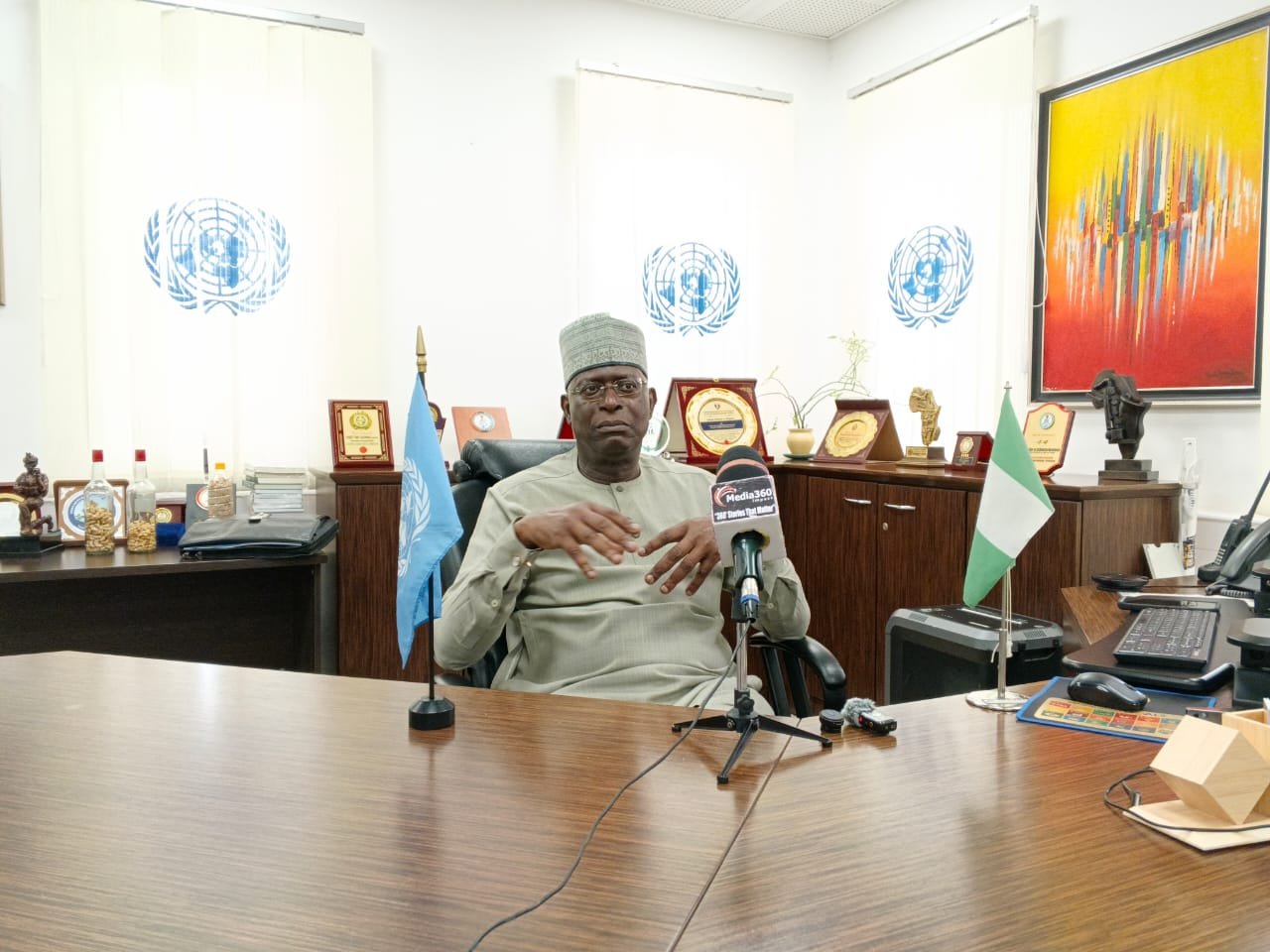
Abuja | Media360Impact Report
Nigeria has the potential to become a major food basket for West and Central Africa, but conflict, climate change, poor irrigation systems and post-harvest losses are undermining the country’s agricultural potential, the United Nations Resident and Humanitarian Coordinator in Nigeria, Mohamed Malick Fall, has said.
Fall made the observation during an exclusive interview in Abuja while discussing Nigeria’s humanitarian situation, food insecurity, malnutrition and the future of the country’s agricultural sector.
He said Nigeria, particularly the Middle Belt, possesses significant agricultural potential capable of supplying food beyond its domestic market.
However, he noted that the country’s ability to fully exploit that potential is being affected by multiple challenges, including climate-related shocks and insecurity.
“Not only because the farm or the land are fertile will take you there,” Fall said, stressing that agricultural productivity also depends on peace, social cohesion and adequate support systems.
Climate shocks putting pressure on agriculture
According to Fall, farmers are increasingly exposed to climate-related shocks, including drought, heat waves and flooding, which can destroy crops and agricultural land.
He said such disruptions directly affect food production and contribute to worsening food insecurity and malnutrition.
Conflict is another major challenge, particularly in areas affected by farmer-herder clashes and other forms of insecurity.
Fall said insecurity can dispossess people of their farmland and livestock, limiting their ability to produce food and earn livelihoods.
He estimated that about 3.5 million people in Nigeria are displaced due to conflict or climate-related shocks, adding that displacement also affects agricultural productivity and food systems.
Post-harvest losses
Beyond production, Fall said Nigeria also needs to address weaknesses in its agricultural value chain.
He noted that a significant proportion of agricultural produce is reportedly lost after harvest because of inadequate value-chain infrastructure and other limitations.
He said investments in storage, processing, irrigation, energy and market access could significantly improve Nigeria’s food system.
Fall also highlighted the potential of solar energy to power water supply and irrigation systems, while digital platforms could be used to identify farmers and improve the distribution of agricultural inputs such as loans and seeds.
According to him, digital systems could also reduce leakages and ensure that support reaches the intended beneficiaries.
Agriculture could create jobs
The UN coordinator said transforming Nigeria’s agricultural sector into a greener and smarter system could also provide significant employment opportunities for young people.
He cited studies indicating that greening the agricultural sector could generate millions of jobs for young Nigerians, provided the necessary investments are made across the value chain.
He said farmers need assurances that their produce will have access to markets and generate adequate revenue.
Malnutrition remains a major concern
Fall also linked Nigeria’s food security challenges to the country’s significant burden of malnutrition.
He explained that malnutrition takes different forms, including chronic and acute malnutrition.
While acute malnutrition can become life-threatening, chronic malnutrition can have long-term consequences for children’s physical and cognitive development, including their ability to learn and become productive adults.
Fall said humanitarian organisations, including the UN and its partners, have established nutrition treatment centres where children with severe malnutrition can receive medical and nutritional care.
He explained that some children are also treated through outpatient programmes where mothers receive therapeutic food, medical guidance and essential micronutrients for their children.
Beyond filling the stomach
The UN official stressed that food security is not simply about having enough food to fill the stomach.
He said the nutritional quality of food is equally important, noting that cultural feeding practices can sometimes lead families to consume foods that provide calories without sufficient micronutrients and vitamins.
Fall said educating mothers and caregivers on appropriate feeding practices is therefore an important component of tackling malnutrition.
He expressed optimism that with greater investment in agriculture, improved value chains, climate-smart farming, better irrigation, stronger market systems and peace, Nigeria could unlock its agricultural potential and contribute significantly to food security across the region.