
By Alkasim Abdulkadir
Nigerian football administration is once again approaching a crucial leadership moment, with the Nigeria Football Federation (NFF) preparing for another elective cycle.
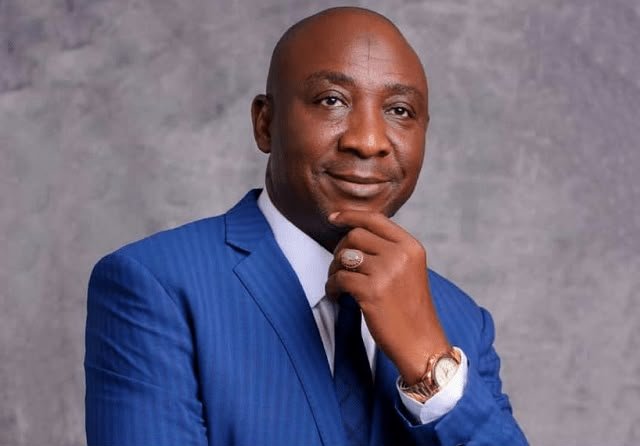
As the debate over the federation’s next leadership unfolds, the case for Ibrahim Gusau’s re-election deserves consideration beyond the emotions that often accompany the results of individual matches.
The argument is straightforward: Nigerian football has recorded measurable progress during Gusau’s tenure, and some of the initiatives already underway may require continuity and stability to reach their full potential.
One of the strongest points in favour of continuity is the performance of Nigeria’s national teams.
The Super Falcons won the 2025 Women’s Africa Cup of Nations, securing Nigeria’s record 10th continental title. The Super Eagles also finished with silver at the 2023 Africa Cup of Nations and bronze at the 2025 edition.
At the 2023 FIFA Women’s World Cup, the Super Falcons went unbeaten in regulation time, including a goalless draw against eventual champions England before eventually losing their round-of-16 encounter on penalties.
Nigeria’s youth teams have also provided reasons for optimism. The Flamingos won bronze at the 2022 FIFA U-17 Women’s World Cup in India, while the Flying Eagles reached the quarter-finals of the 2023 FIFA U-20 World Cup.
Of course, these achievements cannot be attributed to one individual. Football is a collective enterprise involving players, coaches, clubs, technical officials and administrators.
However, leadership remains important because it helps shape the environment in which these stakeholders operate.
Beyond tournament results, there have also been efforts to improve the national teams’ international exposure. The teams have used FIFA international windows for friendly matches, while the Super Eagles won the Afro-Caribbean Unity Cup in 2025 and 2026.
Regular international competition gives coaches opportunities to assess players, test tactical systems and prepare more effectively for major tournaments.
Refereeing is another area where continuity could prove valuable.
The NFF has continued capacity-building initiatives for referees, including efforts to develop younger officiating talent. The use of modern communication equipment and expanded opportunities for Video Assistant Referee (VAR) training also points to an attempt to modernise Nigerian officiating.
Infrastructure development is equally important.
Through FIFA Forward 3.0 funding, the NFF has committed resources to projects including a 68-room players’ hostel, two new training pitches and the renovation of an existing pitch.
Such projects may not attract the same attention as trophies, but they are essential to building the long-term foundations of Nigerian football.
The domestic game also deserves attention.
The Nigeria Premier Football League (NPFL) has made progress in areas such as adherence to its competition schedule, while the Nigeria National League (NNL) has continued efforts to improve its organisation and commercial appeal.
The importance of these developments cannot be overstated. The future of Nigerian football cannot depend exclusively on the performances of the national teams.
Domestic leagues are where players develop, coaches gain experience, referees build their careers and commercial opportunities emerge.
There is also an institutional argument for continuity.
In March 2026, the NFF Congress passed a unanimous vote of confidence in the Gusau-led Executive Committee and approved September 26, 2026, for the federation’s elective congress.
The decision does not determine the outcome of the election, but it provides evidence that members of the federation recognise continuity as a legitimate option.
That does not mean Nigerian football is without problems.
Significant challenges remain, including infrastructure deficits, club administration, financing, player welfare, grassroots development and the need to build a stronger and more sustainable football economy.
The question, therefore, should not simply be whether Gusau’s administration has delivered perfection. It has not.
Rather, the question is whether the progress recorded so far provides a reasonable basis for allowing the current leadership to continue and complete programmes already underway.
If an institution is moving in the right direction, changing leadership is not always the only answer. In some circumstances, stability and institutional memory can provide the foundation needed to consolidate reforms and address remaining weaknesses.
That is the central argument for Gusau.
His tenure has coincided with notable results across the national teams, domestic competitions, refereeing and infrastructure. More importantly, some of the initiatives currently in motion will require time and consistent leadership before their full impact can be measured.
Re-election, therefore, need not be viewed simply as a reward for an individual. It can also be interpreted as a vote for continuity, institutional memory and the completion of reforms already in progress.
Nigerian football has spent years battling inconsistency and abrupt changes in direction. Perhaps the current moment calls for a different approach: consolidating what is working while confronting what is not.
The case for Gusau is ultimately a case for continuity.
The trophies provide part of the evidence. The reforms, infrastructure and institutional developments provide another.
The next mandate, if granted, should therefore be judged not merely by what has already been achieved, but by the ability to turn those gains into lasting improvements for Nigerian football.
Alkasim Abdulkadir is an international and public affairs analyst. He writes from Abuja.