By Gabriel Ameh
As global power dynamics shift and Africa’s voice grows louder on the world stage, the relationship between China and Africa continues to attract wide interest. Yet, beyond the highways, trade deals, and summit declarations lies a quieter but equally powerful force media diplomacy.
In a century defined by information, storytelling has become a bridge between cultures, economies, and ideologies. For China and Africa, the media now stands as a frontier for shaping mutual understanding, correcting stereotypes, and redefining cooperation beyond economics. It is within this emerging landscape that media diplomacy the use of communication and journalism as a tool for international understanding, has become crucial to shaping the future of China–Africa relations.
Media Diplomacy: The New Frontier of Partnership
For decades, China–Africa relations were largely viewed through the prism of trade, aid, and infrastructure. But as both sides deepen engagement, it has become evident that true partnership requires more than economic exchange it demands cultural and informational balance.
Media diplomacy, therefore, represents the soft power dimension of this partnership. It seeks to promote dialogue, transparency, and people-to-people connections through news, documentaries, features, and storytelling.
Although the concept is not new globally, media diplomacy between China and Africa remains relatively young. Before the 1990s, interactions were largely limited to official government communications. However, the advent of China’s “Going Out” strategy in the late 1990s, designed to globalize its media, businesses, and culture, ushered in a new era.
Since then, Chinese media giants such as CCTV, Xinhua News Agency, and China Radio International have set up bureaus across the continent, while African media networks have developed reciprocal partnerships with Chinese outlets. These collaborations aim to tell more balanced stories about both regions, highlighting shared development experiences and human stories.
Opportunities and Challenges in the Media Space
While the growth of China–Africa media partnerships marks progress, challenges persist.
Many African journalists remain wary of Chinese state-run media, fearing propaganda or a lack of editorial independence. Conversely, some Chinese journalists see African outlets as under-resourced or lacking consistent professionalism.
The imbalance in media capacity from funding and technology to storytelling techniques continues to tilt representation in favor of the more resourced Chinese networks. As a result, the African perspective often remains underreported or misrepresented.
Bridging this divide will require deliberate efforts on both sides to foster mutual trust, training, and editorial collaboration.
The Case for Deliberate Investment in Media Diplomacy
Media diplomacy should not be treated as a peripheral element of China–Africa relations it deserves strategic attention and investment.
Governments, institutions, and media organizations must commit to building capacity, funding exchange programs, and facilitating joint media productions that amplify authentic African and Chinese voices.
A good example is the China–Africa Media Forum, launched in 2012, which has since become a hub for sharing ideas and best practices. Another is the Africa–China Reporting Project, established in 2013 at Wits University in South Africa, which provides grants to African journalists to produce balanced, investigative stories on China–Africa issues.
These initiatives show that when dialogue replaces distance, understanding flourishes.
Strategies for Strengthening Media Diplomacy
To achieve sustainable growth in this space, several key strategies must be prioritized:
1. Deep Collaboration: Chinese and African media must co-produce news, documentaries, and digital stories that reflect real human connections, shared development challenges, and cultural beauty on both sides.
2. Capacity Building: Journalists and editors need training in multimedia storytelling, fact-checking, and cross-cultural reporting. This requires investment in both skills and technology.
3. Government and Institutional Support: Governments, academia, and think tanks must support media diplomacy through grants, scholarships, and cultural exchange programs.
4. People-to-People Connections: Beyond headlines and policy, authentic relationships between journalists, content creators, and citizens should drive mutual respect and empathy.
Conclusion: Rewriting the Narrative Together
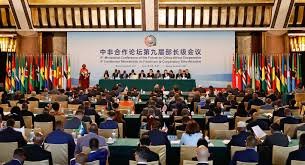
The media has always been a mirror of society but in the China–Africa relationship, it is also a bridge. By embracing media diplomacy, both regions can foster a more balanced narrative one that reflects shared aspirations, respect, and understanding rather than suspicion or bias.
If diplomacy is about building trust between governments, media diplomacy is about building trust between people.
The future of China–Africa relations depends not only on what leaders negotiate in boardrooms but also on how journalists, filmmakers, and storytellers choose to tell their shared story.
🖊 Credit: Editorial by Raphael Omi
📰 Published by Rapheal Oni The Diplomatic Correspondent