
Abuja | Media360Impact Report
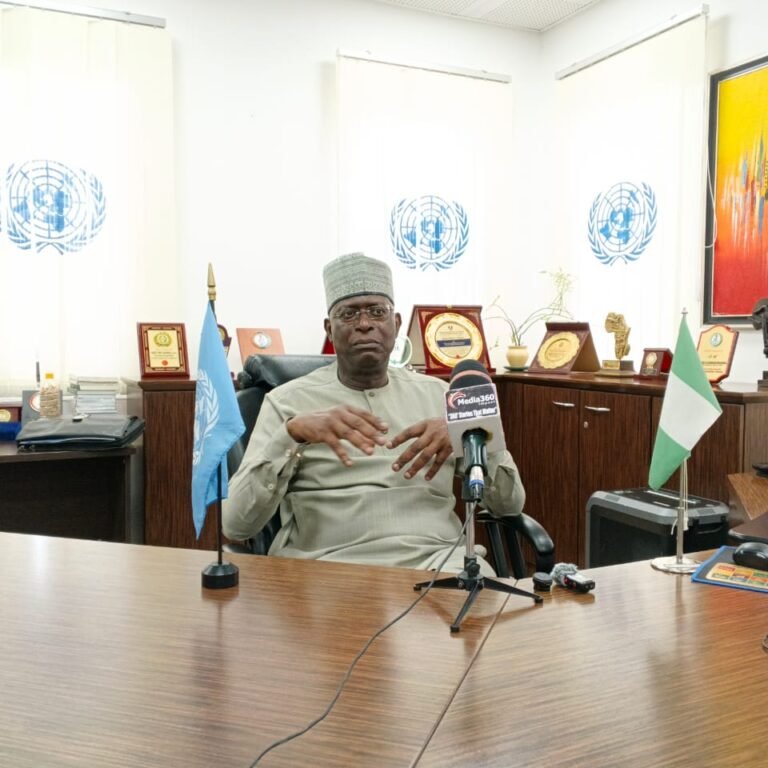
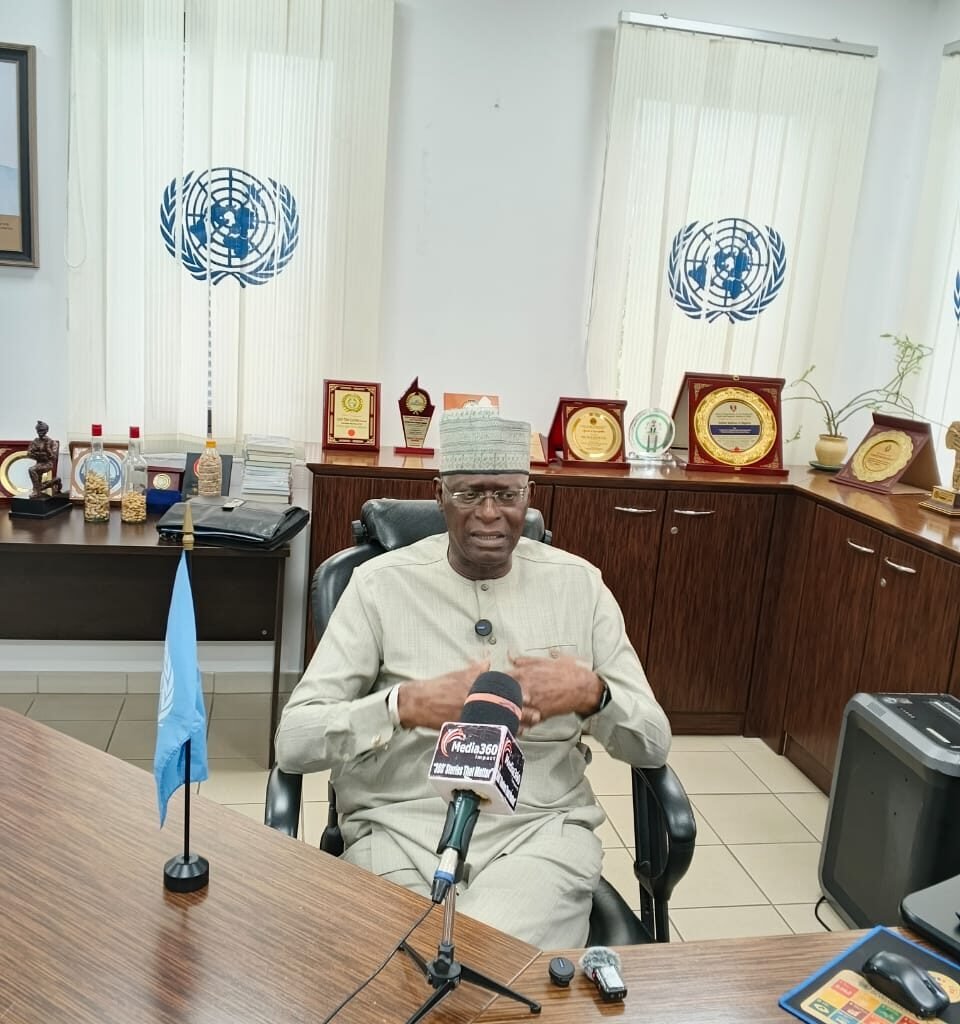
The United Nations Resident and Humanitarian Coordinator in Nigeria, Mohamed Malick Fall, has disclosed that humanitarian funding for Nigeria has dropped sharply from about $900 million to $1 billion in previous years to approximately $250 million.
Fall described the decline as a major funding gap that threatens the capacity of humanitarian actors to respond adequately to the country’s growing humanitarian and development needs.
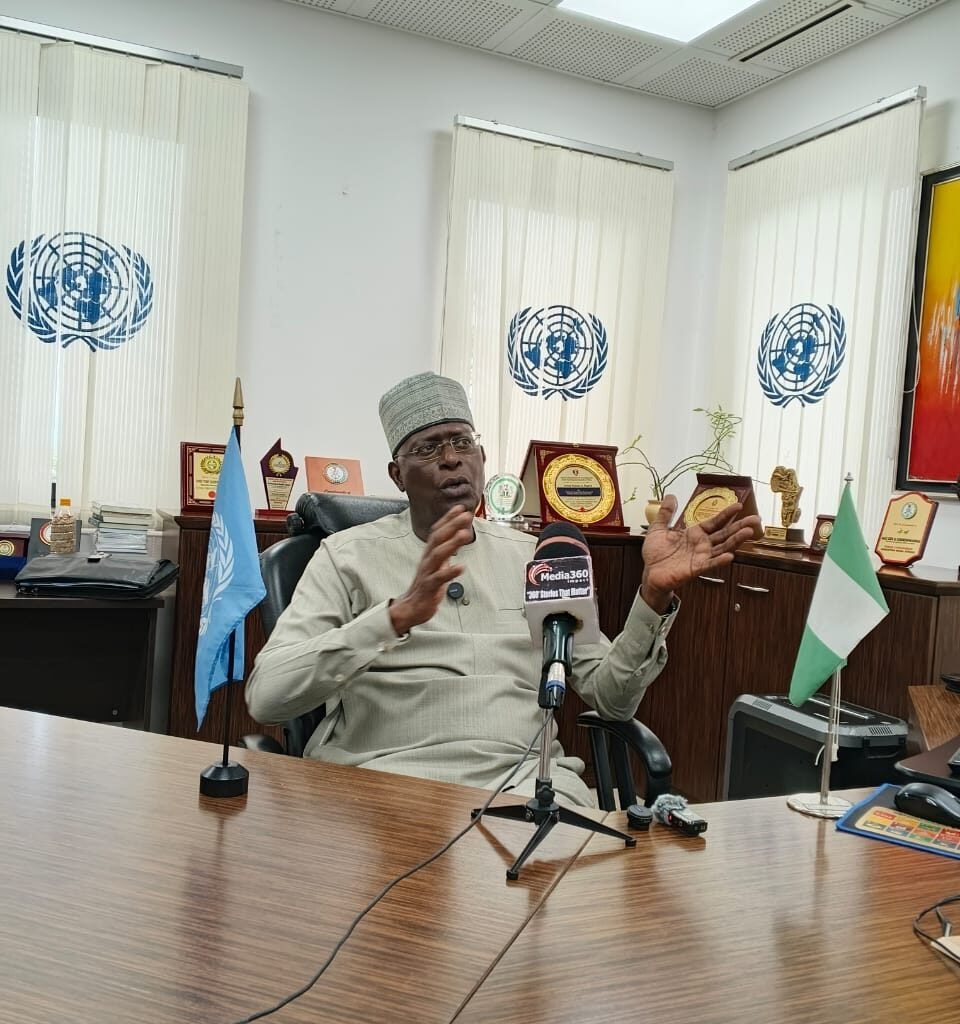
The UN coordinator made the disclosure during an exclusive interview in Abuja, while reflecting on his experience working in Nigeria and the changing landscape of international humanitarian assistance.
According to him, donor countries that previously provided significant development and humanitarian assistance are increasingly turning their attention inward as they prioritise their domestic needs.
“Instead of looking outward, people look inward,” Fall said, explaining that the reduction in development assistance has created a new reality for countries dependent on international support.
He said the situation should serve as a “wake-up call” for the Nigerian government and other host governments to take greater responsibility for financing their own humanitarian and development priorities.
Fall called for alternative financing mechanisms, including stronger domestic resource mobilisation involving government, the private sector and innovation-driven sectors.
He stressed that the challenge was not only about securing more funding but also about improving efficiency in the way available resources are deployed.
According to him, the UN is also examining how digital technology and artificial intelligence can be used to improve efficiency, reduce costs and strengthen the delivery of humanitarian and development interventions.
Fall said the UN’s “UN at 80” reform agenda provides an opportunity to examine how emerging technologies can help the organisation deliver better results with fewer resources.
Nigeria facing multiple humanitarian pressures
Fall noted that Nigeria continues to face significant humanitarian pressures arising from conflict, displacement, food insecurity, malnutrition and climate-related shocks.
He said the country currently has about 3.5 million internally displaced people as a result of conflict and climate-related shocks.
He warned that the combination of shrinking international funding and increasing humanitarian needs makes it necessary for Nigeria to strengthen domestic financing mechanisms.
“More and more African governments, Nigerian government, host countries of UN have to do more effort to improve and contribute more to their development and humanitarian assistance,” he said.
Fall also pointed to recent humanitarian interventions in the country, saying the UN and its partners had targeted about 1.4 million people with humanitarian assistance supported through a special funding arrangement, while approximately one million people had been reached within six months with interventions covering food and malnutrition treatment.
He also cited progress in containing cholera in Borno State, where he said the number of cases had declined compared with the situation several months earlier.
A changing humanitarian landscape
The UN official said the reduction in humanitarian funding represents part of a broader transformation in the international aid system.
He argued that Nigeria and other African countries must increasingly explore ways of mobilising domestic resources to reduce dependence on external assistance.
Fall also urged humanitarian organisations to improve efficiency, embrace innovation and make better use of digital tools to ensure that limited resources reach the people who need them most.
For Nigeria, he said, the funding crisis should ultimately become an opportunity to strengthen national ownership of humanitarian and development programmes.
The UN coordinator maintained that the changing global funding environment requires governments, development partners, the private sector and innovation communities to rethink how humanitarian and development needs are financed.
He said the goal should not simply be to replace lost international funding but to build a more sustainable system in which countries have greater capacity to finance and respond to the needs of their populations.