
By Achile Momoh
Abuja | Media360Impact Report
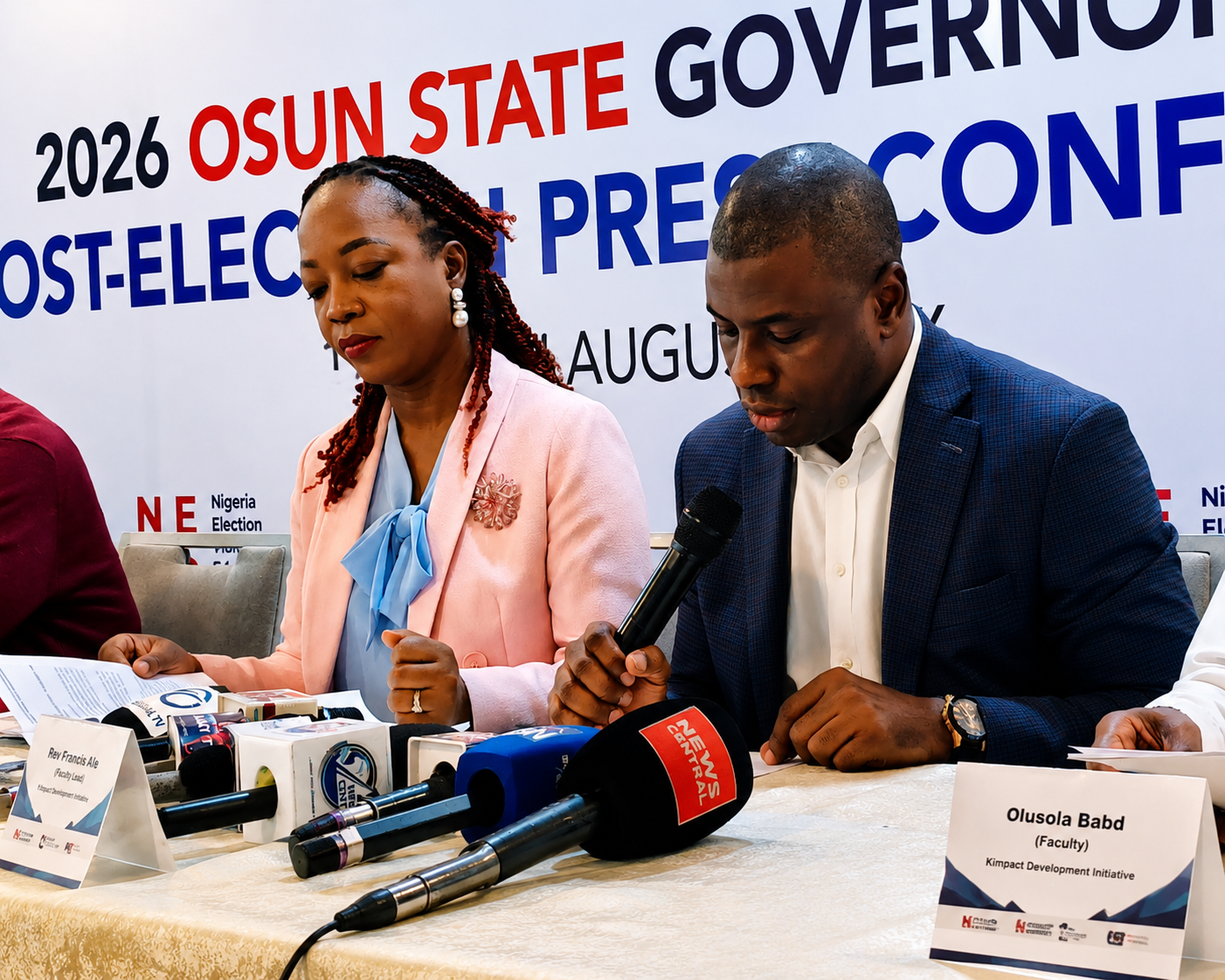
The 2026 Osun State Governorship Election may have avoided widespread election-day violence, but new findings by Kimpact Development Initiative (KDI) show that political tensions, vote trading and security concerns remained significant threats to electoral integrity.
In its final post-election statement released on Wednesday, KDI said it verified 17 election-related violence incidents across 10 Local Government Areas, with more than 44 documented victims.
The incidents included gunshots, physical assaults, intimidation and harassment.
According to KDI, voting was disrupted at one polling unit in Iroyin Ayo Open Space, Ward Elejigbo D/Ejemu in Ejigbo Local Government Area, resulting in the cancellation of the election in the affected location.

Ejigbo and Osogbo recorded the highest proportions of verified violence incidents, each accounting for 17.6 per cent.
KDI, however, noted that the violence was not widespread across the state and that the election-day situation represented an improvement when compared with the pre-election environment.
Between October 2025 and August 2026, the organisation said it had recorded 81 election-related violence incidents and 15 fatalities across Osun State.
Despite the relatively calmer election day, KDI reported multiple cases of post-election violence and property destruction in communities including Ilesa, Iperindo, Atakumosa East, Modakeke and Ikire.
The organisation also raised concerns about the persistence and changing methods of voter inducement.
KDI said it received reports of vote trading across all 30 LGAs, with party supporters accounting for 46.8 per cent of reported actors, followed by party agents at 29.8 per cent.
Voters accounted for 10.6 per cent, while community leaders represented 9.6 per cent of reported actors.
The reported inducements included food, drinks and cash payments, with some reports alleging payments ranging from ₦5,000 to as much as ₦50,000.

KDI said vote buying was becoming more discreet, with alleged transactions taking place away from polling units, including in vehicles and small businesses such as food vendors and provision shops.
The organisation warned that monitoring focused only on the immediate surroundings of polling units could therefore miss parts of the wider vote-buying network.
Security conduct also came under scrutiny.
Although KDI commended security agencies for their deployment and generally professional conduct, seven per cent of processed reports received through its Election Day Data Room indicated alleged interference by security personnel.
The reports came from several LGAs, including Odo-Otin, Ifedayo, Ede South, Ifelodun, Atakumosa West, Oriade, Ife North, Obokun and Ilesa West.

KDI stressed that the reports represented a minority of observations and should not be generalised to the conduct of all security personnel across Osun.
The organisation also called on the Nigeria Police Force to ensure the prompt prosecution of the 295 persons arrested for various election-related offences, while urging authorities to provide appropriate information on the progress of cases.
It said visible and timely prosecution of electoral offences was necessary to strengthen accountability, deter violence and address Nigeria’s longstanding problem of electoral impunity.
KDI further urged political parties and candidates to promote issue-based campaigns, train their polling agents properly and pursue lawful mechanisms for resolving electoral disputes.
As Nigeria moves toward the 2027 General Elections, the organisation said lessons from Osun should be used to strengthen conflict prevention, election security, voter education and accountability mechanisms.