By Gabriel Ameh
ABUJA — The Philippine Ambassador to Nigeria, Mersole Mellejor, has called for stronger institutional mechanisms and legislative frameworks to promote gender equality and ensure greater inclusion in governance.
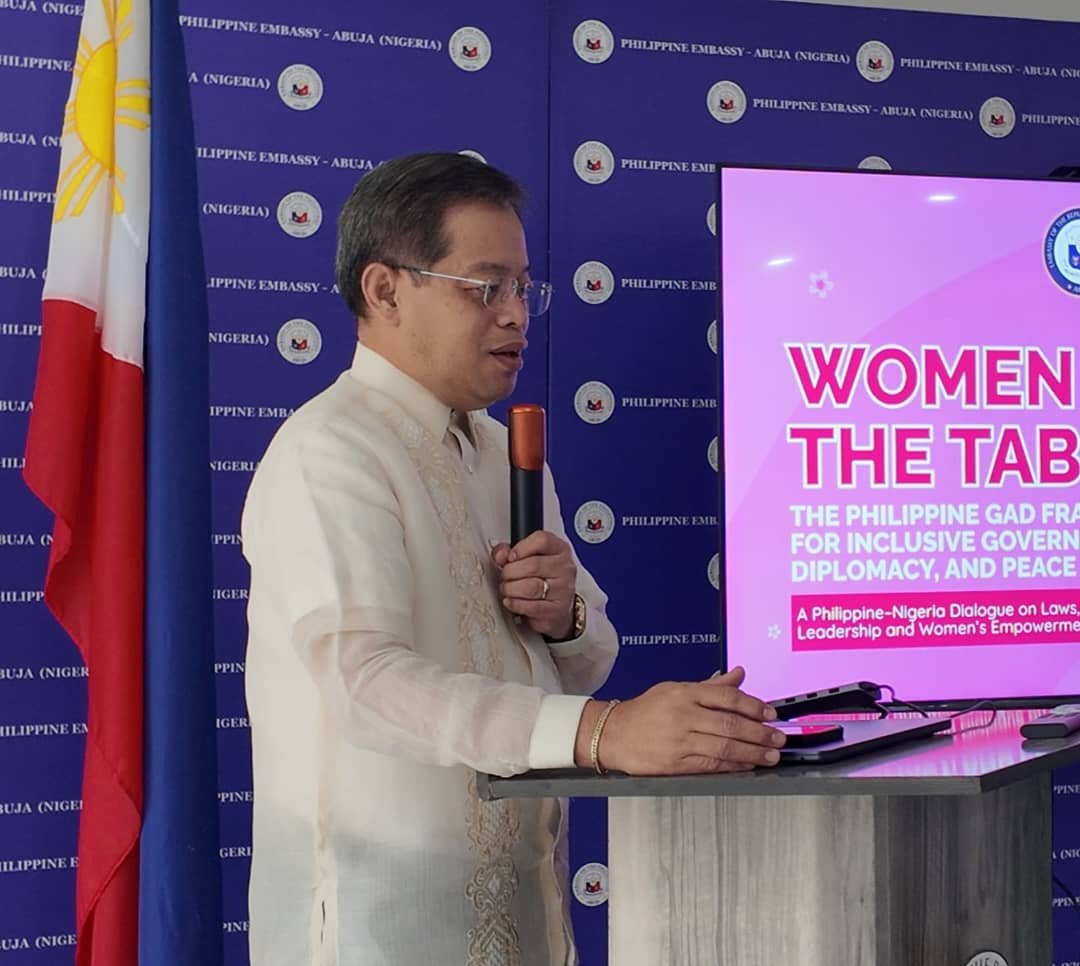
Mellejor made the call during a dialogue session organised under the Female Legislative Mentorship Initiative on Parliamentary Affairs and Diplomacy at the Philippine Embassy in Abuja.
The session featured a presentation titled “Women at the Table: The Philippine Gender and Development (GAD) Framework for Inclusive Governance, Diplomacy, and Peace.”
The engagement brought together officials from the Directorate of Parliamentary Affairs, the Ministry of Foreign Affairs, diplomatic representatives and other stakeholders to exchange perspectives on gender-responsive legislation, women’s leadership and peacebuilding.
Speaking during the session, Ambassador Mellejor described gender mainstreaming as an ongoing process that requires sustained political commitment, institutional accountability and effective legislation.
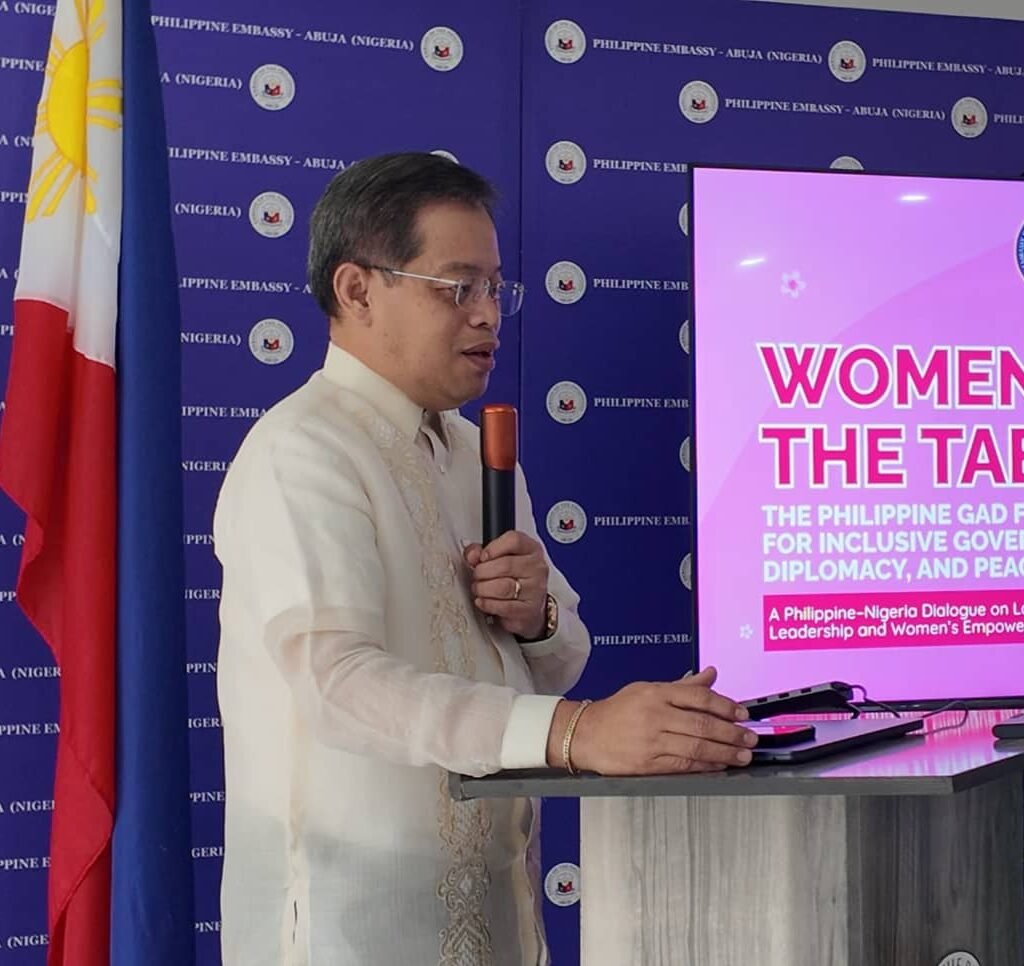
He explained that the Philippines has established mechanisms that attach direct budgetary implications to gender mainstreaming across government agencies.
According to him, agencies that fail to implement gender-related programmes can face consequences in their budgetary allocations, making funding an important tool for promoting compliance.
The ambassador also highlighted the Philippines’ Safe Spaces Act, which provides legal protection against gender-based harassment and abuse in public spaces and workplaces. He noted that the framework allows third parties to initiate legal action on behalf of victims in certain circumstances.
Reflecting on Nigeria’s efforts to promote gender inclusion, Mellejor commended the country’s progress despite its diverse socio-cultural environment.
He encouraged Nigerian policymakers to view the country’s diversity and large youthful population as opportunities for strengthening national unity and development.
“As an outsider, I am very encouraged by where Nigeria is in terms of gender mainstreaming. You are on the right path,” Mellejor said, while pointing to Nigeria’s population diversity as a potential strength rather than a weakness.
He further identified Nigeria’s young and technology-oriented population as a major economic asset, particularly in the creative and digital sectors.
Mellejor said the shared democratic values and development interests of Nigeria and the Philippines could provide opportunities for deeper cooperation in areas including gender equality, governance, diplomacy and youth development.
Members of the Philippine diplomatic team, including Vice-Consul Norman and Vice-Consul Yate, also shared perspectives on the embassy’s domestic and external Gender and Development programmes.
The mentorship dialogue provided Nigerian legislative mentees with an opportunity to learn from the Philippine experience in gender-responsive governance while exploring strategies for increasing women’s participation in leadership and peacebuilding.
Mellejor expressed optimism that the Philippine Embassy could develop stronger institutional partnerships with the Nigerian National Assembly and civil society organisations to deepen legislative and diplomatic engagement on gender equality.
The engagement underscored the growing importance of gender-responsive policies and inclusive governance in strengthening democratic institutions and advancing national development.