
By Ihotu Uriel
President Bola Tinubu has disclosed that Nigerian security forces have killed or arrested four of eight identified senior terrorist leaders, describing the development as evidence of progress in the fight against terrorism.
The President also called on security agencies to strengthen intelligence sharing, embrace modern technology and deepen collaboration to tackle Nigeria’s evolving security challenges.
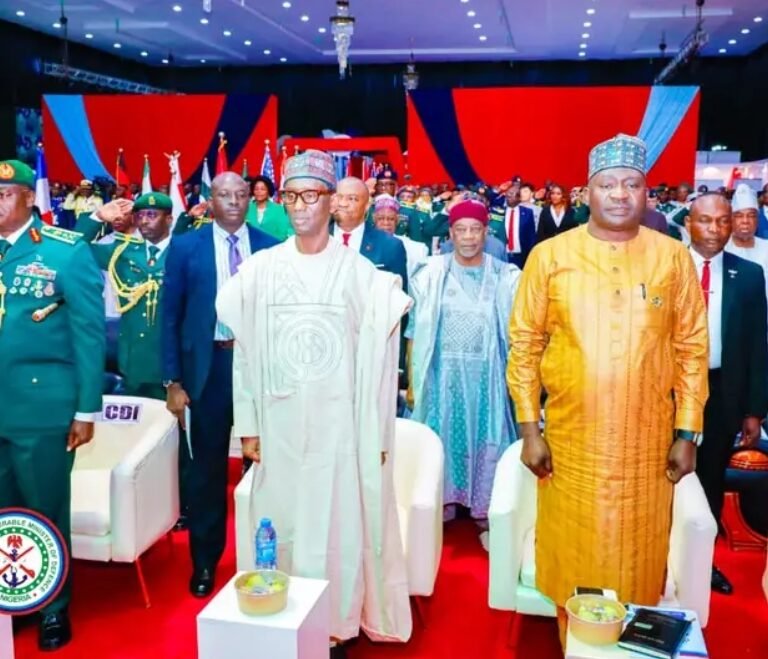
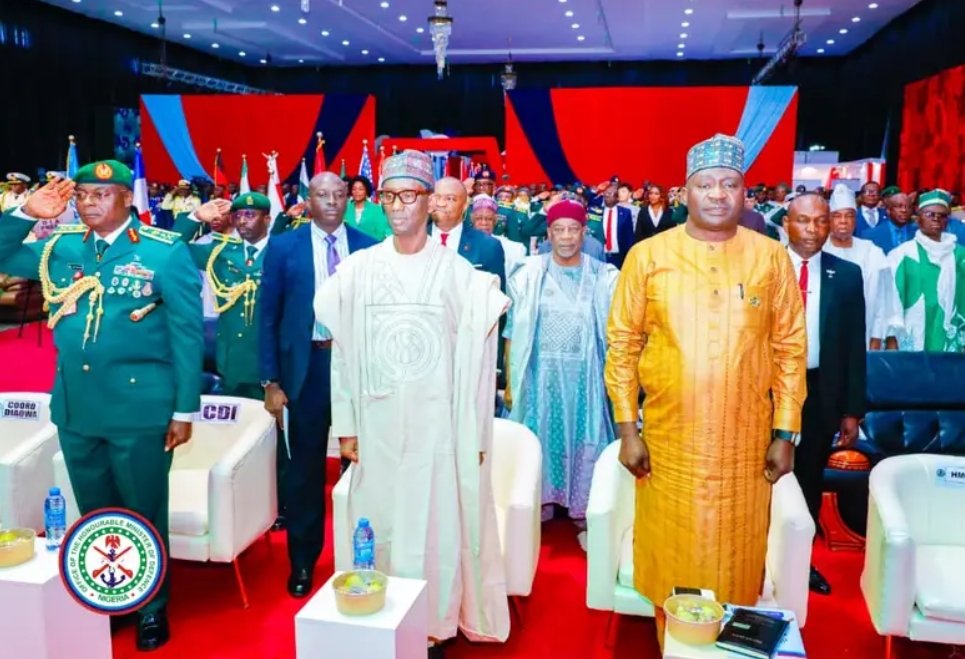
Tinubu made the call on Monday, November 16, 2026, at the 2026 Chief of Defence Intelligence (CDI) Annual Conference held at the Armed Forces Event Centre, Asokoro, Abuja.
Represented by the National Security Adviser, Nuhu Ribadu, the President said threats such as terrorism, banditry, kidnapping, cybercrime and transnational organised crime had become more complex, interconnected and technology-driven.
He said tackling these threats required intelligence systems capable of anticipating security risks, supporting timely decisions and improving the effectiveness of security operations.
Highlighting his administration’s record in the fight against terrorism, Tinubu said four of the eight identified senior terrorist leaders had been killed or arrested through sustained and coordinated security operations.
He said the operations had helped weaken terrorist leadership structures, disrupt criminal networks and limit their ability to operate.
The President also disclosed that Nigeria had recorded more than 1,000 convictions and over 2,000 terrorism-related trials in the last two years.
According to him, the figures reflect ongoing efforts to ensure accountability and bring those involved in terrorism to justice.
Tinubu urged security agencies to build on the gains by sustaining pressure on terrorist groups and criminal networks, protecting vulnerable communities and improving intelligence operations, particularly in the North-Central region.
He stressed that modern intelligence operations must make greater use of artificial intelligence, machine learning, cyber capabilities and unmanned systems to detect threats, track criminal networks and provide early warnings.
However, he cautioned that information generated through artificial intelligence must be properly verified and subjected to human judgement. He also called for stronger data protection and cybersecurity measures.
On inter-agency cooperation, the President urged closer collaboration among the Armed Forces, Defence Intelligence, Department of State Services, National Intelligence Agency, Nigeria Police Force, Nigeria Security and Civil Defence Corps and other relevant institutions.
He said Nigeria was also strengthening security partnerships with the United States, France, the United Kingdom, China, the United Arab Emirates, Türkiye and neighbouring African countries.
The partnerships, he explained, focus on intelligence sharing, training and technological cooperation while protecting Nigeria’s sovereignty and national interests.
Tinubu further disclosed that his administration was pursuing security reforms and had directed the Special Adviser on Homeland Security, Major General A. A. Tarfa, to coordinate the development of a comprehensive national threat assessment and a five-year rolling strategic defence operations plan.
He challenged participants at the conference to turn their discussions into practical recommendations with clear responsibilities, timelines and measurable results.
According to him, the ultimate measure of success is whether security institutions can make Nigerian communities safer.
Defence Minister calls for local technology investment
In his goodwill message, the Minister of Defence, General Christopher Gwabin Musa (retd.), said intelligence-led operations, technological advancement and stronger cooperation were critical to addressing Nigeria’s security challenges.
Musa called for increased investment in indigenous technical expertise and stronger partnerships with research institutions and technology companies.
He said Nigeria must develop its own technological capabilities to reduce dependence on external solutions and strengthen the operational capacity of the Armed Forces.
The minister reaffirmed the Federal Government’s commitment to supporting the military and intelligence community through improved operational capabilities, strategic partnerships and the development of indigenous defence technology.
Earlier, the Chief of Defence Intelligence, Lieutenant General Emmanuel Undiandeye, described the annual conference as an important platform for strengthening intelligence cooperation and developing practical responses to Nigeria’s security challenges.
He recalled that the conference, formerly known as the Defence Intelligence Agency Conference, provides an opportunity for security stakeholders to examine emerging threats and explore how technology and strategic partnerships can improve intelligence operations.
Undiandeye emphasised the need for collective commitment among security institutions and international partners, noting that intelligence must remain central to national security planning and operational decisions.
He also acknowledged the contributions of the diplomatic community and other stakeholders to Nigeria’s security efforts.
The 2026 conference is expected to produce recommendations aimed at deepening strategic partnerships, improving intelligence sharing and advancing technology-driven solutions to the country’s security challenges.