
By Gabriel Ameh
Abuja | Media Report
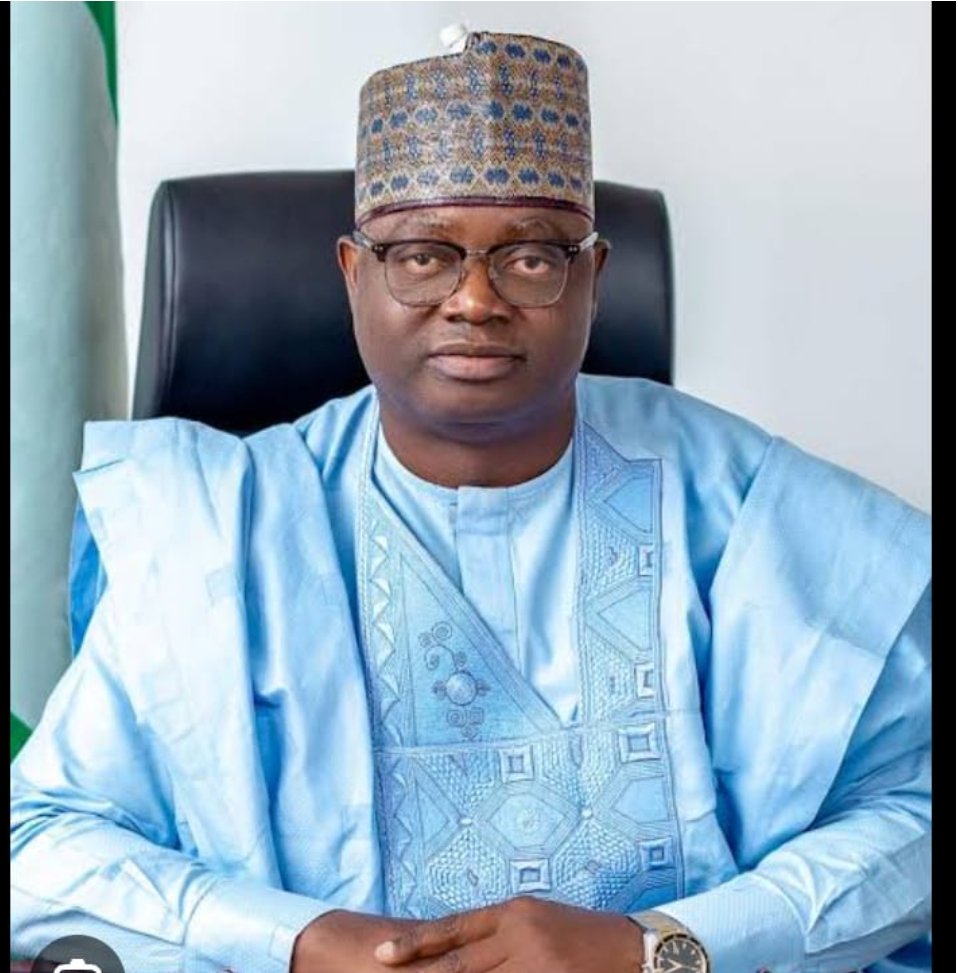
The Director-General of the National Orientation Agency (NOA), Mallam Lanre Issa-Onilu, has reaffirmed the agency’s commitment to strengthening national development through strategic collaboration, as the Nigeria Association of Women Journalists (NAWOJ) paid a courtesy visit to the agency in Abuja.
Speaking during the visit, Issa-Onilu emphasized the critical role of NOA in national communication, civic engagement, and value reorientation, noting that the agency remains uniquely positioned to reach citizens at the grassroots across the country.
He highlighted the evolution of the agency from the former Mass Mobilization for Self-Reliance, Social Justice and Economic Recovery (MAMSER), stressing that its structure spread across all states and local government areas makes it one of the most far-reaching institutions for public information dissemination in Nigeria.
According to him, while Nigeria has developed several policy frameworks over the years, the major challenge has always been effective implementation.
“The problem is not producing beautiful documents but ensuring implementation. That is where the real work lies,” he said.
The NOA boss also revealed that the Federal Executive Council (FEC) had approved key proposals submitted by the agency in September 2024, paving the way for actionable reforms.
One of such milestones, he noted, is the reintroduction of civic education through a new subject, Citizenship Studies, now compulsory in primary and secondary schools nationwide. He added that efforts are ongoing to extend similar civic-oriented curricula to universities and colleges of education.
Issa-Onilu stressed that media collaboration remains essential in driving these initiatives, noting that no institution is better positioned than NOA to coordinate nationwide communication strategies.
Earlier, the National Chairperson of NAWOJ, Comrade Aisha K. Bura, described the visit as more than ceremonial, calling it a strategic engagement aimed at fostering impactful collaboration.
She commended the NOA for its role in shaping public values and strengthening the relationship between citizens and government.
“At this critical point in our democratic journey, orientation, education, and citizen engagement are no longer optional they are essential,” she said.
Bura proposed a Joint NOA–NAWOJ Training and Public Engagement Initiative, focused on enhancing civic and voter education, promoting ethical journalism, and combating misinformation.
The proposed initiative includes nationwide training workshops, community outreach programmes targeting women and youth, development of civic education materials in local languages, and coordinated media campaigns to promote inclusivity and national unity.
She emphasized the need to prioritize inclusive governance, noting that democracy must go beyond participation to representation.
“A democracy that excludes is a democracy that is weak. Women, young people, and marginalized groups must be empowered not just to vote, but to lead and be represented,” she added.
Bura also reiterated NAWOJ’s commitment to supporting NOA’s mandate through advocacy, media amplification, and sustainable partnerships.
Both parties expressed optimism that the collaboration would significantly enhance public understanding of democratic processes and promote a more inclusive and informed society.