
By Ihotu Uriel
Vice President Kashim Shettima has called on government institutions, state and local governments, the private sector and international partners to urgently implement Nigeria’s National Drug Control Master Plan (NDCMP) 2026–2030.
Shettima said the success of the five-year plan would depend on adequate funding, strong coordination and accountability across all levels of government.
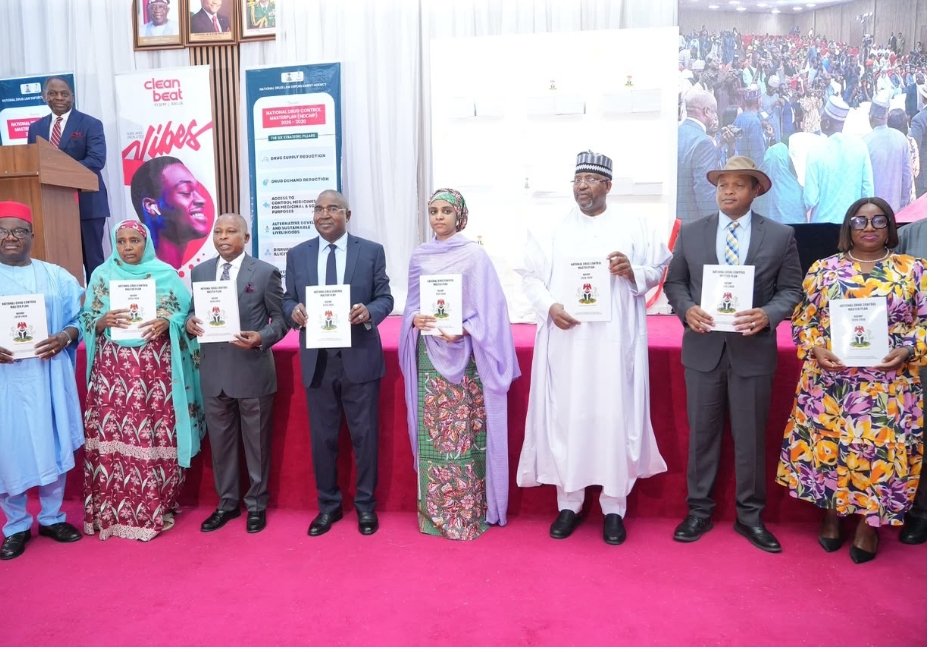
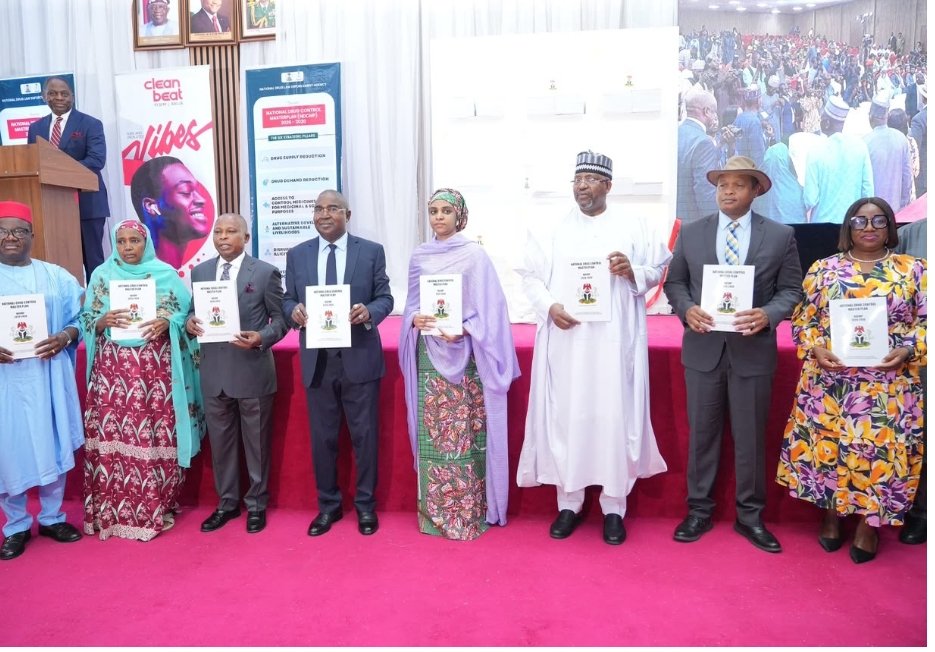
He made the call on Monday in Abuja during the official launch of the plan, where he was represented by the Special Adviser to the President on Special Duties in the Office of the Vice President, Dr Modibbo Aliyu Umar.
Commending the plan on behalf of President Bola Tinubu, the Vice President described drug abuse and trafficking as major national challenges that threaten public health, security, economic development and the country’s future.
He warned that Nigeria could not secure its future without protecting the people responsible for building it.
According to him, tackling the drug problem requires more than arrests and seizures, stressing the need for prevention, treatment, rehabilitation and measures to disrupt the financial networks sustaining illegal drug markets.
The plan is built around six pillars: supply reduction, drug demand reduction, access to controlled medicines for medical and scientific purposes, alternative development and sustainable livelihoods, disruption of the illicit drug economy, and governance, financing and coordination.
Shettima urged ministries, departments and agencies to incorporate the plan’s objectives into their work programmes, budget proposals and implementation schedules.
He warned that without a clear funding strategy, the plan could become another policy document with little impact on the lives of Nigerians.
The Vice President also commended the National Drug Law Enforcement Agency (NDLEA), under its Chairman, Brigadier General Mohamed Buba Marwa (retd.), for introducing an Alternative Development programme aimed at helping communities move away from illicit drug cultivation towards legitimate agricultural activities.
He encouraged state and local governments to support the initiative and take ownership of drug control programmes within their communities.
Speaking at the event, Marwa said the 2026–2030 plan was developed from lessons learned during the implementation of the previous National Drug Control Master Plan covering 2021–2025.
He disclosed that an evaluation of the previous plan recorded 77,736 arrests, the seizure of more than 14.8 million kilogrammes of illicit drugs and over 14,200 convictions.
Marwa added that more than 32,400 people also received treatment, counselling and rehabilitation services during the period.
However, he acknowledged that the evaluation identified weaknesses in funding, coordination, service delivery, data management, monitoring and accountability, particularly at state and local government levels.
He said the new plan would address these gaps while strengthening Nigeria’s response to emerging threats, including synthetic drugs, new psychoactive substances and sophisticated international trafficking networks.
The NDLEA chairman also highlighted recent international operations involving the United States Drug Enforcement Administration and law enforcement partners in Europe.
He cited a coordinated operation conducted on April 28, 2026, which he said dismantled a transnational criminal organisation and resulted in arrests in Switzerland and Nigeria.
According to Marwa, the operation also led to the blocking of several bank accounts and cryptocurrency wallets, alongside interim forfeiture proceedings involving properties allegedly linked to the suspected drug network.
He further recalled the dismantling of a Nigerian-Mexican methamphetamine trafficking network and the discovery of clandestine drug laboratories in Ogun, Oyo, Ebonyi and Enugu states.
Marwa said sustainable funding would be critical to achieving the objectives of the new plan. He urged federal budget authorities to include its priorities in annual budgets and the Medium-Term Expenditure Framework.
He also called on state and local governments to make dedicated financial provisions for their drug control committees, while encouraging banks, telecommunications companies, technology firms, agribusinesses and philanthropists to support prevention, treatment and livelihood programmes.
The NDLEA chairman disclosed that the agency would develop a resource mobilisation framework supported by costed implementation plans.
He also welcomed President Tinubu’s transmission of the proposed National Drug Law Enforcement Agency Bill 2026 to the National Assembly, where it has passed second reading, describing legal support as important to strengthening the country’s drug control framework.
Meanwhile, Attorney-General of the Federation and Minister of Justice, Prince Lateef Fagbemi, said the new master plan would strengthen cooperation between law enforcement agencies, the health sector, the judiciary, educational institutions and local communities.
Fagbemi described the NDLEA as a major pillar of Nigeria’s drug control efforts and pledged the Justice Ministry’s support in ensuring speedy prosecution of drug-related cases, recovery of illicit assets and improved international cooperation.
He stressed the need to distinguish between drug traffickers and people struggling with drug dependence, noting that while criminal networks must face the law, people with drug use disorders require treatment, counselling and rehabilitation.
The ECOWAS Commission also pledged support for Nigeria’s implementation of the plan, describing it as an important contribution to regional security and public health.
The commission said effective implementation would require sustained political commitment, adequate funding and cooperation among governments, civil society organisations, communities and international partners.
Similarly, the House of Representatives Committee on Drugs and Narcotics reaffirmed its commitment to providing legislative support and oversight to ensure the plan achieves its objectives.
The committee also emphasised the importance of accountability, adequate funding and coordination among relevant institutions.
The First Lady of Yobe State, Hajiya Hafsat Kollere Buni, also pledged partnership and support for the NDLEA in implementing the initiative.
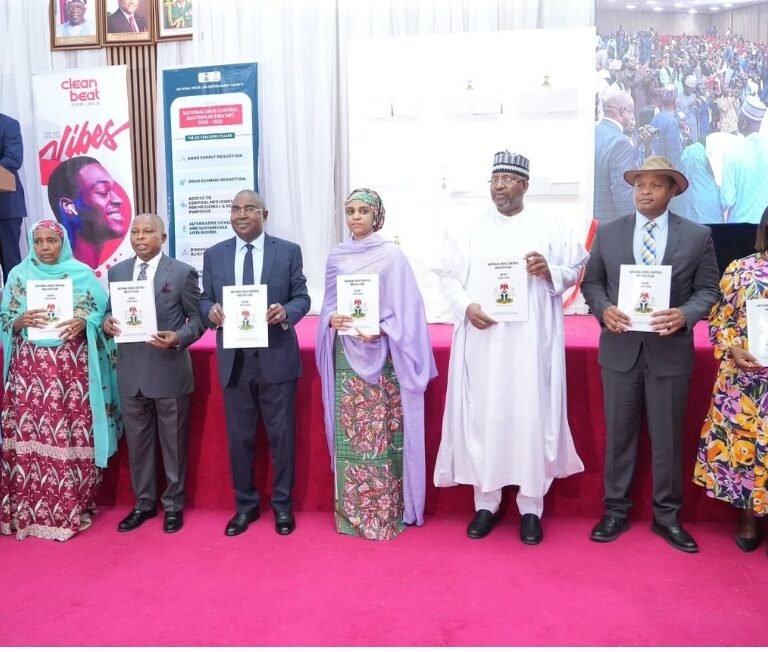
The launch, themed ‘Strategic Action for a Drug-Free Nation’, attracted government officials, lawmakers, diplomats, traditional and religious leaders, development partners, civil society organisations and representatives of youth groups.
The new master plan is expected to guide Nigeria’s drug prevention, treatment, rehabilitation and enforcement efforts between 2026 and 2030.