
0-0x0-0-0-{}-0-0#
By Gabriel Ameh
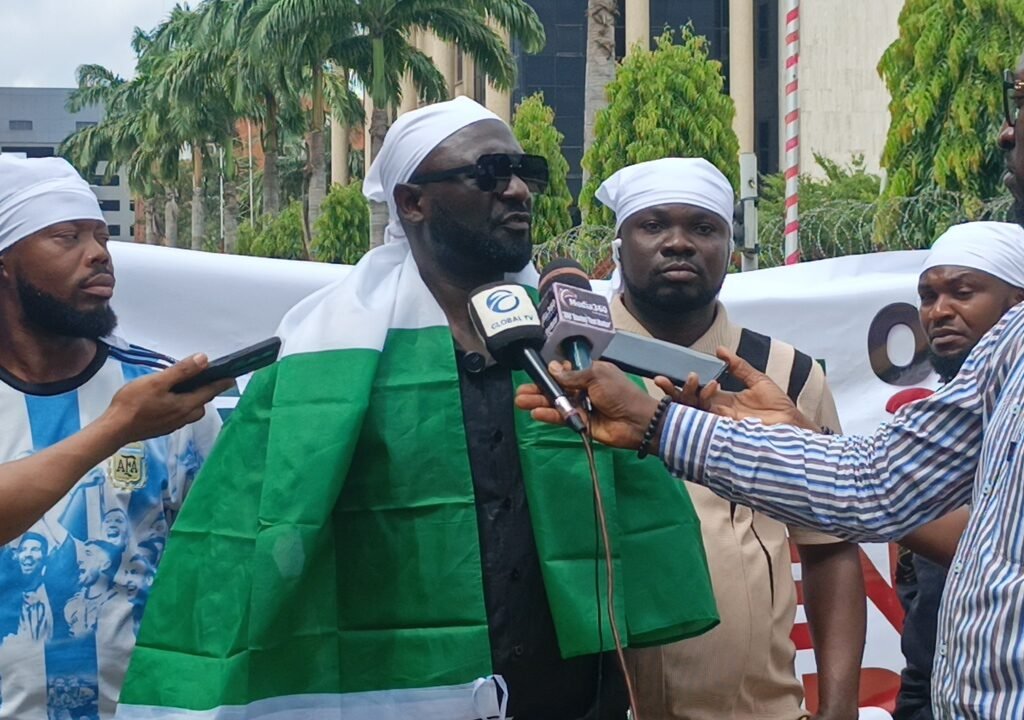
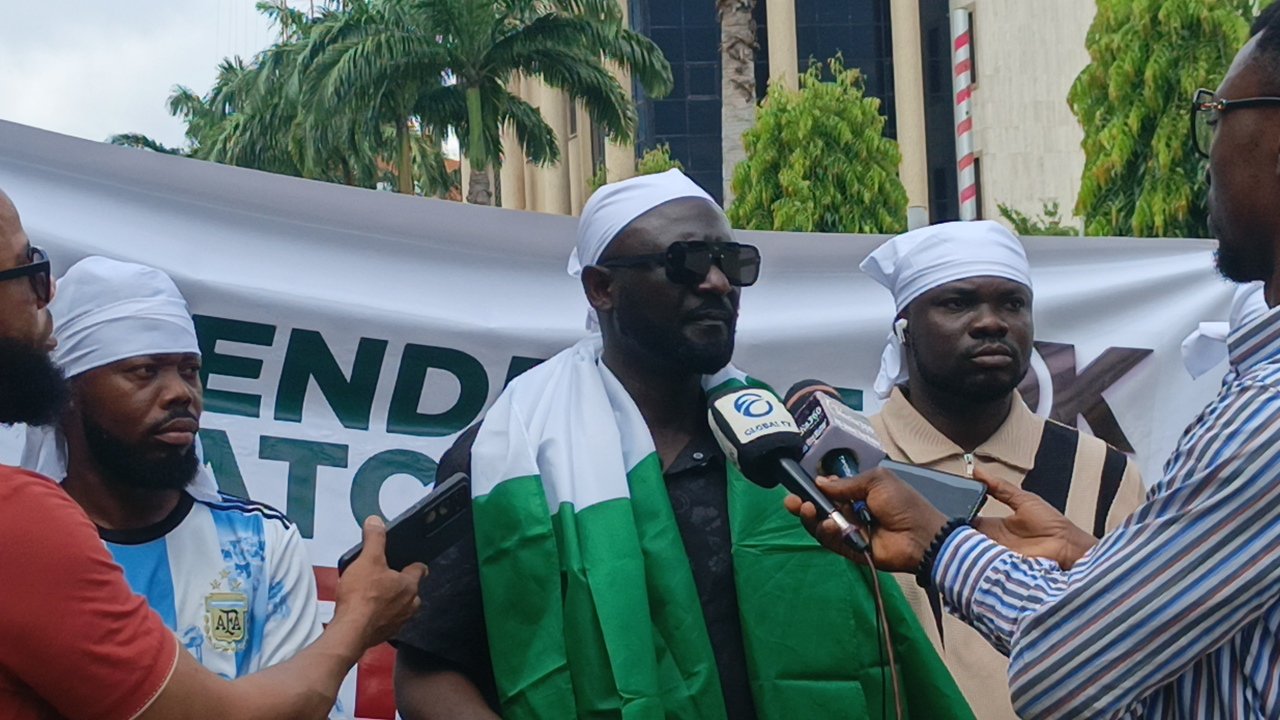
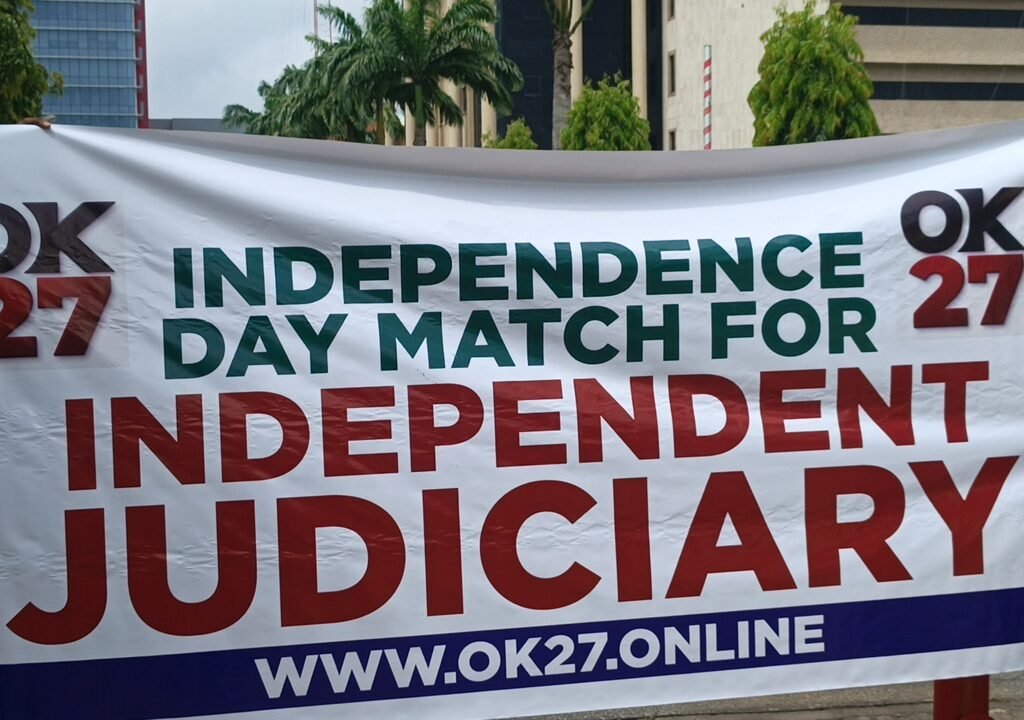
An advocacy group, OK27, has staged an Independence Day protest in Abuja, calling for greater independence of Nigeria’s judiciary and stronger protection of citizens’ rights.
The protesters, led by Henry Pwajok Lodam, gathered at the Federal High Court in Abuja on Wednesday, October 1, 2026, saying Nigeria’s Independence Day provided an opportunity to draw attention to what they described as challenges facing the justice system.
Addressing protesters at the gathering, Lodam said the demonstration was not limited to political cases but was also intended to draw attention to Nigerians who, according to him, remain in detention for prolonged periods without trial.
He alleged that some detainees had spent years in custody without their cases being properly concluded.
“The judiciary in Nigeria is broken,” Lodam said, while calling on judicial authorities to strengthen the protection of citizens and ensure due process.
According to him, the judiciary should be able to protect the rights of ordinary Nigerians, regardless of their political affiliation, social status or circumstances.
Lodam also raised concerns about what he described as undue influence of the executive arm of government on the judiciary, arguing that judicial independence was essential to the survival of democracy.
“We want independence of the judiciary, which is very important for democracy. If the judiciary is not allowed to function independently of the executive arm of government, then there is no democracy,” he said.
Call for Due Process
The OK27 leader cited several politically sensitive cases while making his argument for judicial independence, including the cases involving Nnamdi Kanu and Nasir El-Rufai.
He described the continued legal proceedings and detention surrounding some individuals as matters that deserve closer scrutiny, while calling for every person who is unlawfully detained to be given access to justice and due process.
Lodam acknowledged that different groups have grievances against former Kaduna State Governor Nasir El-Rufai, particularly over issues surrounding his administration.
However, he argued that such disagreements should not prevent anyone from receiving a fair hearing under the law.
“We are not saying that we believe that his government was fair to all. But what we are saying is that we need the justice system of this country to be cleaned up,” he said.
He described what he considered the continued detention of El-Rufai as an example of what the group believes should be subjected to proper judicial scrutiny.
The group subsequently called for El-Rufai’s release, while stressing that its demand should also apply to other Nigerians who may be unlawfully detained.
Why Independence Day?
Explaining why the group chose October 1 for the demonstration, Lodam said Independence Day symbolises freedom and therefore provided an appropriate occasion to call for what he described as the “independence” of Nigeria’s judiciary.
“Anyone that is under any form of oppression is not free. It’s not independent of the influences of the powers that be,” he said.
He argued that the judiciary remains particularly important because citizens rely on the courts when their rights are threatened.
“We chose the judiciary specifically because it is the last hope of the common man,” Lodam said.
OK27 Denies Political Sponsorship
Lodam also said OK27 was an independent group and not an organisation sponsored by any political party or political figure.
He was questioned about the group’s repeated references to Labour Party presidential candidate Peter Obi, whom he referred to as their “principal.”
Lodam denied that Obi was funding the protest.
“Peter Obi is not the one bankrolling this process,” he said, insisting that the group consists of people who came together over concerns about developments in Nigeria.
He nevertheless expressed support for Obi and described him favourably in the course of his remarks.
The protest comes as Nigerians mark the 66th anniversary of the country’s independence, with the demonstrators using the occasion to demand what they described as a more independent judiciary and stronger protection of citizens’ rights.
The claims made by the protesters regarding specific court cases, unlawful detention and alleged political persecution remain their stated positions and would require verification against court records and official statements from the relevant authorities.