
By Gabriel Ameh
Nigeria is seeking stronger technological and intelligence support from the European Union (EU) to tackle terrorism, as armed groups increasingly use satellite communication devices, drones and digital technology to evade security operations.
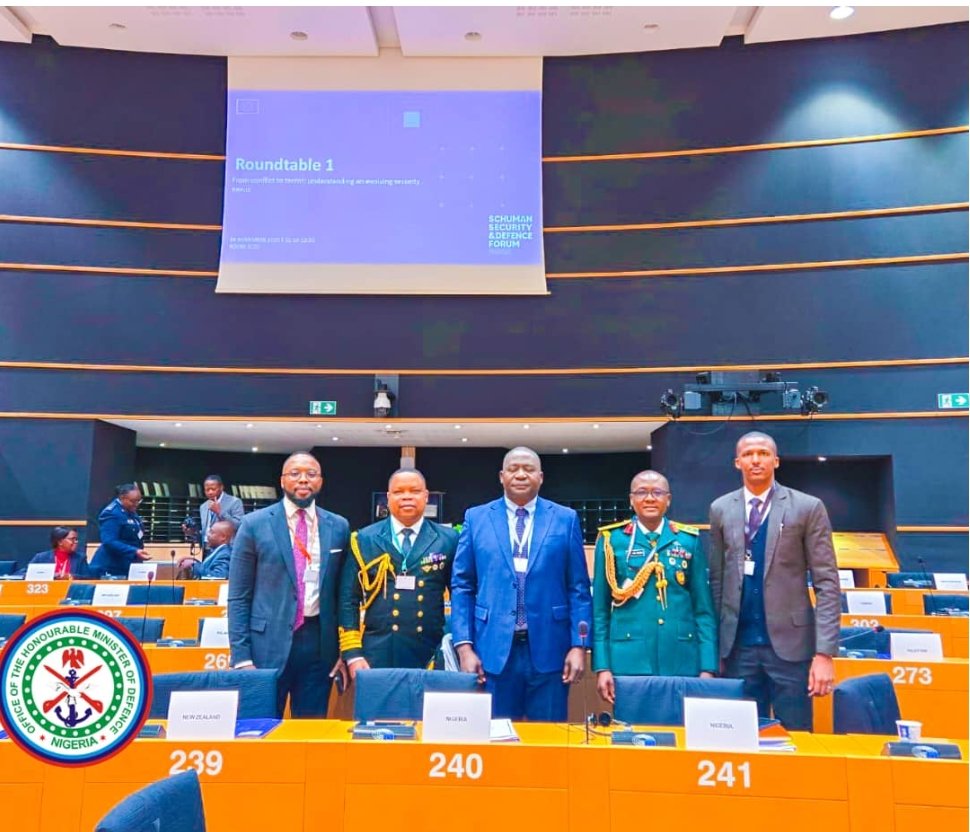
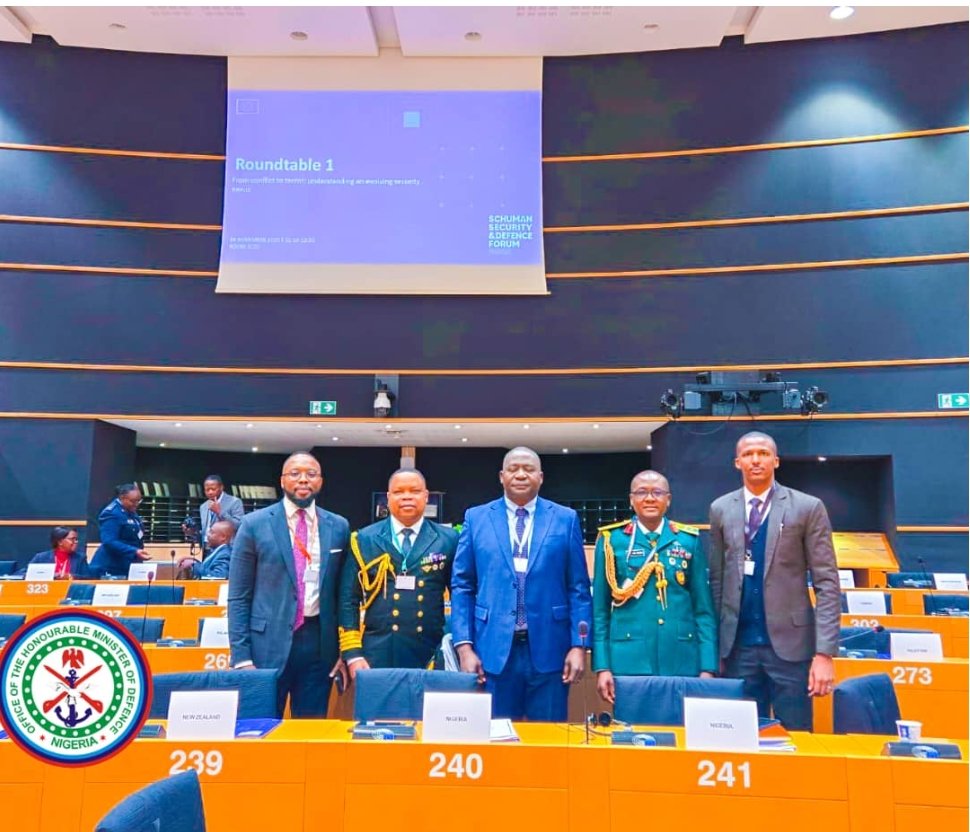
The Minister of Defence, retired General Christopher Musa, made the appeal at the third Schuman Security and Defence Forum held at the European Parliament in Brussels, Belgium.
Musa called for deeper cooperation with the EU in counter-drone technology, satellite intelligence, digital forensics and intelligence sharing to strengthen Nigeria’s fight against terrorism.
He disclosed that troops of Operation HADIN KAI intercepted more than 400 Starlink communication devices allegedly linked to terrorist networks in the North-East in May 2026, highlighting how armed groups are increasingly relying on modern technology to coordinate their activities.
The minister said the development had made it necessary for Nigeria to strengthen its technological capacity and work more closely with international partners to disrupt terrorists’ communication networks and operations.
In a statement issued on Friday by his Special Assistant on Media, Leah Katung-Babatunde, Musa said the Federal Government was adopting a broader counterterrorism strategy that combines military action, intelligence gathering, law enforcement, community engagement and socioeconomic interventions.
He explained that terrorism in Nigeria was driven by several factors, including poverty, porous borders, local grievances and transnational criminal activities, making a purely military response insufficient.
According to him, Nigeria’s National Counter Terrorism Strategy provides a framework for coordinated action involving government institutions, security agencies and communities.
Musa said the military was deploying intelligence-led operations, surveillance technology, unmanned aerial platforms and artificial intelligence to weaken terrorist networks and improve security operations.
He added that the Ministry of Defence was also investing in local defence innovation through research and partnerships with private-sector players to reduce dependence on foreign technology and develop homegrown solutions to emerging security threats.
The minister further identified kidnapping for ransom, illegal mining, cattle rustling and arms trafficking as criminal activities helping to finance terrorism and sustain insecurity.
He said the Nigerian Financial Intelligence Unit, National Counter Terrorism Centre and other security agencies were working to track suspicious financial transactions, prosecute criminal networks and tighten border security to disrupt the financial and logistical channels supporting armed groups.
Musa also reaffirmed Nigeria’s commitment to regional security cooperation through the Multinational Joint Task Force in the Lake Chad Basin, ECOWAS, the African Union and other international security initiatives.
On military conduct, he said the Armed Forces remained committed to national laws and international humanitarian standards, including the protection of civilians, lawful prosecution of suspects and rehabilitation of former combatants eligible for reintegration.
He cited Operation SAFE CORRIDOR as part of Nigeria’s efforts to rehabilitate and reintegrate former combatants.
Nigeria’s appeal for stronger EU support comes as the country seeks to strengthen its domestic defence technology capacity while expanding international partnerships to respond to evolving security threats.
The Schuman Security and Defence Forum brings together defence officials, representatives of international organisations and policy experts to discuss global security, peace and defence cooperation.