

By Gabriel Ameh
The Nigeria Civil Society Situation Room has raised concerns over growing threats to Nigeria’s democratic process ahead of the 2027 general elections, citing voter intimidation, political violence, inflammatory rhetoric, abuse of public office and declining public confidence in democratic institutions.
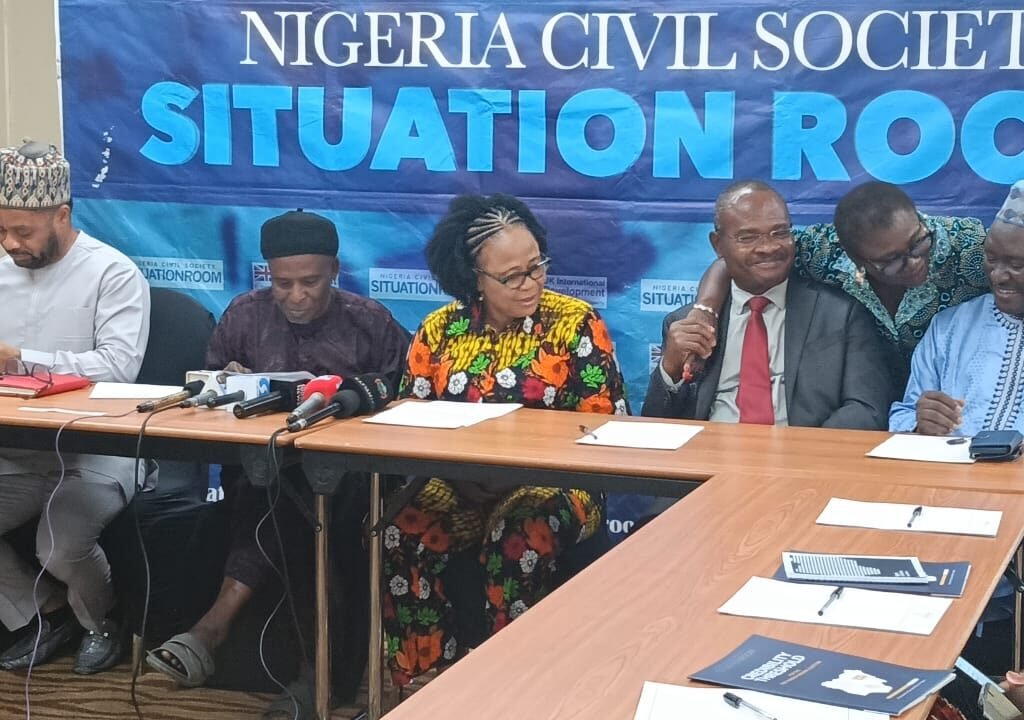
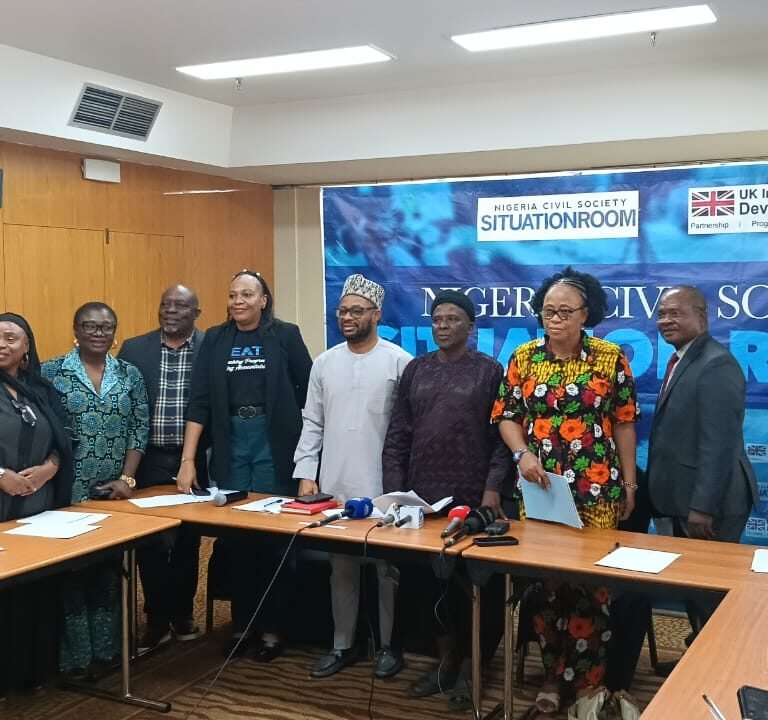
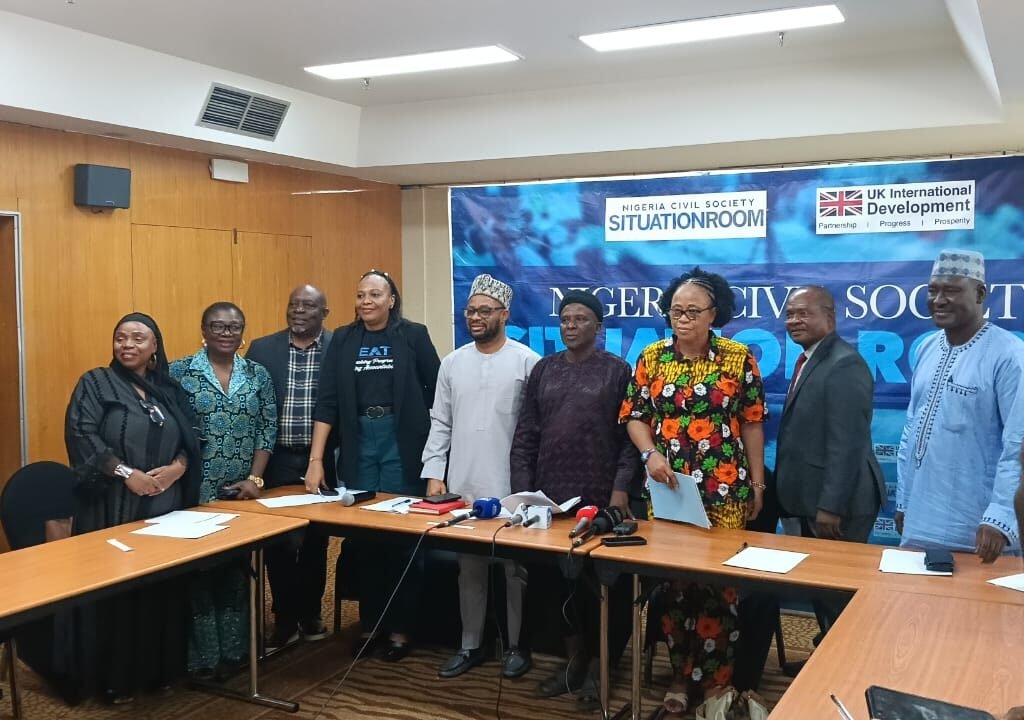
The coalition raised the alarm on Tuesday, September 15, 2026, while marking the International Day of Democracy in Abuja, stressing that the credibility of the 2027 elections would depend not only on what happens on election day but also on the political environment and institutional preparedness leading up to the polls.
According to the Situation Room, recent public opinion data indicate growing dissatisfaction with the performance of democracy in Nigeria.
It cited Afrobarometer findings showing that 77 per cent of Nigerians are dissatisfied with the way democracy is working, while only 23 per cent expressed trust in the Independent National Electoral Commission (INEC).
However, the group noted that the figures did not mean Nigerians had rejected democracy.
It said 64 per cent of Nigerians still preferred democratic government to any other form of government, arguing that the findings point instead to concerns over democratic delivery, institutional trust and accountability.
The Situation Room also referenced the V-Dem Institute’s classification of Nigeria as an “Electoral Autocracy” and the country’s position in the Mo Ibrahim Index of African Governance as indicators of wider concerns about Nigeria’s democratic and governance trajectory.
It said the concerns were becoming more significant as the 2027 elections approach, particularly amid what it described as hostile political rhetoric, threats, intimidation and violence involving political actors and citizens.
The coalition also pointed to concerns arising from the 2026 Osun State governorship election, including allegations of intimidation, threats, violence and coercion involving political actors.
Six threats identified
The Situation Room identified six major areas of concern:
- Institutional failure and impunity;
- Voter intimidation and inflammatory political rhetoric;
- Forced disenfranchisement and threats of displacement;
- Weaponisation of public office;
- Weaponisation of ethnicity and religion; and
- Political thuggery, obstruction and voter suppression.
The group called on INEC, security agencies, prosecutorial authorities and the judiciary to demonstrate greater independence and effectiveness in responding to alleged electoral offences, intimidation, incitement and political violence.
It warned that failure to investigate and prosecute credible allegations, particularly where politically influential individuals are involved, could reinforce a culture of impunity.
Warning over political threats
The Situation Room also condemned alleged threats against citizens because of their political choices.
It referenced reports of alleged directives asking residents to support the ruling All Progressives Congress or leave their communities, describing such threats as a violation of citizens’ constitutional rights.
The coalition maintained that Nigerians should not have to choose between exercising their political rights and protecting their lives, livelihoods or homes.
It further warned against the alleged use of government appointments, removals, administrative powers and public resources to compel political loyalty or influence electoral outcomes.
Ethnicity, religion and election security
On ethnic and religious mobilisation, the Situation Room urged political leaders, traditional and religious authorities, the media and other influential actors to promote tolerance and inclusion.
It said elections should be based on ideas, policies, competence and accountability rather than ethnic or religious divisions. Similar concerns over the use of ethnicity, religion and public office have been raised by the coalition in its 2026 election-related messaging.
The coalition also called for improved security arrangements to prevent political thuggery, attacks on candidates and voter suppression.
It urged security agencies to protect political actors and citizens equally, regardless of their political affiliation or status.
‘Business as usual’ not an option
The Situation Room said Nigeria could not afford to approach the 2027 elections as “business as usual.”
It demanded strict enforcement of electoral laws, neutrality of public institutions, protection of civic freedoms, accountability for political parties and political leaders, and stronger institutional preparedness ahead of the polls.
The coalition said it would intensify monitoring of Nigeria’s political and electoral environment ahead of 2027, focusing on electoral preparedness, campaign financing, alleged abuse of public resources, electoral violence, hate speech, misinformation, citizen participation and the independence of institutions responsible for conducting elections.
It added that it would continue to provide information, promote public dialogue and demand accountability from public officials as Nigeria prepares for the 2027 general elections.
The Situation Room’s warning comes as civil society groups continue to push for stronger electoral safeguards and greater public confidence in Nigeria’s democratic institutions ahead of the next general elections.