

By Gabriel Ameh
The Federal Road Safety Corps (FRSC) has launched a National Movement for Safe Loading and Safe Roads to tackle vehicle overloading and other dangerous transportation practices blamed for road crashes, infrastructure damage and economic losses.
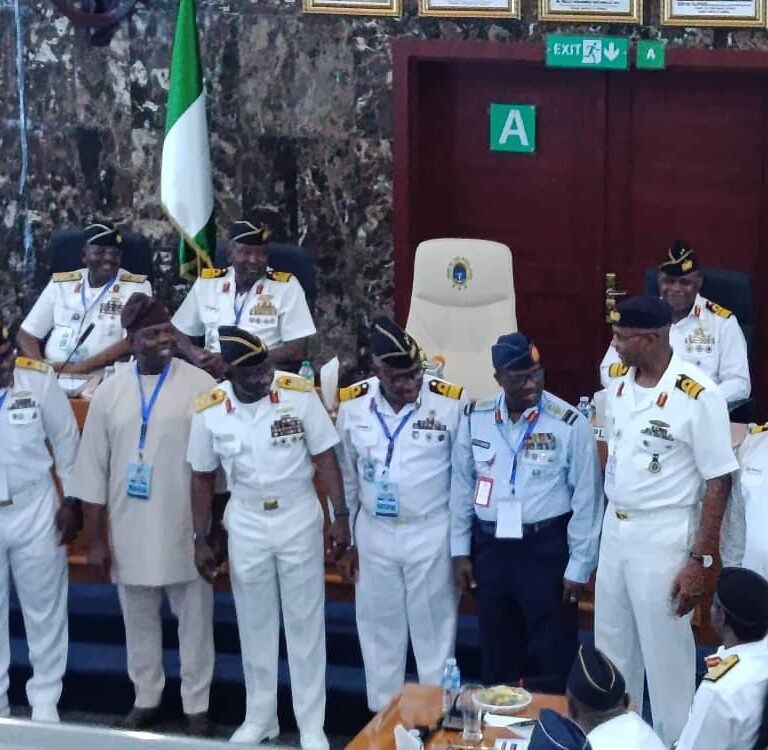
The Corps Marshal, Shehu Mohammed, made the call on Thursday in Abuja during the National Breakfast Policy Dialogue and launch of the movement, themed “Ending Overloading, Saving Lives: A National Commitment to Safer Roads and Responsible Transportation in Nigeria.”
Mohammed said overloading should no longer be viewed simply as a traffic violation, but as a major road safety, infrastructure, logistics and economic development concern.
According to him, excessive loads can affect a vehicle’s braking, steering and stability, while also accelerating vehicle deterioration and increasing the risk of crashes.
He also warned about the dangers of mixed and improper loading, stressing that the risk was not only about the weight of cargo but also what was being transported, how different items were combined, positioned and secured.
The Corps Marshal particularly cautioned against the inappropriate combination of passengers and cargo, incompatible or dangerous materials, and loads that are poorly secured or unevenly distributed.
He said commercial pressure to maximise every journey in Nigeria’s haulage and logistics sector could encourage unsafe practices, but warned that no transportation savings or business benefit was worth the loss of human life.
“A vehicle must carry only what it is designed, licensed and safely configured to carry,” Mohammed said.
He noted that Nigeria’s economy depends heavily on the safe movement of agricultural produce, raw materials, manufactured goods, fuel and other essential commodities.
According to him, an efficient and safe transportation system should be seen as a foundation for economic development rather than an obstacle to business.
Mohammed said the impact of overloading cuts across the economy, with government facing increased road maintenance costs, operators dealing with vehicle damage and businesses and consumers suffering delays in the movement of goods.

But he stressed that the consequences become far more devastating when overloading contributes to a fatal crash, leaving families to bear losses that cannot be measured financially.
The FRSC boss said the Corps would continue to enforce road safety laws firmly and professionally but acknowledged that enforcement alone would not eliminate overloading.
He called for greater responsibility among cargo owners, shippers, loading agents, transporters, fleet operators, drivers, regulators and government agencies.
Mohammed urged cargo owners and shippers to accurately declare cargo weights and insist on safe loading, while transport operators were advised to maintain their vehicles and comply with approved weight limits.
He also urged drivers to reject unsafe, improperly mixed or inadequately secured loads.
Regulators, he said, must strengthen coordination, weighing infrastructure, axle-load management, data sharing and enforcement.
The FRSC will also continue to expand public education, stakeholder engagement, intelligence-led operations and the use of technology and data to improve compliance.
Mohammed said the new National Movement for Safe Loading and Safe Roads should go beyond the FRSC and become a nationwide initiative involving government, the transport industry, drivers, regulators, professional bodies, civil society, development partners and the media.
He disclosed that the policy dialogue would culminate in the adoption and signing of the Abuja Declaration 2026, which he said should establish clear responsibilities, measurable commitments, timelines and mechanisms for monitoring progress.
He said the initiative should ultimately be judged by measurable improvements on Nigerian roads, including fewer overloaded vehicles, accurate cargo-weight declarations, the elimination of incompatible loads, improved compliance and reductions in crashes and fatalities.
“We must not carry an avoidable death on our roads,” Mohammed said, urging stakeholders to make the movement a platform for sustained action.
VON Calls for Responsible Road Behaviour
Also speaking at the event, the Director-General/Chief Executive Officer of Voice of Nigeria (VON), Jibrin Baba Ndace, commended the FRSC for launching the initiative and praised the leadership of the Corps.
Ndace said road safety should not be regarded solely as an enforcement responsibility, describing it instead as a collective national duty requiring effective communication, public education, stakeholder collaboration and responsible behaviour by road users.
He described overloading as a serious road safety challenge with consequences for human lives, vehicles, infrastructure and the wider economy.
The VON Director-General called for a coordinated response involving government agencies, transport operators, regulators, the private sector, civil society, the media and the travelling public.
He also cautioned motorists against overconfidence on the roads, saying years of driving experience or familiarity with a particular route should encourage greater caution rather than reckless behaviour.
Ndace urged motorists to avoid speeding, dangerous overtaking, sudden lane changes and impatience, stressing that arriving at a destination a few minutes earlier was never worth putting another person’s life at risk.
He advocated greater courtesy, patience and mutual respect among motorists, pedestrians, cyclists, motorcyclists and other road users.

FRSC, VON Urge Nigerians to Help Crash Victims
Ndace further called for a change in how Nigerians respond to road crashes, urging members of the public to focus on saving lives rather than gathering around accident scenes to take pictures or record videos.
He encouraged citizens to assist victims where possible, alert the appropriate authorities and create room for emergency responders to reach accident scenes quickly.
“An accident victim is not an object of public curiosity. He or she is someone’s father, mother, brother, sister, child or friend,” he said.
Ndace said the national road safety campaign should therefore extend beyond warnings against overloading and traffic violations to include public education on how to respond appropriately to road crashes while preserving the dignity of victims.
He also stressed the importance of sustained public education in changing road-user behaviour, noting that FRSC and VON could work together to promote responsible road use among Nigerians and communicate the message to the international community.
He urged stakeholders to support the National Movement for Safe Loading and Safe Roads and ensure that commitments reached at the Abuja dialogue translate into measurable improvements in road safety across Nigeria.