

By Gabriel Ameh
Corporate Accountability and Public Participation Africa (CAPPA) has called on federal and state governments to make healthy food more affordable and accessible as Nigeria battles a growing diabetes burden.
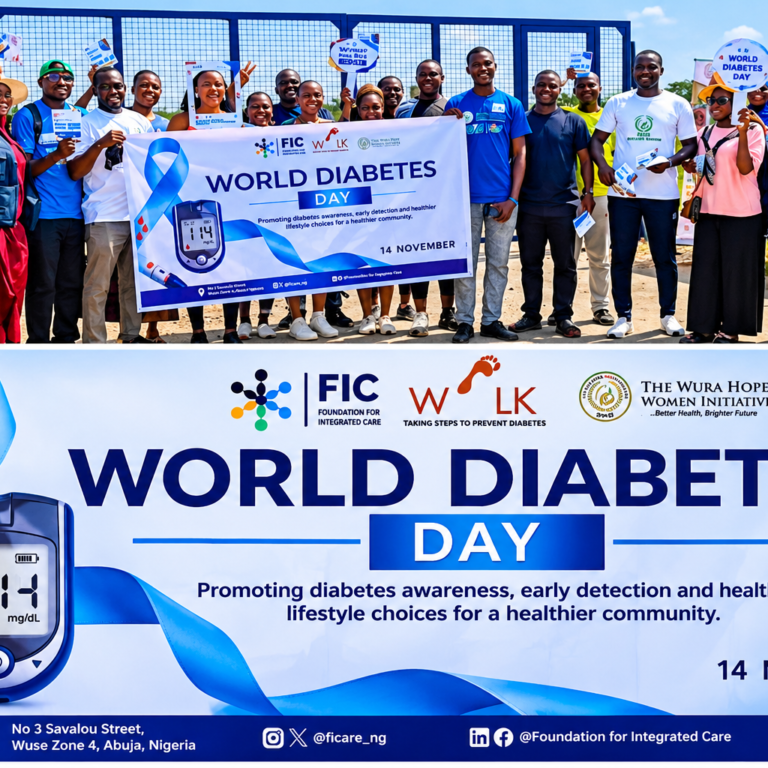
The organisation made the call ahead of World Diabetes Day, marked on November 14, 2026, under the theme “Early Action on Diabetes.”
CAPPA said preventing diabetes requires more than encouraging people to eat healthily or undergo regular medical checks. It argued that governments must also address the food policies and commercial practices that make unhealthy diets widespread and difficult to avoid.
According to the International Diabetes Federation (IDF), Nigeria has the highest number of adults aged 20 to 79 living with diabetes in Africa. The World Health Organisation (WHO) also estimates that nearly three in four adults with diabetes on the continent remain undiagnosed.
Undetected diabetes can lead to serious complications, including kidney failure, blindness, stroke and amputations.

CAPPA further cited an estimated ₦1.92 trillion annual out-of-pocket spending by Nigerian households on the treatment of diet-related non-communicable diseases, warning that the financial burden pushes vulnerable families deeper into poverty.
The organisation’s Executive Director, Akinbode Oluwafemi, said diabetes prevention should not be treated only as a matter of personal discipline.
He argued that aggressive advertising, misleading product claims and the growing availability of unhealthy food and drinks are shaping what Nigerians consume, often at the expense of public health.
CAPPA referenced its 2025 report, Junk On Our Plates, which examined food and beverage marketing in seven Nigerian states. The report identified strategies such as advertising targeted at children and low-income communities, misleading nutrition labels and celebrity endorsements to promote ultra-processed products high in sugar and sodium.
“We cannot keep telling Nigerians to eat healthily while allowing unhealthy food and beverages to dominate our markets, schools, advertisements and public spaces,” Oluwafemi said.
He maintained that meaningful early action on diabetes must include policies that make nutritious food affordable and accessible, rather than placing the entire responsibility on individuals.
Five actions CAPPA wants government to take
To reduce diet-related diseases, CAPPA outlined five priority areas for government and regulatory agencies.
1. Introduce a stronger tax on sugary drinks
CAPPA urged the National Assembly and the Executive to conclude work on the proposed review of the Sugar-Sweetened Beverage (SSB) tax.
Following the Senate’s passage of the tax review bill earlier in 2026, the organisation called for an inflation-adjusted excise tax of at least 20 per cent of the final retail price, in line with WHO recommendations.
It also wants revenue from the tax transparently dedicated to diabetes prevention and treatment, primary healthcare, screening services, healthy food subsidies and nutrition programmes.
2. Make warning labels compulsory on packaged foods
The organisation called on the Federal Ministry of Health and Social Welfare and the National Agency for Food and Drug Administration and Control (NAFDAC) to introduce mandatory Front-of-Pack Warning Labels.
The proposed labels would help consumers quickly identify packaged products containing high levels of sugar, sodium and unhealthy fats.
CAPPA said consumers should not have to struggle to understand tiny or difficult-to-read nutritional information printed on the back of food packages.
3. Restrict unhealthy food advertising to children
CAPPA also called for restrictions on the marketing and sponsorship of sugary drinks and ultra-processed foods aimed at children and adolescents.
It urged the government to prohibit the use of child actors in such advertisements and strengthen enforcement of healthy food standards in schools.
The organisation further asked states to implement federal public food procurement guidelines so that schools, hospitals and other public institutions provide nutritious meals instead of relying on ultra-processed products.
4. Protect health policies from industry interference
CAPPA warned against attempts by ultra-processed food companies to influence nutrition policies through lobbying, voluntary self-regulation and what it described as “healthwashing”.
It said misleading health claims and product fortification should not be used to create the impression that unhealthy products are nutritious.
The organisation specifically argued that adding selected micronutrients to sugary drinks or high-sodium bouillon cubes does not remove their excessive sugar or salt content.
5. Strengthen primary healthcare and local food production
CAPPA urged federal and state governments to increase funding for Primary Healthcare Centres (PHCs), including access to free or subsidised blood glucose tests and essential diabetes medicines.
It also called for support for local insulin production and a shift in agricultural incentives towards smallholder farmers growing indigenous fruits, vegetables and whole grains.
Oluwafemi said diabetes is not inevitable and that prevention must include action against commercial practices that make unhealthy diets increasingly difficult to avoid.
He urged Nigerian lawmakers and regulators to prioritise public health and national productivity over the profits of ultra-processed food corporations.
Source: Corporate Accountability and Public Participation Africa (CAPPA).