
By Gabriel Ameh
The Nigerian Meteorological Agency (NiMet) has reaffirmed its commitment to leveraging Artificial Intelligence (AI) in enhancing weather forecasting and climate services to support farmers and strengthen national food security.
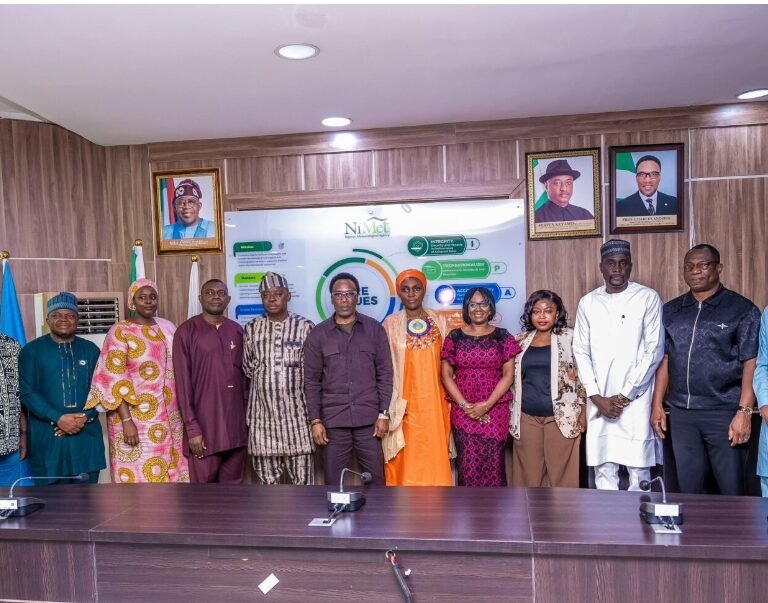
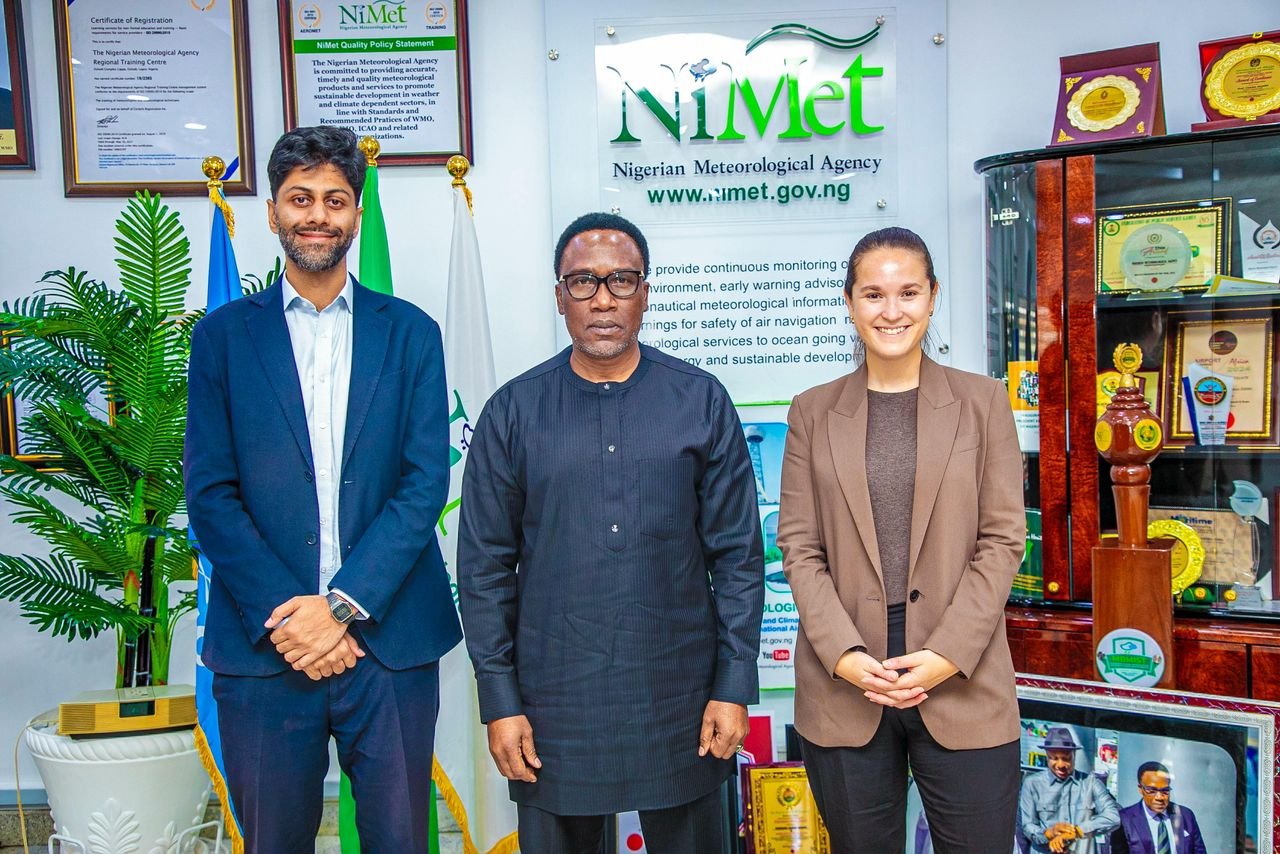
This was disclosed by the Director General/Chief Executive Officer of NiMet, Professor Charles Anosike, during a courtesy visit by the Agricultural Innovation Mechanism for Scale (AIM for Scale) delegation to the agency’s headquarters in Abuja. The team was led by Imara Salas, Director of the AIM for Scale Secretariat, and Mohammad Farrae, Scientific Director.
AIM for Scale is a global initiative focused on advancing agricultural innovation and scaling up weather services for farmers. The consortium includes leading international organizations such as the Bill & Melinda Gates Foundation, United Arab Emirates (UAE), Asian Development Bank (ADB), World Bank, USAID, NASA, MIT, Community Jameel, Mohamed bin Zayed University of Artificial Intelligence (MBZUAI), University of Chicago’s AI for Climate (AICE) initiatives, World Meteorological Organization (WMO), and the United Nations Systematic Observations Financing Facility (SOFF).
During discussions, both teams explored collaborative strategies to co-develop AI-driven weather forecasting models, mobilise investments, and scale up the delivery of real-time, localized climate information to smallholder farmers across Nigeria.
Expressing gratitude for NiMet’s warm reception, Imara Salas noted that AIM for Scale is committed to developing tailored innovation packages that integrate AI forecasting and mobilise investment to benefit millions of farmers globally. She added that working with NiMet would strengthen the delivery of cost-effective and scalable weather solutions to the Nigerian agricultural sector.
In his remarks, Prof. Anosike commended AIM for Scale for selecting Nigeria as one of the first African pilot countries under the initiative. He highlighted NiMet’s readiness and technical expertise, noting that the agency is already investing in AI-enabled systems to improve the accuracy, timeliness, and accessibility of weather forecasts.
“NiMet is fully prepared to harness AI-powered weather forecasting to meet the growing demand for accurate and actionable climate information, particularly among smallholder farmers. Our goal is to help farmers make informed decisions on planting, harvesting, and risk management,” Anosike said.
He emphasized that the adoption of AI in weather prediction represents a major step forward in making forecasts more precise and accessible, thereby reducing agricultural risks and enhancing productivity.
Anosike, however, identified gaps such as the limited number of in-situ weather stations and the need to expand radar coverage across Nigeria to strengthen data accuracy and service delivery.
The AIM for Scale delegation later toured NiMet’s main weather forecasting facilities, where they were briefed on the agency’s current capabilities and future expansion plans.
At the end of the visit, both parties agreed to develop and sign a Memorandum of Understanding (MoU) to formalize their collaboration on joint research initiatives. The MoU will focus on ensuring the sustainability and operational success of the planned AI-powered weather and climate services for Nigerian farmers.