

By Emeka Uga
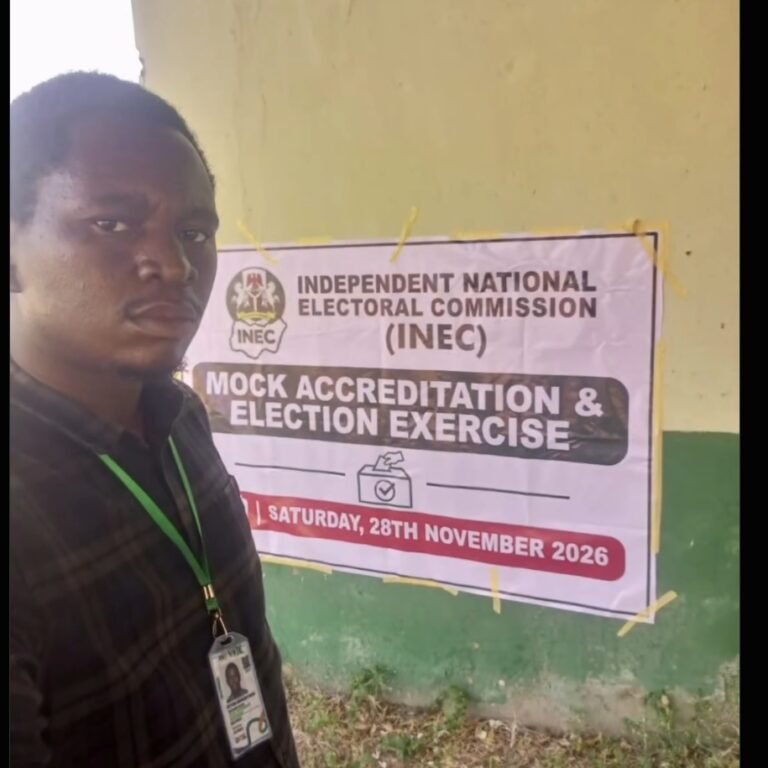
The Independent National Electoral Commission (INEC) has recorded only two successful voter accreditations out of 339 registered voters at a polling unit in Enugu State during its nationwide mock accreditation exercise ahead of the 2027 general elections.
The low participation was recorded at Polling Unit 001, New Haven Primary School 1, Enugu, during the exercise aimed at testing the commission’s electoral technology and operational readiness.
The Presiding Officer, Igbokwe Ifeanyi, disclosed the figures while briefing the INEC National Commissioner supervising Enugu State, Prof. Sunday Ajah, who visited the polling unit at about 11:20 a.m.
According to the presiding officer, the school has eight polling units, but only Polling Unit 001 was selected for the mock exercise.
He explained that some voters who arrived at the school could not participate because their respective polling units were not included in the exercise. Their names were therefore not on the voter register being used at the selected polling unit.
Ifeanyi maintained that the accreditation process was functioning properly, with no major technical complaints reported at the time of the commissioner’s visit.
The figures showed that only two of the 339 registered voters assigned to the selected polling unit had been accredited at the time of the report.
Although the presiding officer attributed the low participation partly to the exclusion of the other seven polling units, the development raises questions about voter awareness and communication ahead of the exercise.
It also highlights the importance of informing residents about the specific polling units selected so that voters do not arrive expecting to participate when their units are not covered.
The nationwide mock accreditation exercise is part of INEC’s preparations for the 2027 general elections, particularly its efforts to assess the performance of the Bimodal Voter Accreditation System (BVAS).
The exercise is also designed to identify technical and operational challenges early enough for the commission to make necessary corrections before the actual elections.
The test comes amid public expectations that INEC will strengthen the reliability of its electoral technology and address concerns surrounding the electronic accreditation and result transmission challenges associated with the 2023 presidential election.
For the commission, the success of these preparations will be measured not only by the performance of its technology but also by how effectively voters are informed and the electoral process is managed.