
By Gabriel Ameh
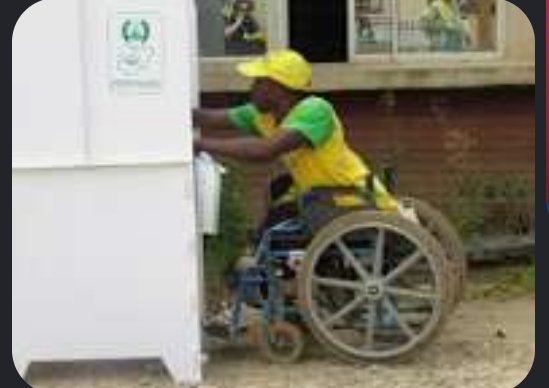
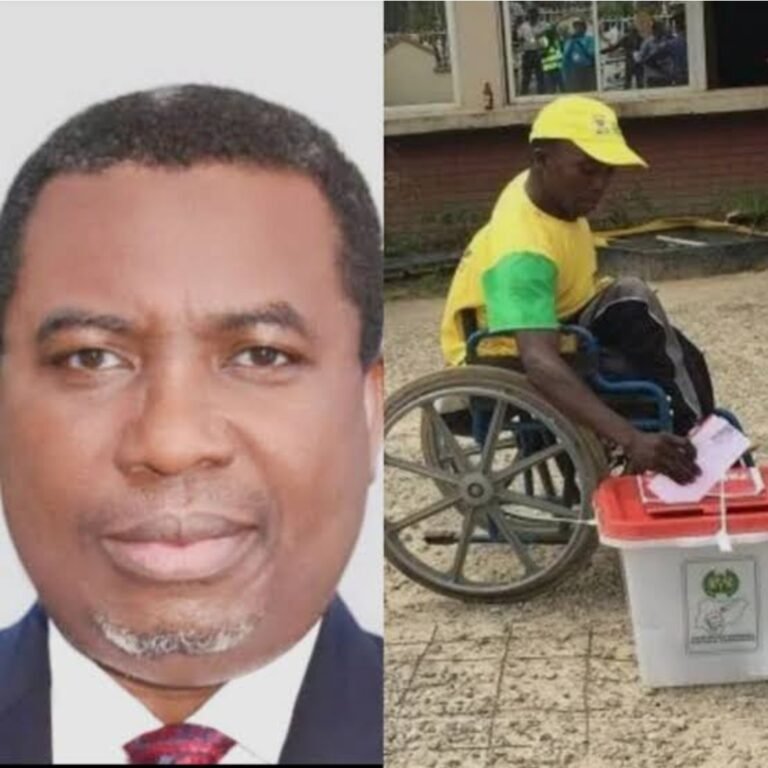
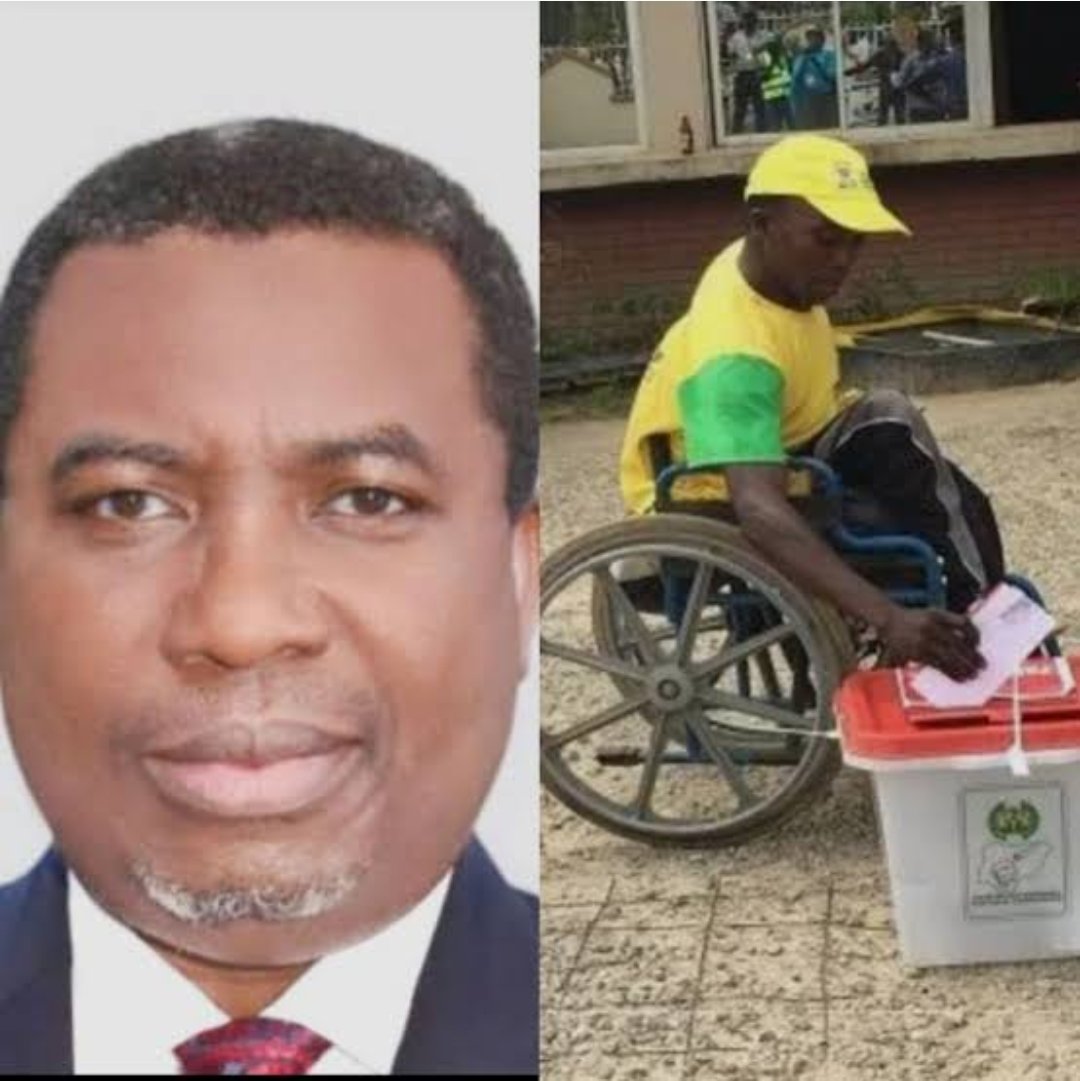
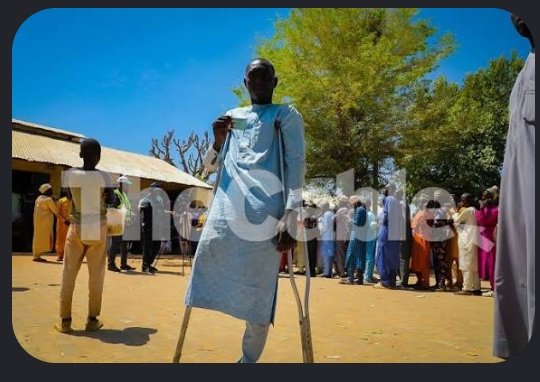
The Independent National Electoral Commission (INEC) has put the number of Persons With Disabilities (PWDs) recorded on Nigeria’s voter register at 232,658, as concerns persist over how the disability data is captured and interpreted.
INEC Chairman, Professor Joash Amupitan, disclosed the figure on Tuesday in Abuja while presenting the latest voter register at the World Press Conference and National Stakeholders’ Meeting to mark 100 days to the 2027 general election.
Amupitan said the National Register of Voters now stands at 103.43 million following three phases of Continuous Voter Registration (CVR) and Automated Biometric Identification System (ABIS) verification.
According to him, the three CVR phases added 10,772,421 new voters to the register.
The first phase, conducted from August 25 to December 10, 2025, added 2,611,266 voters; the second phase from January 5 to April 17, 2026, added 4,121,835; while the third phase from May 11 to July 26, 2026, added 3,867,997 voters.

Amupitan said the register contains 232,658 PWDs across 10 disability categories, representing about 0.23 per cent of the total registered voters.
The categories include 101,183 persons classified under “others”; 44,023 with albinism; 27,141 with physical impediments; 19,939 who are blind; 14,326 who are deaf; 8,832 with autism; 7,723 with cognitive or learning disabilities; 5,755 with little stature; 2,080 with Down syndrome; and 1,656 with spinal cord injuries.
However, the figure has renewed concerns over whether INEC’s disability data captures the full number of PWDs across the entire historical voter register.
In a September 20, 2026 statement titled “Misreporting PWD Numbers in Nigeria’s Voter Register: Why INEC’s Captured Figures Do Not Reflect the Full Historical Reality,” APC National Leader for Persons With Disabilities, Aare (Hon.) Tolu Bankole, questioned the interpretation of INEC’s PWD statistics.
Bankole argued that systematic collection of disability status as a separate data field was only introduced with the 2021 CVR process, following the launch of INEC’s online registration portal.
He therefore maintained that voters registered before the 2021 CVR restart, including PWDs, may not have a disability status recorded against their names.
According to Bankole, this means the figures captured through the disability field may represent persons who indicated their disability status during the relevant registration period rather than the total number of PWDs contained in the historical voter register.
He also identified other possible factors that could contribute to underreporting, including lack of awareness, reluctance to self-identify, stigma and voters choosing not to disclose their disability status.
Bankole had urged INEC to consistently state the temporal and methodological limitations of its PWD statistics, increase public sensitisation and explore ways of improving historical visibility of persons with disabilities while respecting legal and privacy requirements.
Beyond the PWD figures, INEC’s latest register shows significant differences in voter numbers across the states.
Lagos has the highest number of registered voters with 7,488,633, followed by Kano with 6,570,276 and Kaduna with 4,662,640.
Other states among the top 10 are Katsina with 3,876,051; Rivers, 3,736,434; Oyo, 3,588,111; Delta, 3,525,988; Benue, 3,057,225; Ogun, 3,037,981; and Bauchi, 3,012,547.
The five states with the lowest voter figures are Ekiti with 1,055,708; Bayelsa, 1,200,691; Yobe, 1,733,671; Gombe, 1,768,566; and the Federal Capital Territory, 1,732,043.
On gender distribution, INEC recorded 53,528,218 male voters, representing 51.75 per cent, and 49,900,497 female voters, representing 48.25 per cent.
The 35–49 age group accounts for the largest share of registered voters at 43,265,946, or 41.83 per cent. It is followed by voters aged 18–34 with 29,777,578, or 28.79 per cent.
Voters aged 50–69 account for 22,982,900, or 22.22 per cent, while those aged 70 and above number 7,402,291, representing 7.16 per cent.
Amupitan also said INEC had completed nine of 14 critical milestones contained in its revised timetable for the 2027 general election.
He announced that distribution of Permanent Voter Cards for Phase One would begin on October 9, 2026, while the voter register would be displayed from October 9 to 15 for claims and objections in accordance with Section 19(1) of the Electoral Act 2026.
The Commission, he added, had also acquired 57,000 new Bimodal Voter Accreditation System (BVAS) devices.
INEC has further signed a Memorandum of Understanding with transport unions, including the National Union of Road Transport Workers (NURTW), Road Transport Employers Association of Nigeria (RTEAN) and Maritime Workers Union of Nigeria (MWUN), to support the deployment of more than 100,000 vehicles and 4,000 boats for the 2027 elections.
The logistics plan is expected to support operations across 176,846 polling units and 8,838 Registration Areas nationwide.
Credit: Media360Impact Report | Source: Independent National Electoral Commission (INEC)