
By Gabriel Ameh
Nigeria’s oil and gas sector is recording fresh investment activity, with the $800 million Ima Gas Project becoming the fourth major gas project to reach Final Investment Decision (FID) under President Bola Ahmed Tinubu’s administration.
The Tinubu Stakeholders Forum (TSF), in a statement signed by its Chairman, Ahmad Sajoh, and Secretary, Danjuma Sada, described the development as evidence of growing investment momentum in the country’s oil and gas industry.
The Ima Gas Project is being developed by Nigerian energy company AMNI International in partnership with TotalEnergies. Located offshore in Oil Mining Leases (OMLs) 112 and 117, the project is expected to produce about 300 million standard cubic feet of gas per day at peak, according to NNPC Ltd. and the State House.
The project is particularly significant because the Ima gas resource was discovered in 1973 but remained undeveloped for more than five decades.
According to TSF, the Ima FID follows earlier investment decisions on the Iseni, Ubeta and HI gas projects, bringing the number of major gas projects reaching FID under the Tinubu administration to four. NNPC Ltd. also identifies Ima as the fourth major gas project to reach FID under the administration.
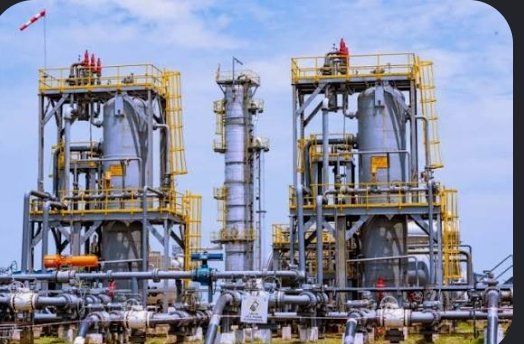
The Forum said the developments could help move Nigeria’s previously stranded gas resources into active production, with potential benefits for industrial activity, employment and energy supply.
TSF attributed the recent investment activity to reforms aimed at improving the investment environment, including fiscal incentives for non-associated gas projects, streamlined contracting processes and measures intended to reduce development costs.
The Ima project is also expected to supply feedgas to Nigeria LNG Limited as part of the company’s Train 7 expansion, which will increase the Bonny Island plant’s liquefaction capacity from 22 million tonnes per annum to 30 million tonnes per annum.
Beyond the Ima project, the Federal Government has introduced a new framework for deep offshore oil and gas projects. Approved in August 2026, the framework is designed to provide clearer, rules-based incentives for qualifying developments and is expected by the government to unlock up to $50 billion in new investment.
TSF said increased gas production could have wider implications for Nigeria’s economy by supporting power generation, fertiliser and petrochemical industries, LNG production and other gas-dependent businesses.
The Forum also said the investment could create opportunities for Nigerian banks, contractors, engineers, service providers and workers across the energy value chain.
“The significance of these developments is that Nigeria is beginning to convert resources that remained dormant for decades into actual investment, production, jobs and economic value,” the Forum said.
TSF urged investors and Nigerian businesses to explore opportunities emerging across the gas and wider energy value chain, saying sustained investment could strengthen energy security, expand domestic industrial capacity and increase government revenues.
The group said the four gas FIDs, alongside the new deep offshore investment framework, point to significant changes in Nigeria’s approach to attracting capital into long-term oil and gas projects.
Source/Credit: Tinubu Stakeholders Forum (TSF); NNPC Ltd.; State House; TotalEnergies.