
By Gabriel Ameh
ABUJA — As Nigeria begins preparations for the 2027 General Elections, the Police Community Relations Committee (PCRC) is seeking to deepen community participation in security through a proposed workshop on the country’s emerging multi-layered security architecture.
The initiative is expected to bring together security stakeholders, government representatives and community actors to examine emerging security challenges and explore ways of strengthening collaboration at the grassroots ahead of the elections.
The engagement will form part of the PCRC’s second Collective Security and Community Synergy Workshop, being convened by the PCRC Monitoring Unit (PMU).
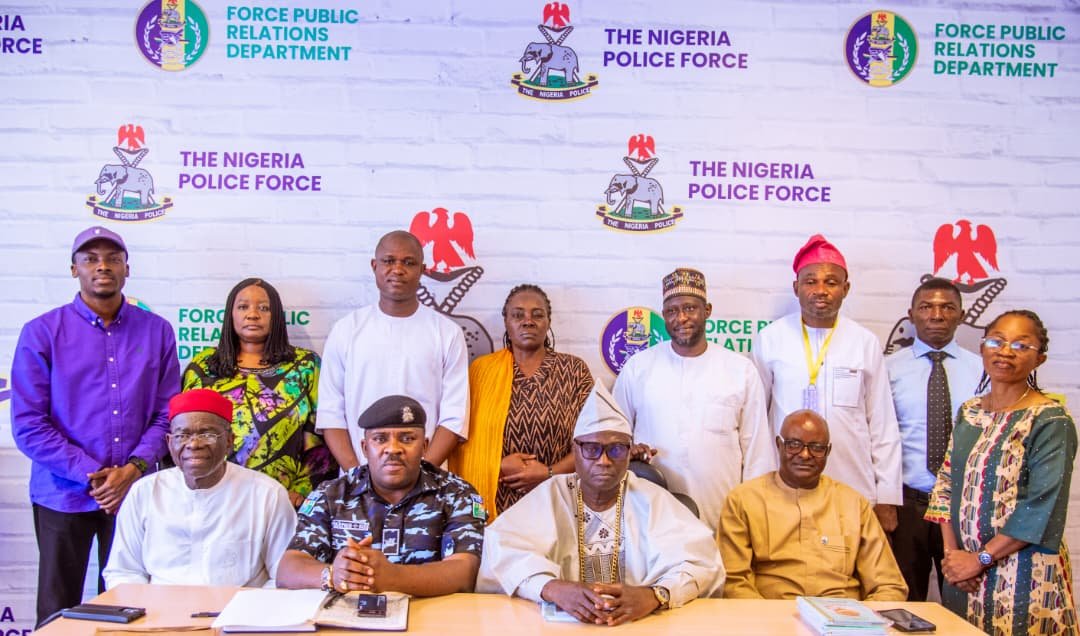
The National Chairman of the PCRC, Alhaji Mogaji Ibraheem Olaniyan, disclosed the development during the inauguration of the Local Organising Committee (LOC) for the workshop at the Force Headquarters in Abuja.
Olaniyan, who was represented at the ceremony by the PCRC Chairman, Zone 16, Yenagoa, Archbishop Moses Omonkhuale, described the planned engagement as an important community security policy dialogue.
The LOC is chaired by Professor Theophilus Ndubuaku, while Mrs. Sosanya Adebimpe serves as Secretary.
Other members include Mr Inuwa Umar, Dr Princess Joy Idam, Engr. David Dung, Ms Gloria Dandam, Mr Onoja Sunday, Quantity Surveyor Patrick Nwaefido, Barrister Jessy Gagara and Mr Andrew Enantiwhen.

Beyond Traditional Policing
The proposed workshop is built around an expanding understanding of community security, with the PCRC advocating a model in which communities are not viewed merely as sources of information for law enforcement agencies but as active stakeholders in security.
For years, police-community relations have largely centred on encouraging citizens to provide intelligence and support security agencies.
However, the PCRC Monitoring Unit says the changing security environment requires a broader approach that recognises communities as co-producers and owners of community security.
The National Coordinator of the PCRC Monitoring Unit, Austen Yong, said the workshop reflects this changing philosophy of community engagement.
According to Yong, the emphasis is shifting from simply asking communities to support the police to recognising citizens as stakeholders and partners in creating safer communities.

Nigeria’s Evolving Security Architecture
The proposed engagement comes amid growing discussions around community policing, State Police, regional security structures and other community-based approaches to addressing insecurity.
While such structures could provide opportunities for more responsive security systems, they also raise questions around coordination, responsibilities and how different actors can operate effectively without duplication or conflict.
The PCRC workshop is expected to examine these issues and consider how the various layers of Nigeria’s security architecture can complement one another.
Communities remain particularly important in this process because residents are often among the first to observe unusual activities or developments within their neighbourhoods.
Their knowledge of local environments and relationships can provide valuable information to security agencies.
However, translating such local knowledge into effective security partnerships requires trust, clear responsibilities and greater understanding of citizens’ roles within the security framework.
Focus on the 2027 General Elections
A major focus of the workshop will be security ahead of the 2027 General Elections.
Nigeria’s electoral process has historically placed significant demands on security agencies, particularly in areas affected by political tensions, misinformation, communal conflicts and other emerging threats.
The PCRC said the workshop will examine what it describes as violent signals ahead of the 2027 polls and explore preventive measures that can be adopted through stronger community-security cooperation.

Yong said the objective is to ensure that communities are better prepared to contribute to safer and more credible elections.
The approach places community participation at the centre of discussions around electoral security, with citizens expected to play constructive roles in identifying and reporting potential threats while working with relevant security institutions.
Strengthening Police-Community Relations
Representing the Force Public Relations Officer, CSP Iniedu Anietie Okokon, at the LOC inauguration, the Admin Officer of the Force Public Relations Department, SP Stephen Kuti, commended the PCRC for its efforts to strengthen relations between the police and communities.
Kuti acknowledged the organisation’s contribution to community policing and its efforts to promote closer integration between the police and the communities they serve.
“I often wonder where you get the energy to do all the things you are doing,” Kuti remarked, while expressing the Police Force’s appreciation of the PCRC’s activities.
His comments further highlighted the importance of partnerships between formal security institutions and community-based organisations in addressing Nigeria’s security challenges.
Building Safer Communities Ahead of 2027
With preparations for the 2027 elections gradually gathering momentum, the PCRC’s proposed workshop could provide an opportunity for stakeholders to reassess the role of communities in Nigeria’s security architecture.
The central message of the initiative is that community security cannot rest solely on government and formal security institutions.
Communities, civil society organisations and other stakeholders also have roles to play in identifying emerging threats, strengthening communication and supporting peaceful electoral processes.
The effectiveness of Nigeria’s evolving multi-layered security architecture will depend, in part, on how well the different actors communicate, coordinate their responsibilities and build public trust.
Through the Collective Security and Community Synergy Workshop, the PCRC says it hopes to advance that conversation by placing communities at the centre of discussions on security and preparing them to contribute constructively to a safer environment for the 2027 General Elections and beyond.