
By Gabriel Ameh
China’s General Administration of Customs (GACC) has urged African businesses and producers to take greater advantage of the country’s expanded zero-tariff policy by increasing exports of agricultural and other high-quality products to the Chinese market.
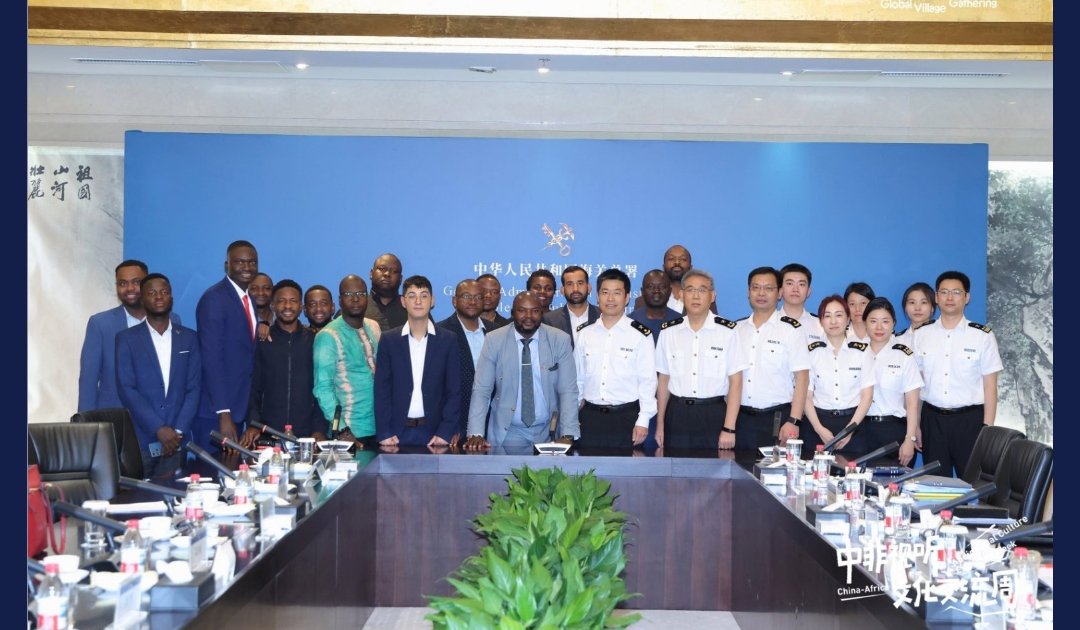
The call was made in Beijing by Zhang Xiaohui, Deputy Director-General of the GACC Department of International Cooperation, during a briefing with 16 African journalists.
Zhang said China-Africa trade continued to record strong growth, reaching more than $348 billion in 2025, while trade volume in 2026 had already exceeded $207 billion.
He explained that China’s zero-tariff policy, expanded on May 1, 2026, now covers 53 African countries, compared with the 33 countries that initially benefited from the arrangement.
According to him, the expanded policy is opening new opportunities for African exporters, with products such as Kenyan avocados and Ethiopian coffee already gaining access to the Chinese market.
Zhang encouraged African countries and businesses to diversify their exports by introducing more agricultural products to Chinese consumers rather than relying mainly on traditional export commodities.
“China wants to benefit from Africa’s high-quality products,” he said, noting that Chinese President Xi Jinping had called for customs procedures to be improved to facilitate the entry of African goods into the Chinese market.
He disclosed that the GACC had established an online platform to simplify procedures for African countries seeking certificates of origin, which are required for goods benefiting from preferential trade arrangements.
The customs official, however, stressed that zero tariffs do not mean African exporters are exempt from China’s health, safety and quality requirements.
He said all products entering the Chinese market must comply with relevant standards designed to protect consumers. Agricultural products, he added, must meet applicable quality requirements, while animal products are subject to disease prevention and control regulations.
Zhang also disclosed that the GACC had introduced integrated market access measures for products including dried chilli peppers and coffee beans, potentially creating additional opportunities for African producers and exporters.
He described China-Africa trade relations as a partnership built on mutual support and cooperation, assuring that Chinese customs authorities would continue working with African governments, businesses and producers to facilitate legitimate trade.
He further called on African media organisations to play a stronger role in informing farmers, producers and businesses about the opportunities created by China’s expanded zero-tariff framework.
China introduced zero-tariff treatment covering 100 per cent of tariff lines for all least-developed countries (LDCs) with which it maintains diplomatic relations on December 1, 2024. At the time, 33 African countries benefited from the arrangement.
The policy was expanded on May 1, 2026, to cover the remaining 20 African countries that have diplomatic relations with China, bringing the total number of participating African countries to 53.
Under the expanded arrangement, zero tariffs apply to the 20 African non-LDCs through preferential tariff rates for two years. During the period, China will continue efforts to promote the signing of the China-Africa Economic Partnership for Shared Development agreement with relevant African countries.
The expanded market access is expected to deepen China-Africa trade cooperation while creating more opportunities for African producers and encouraging investment in agriculture, processing and export development.