

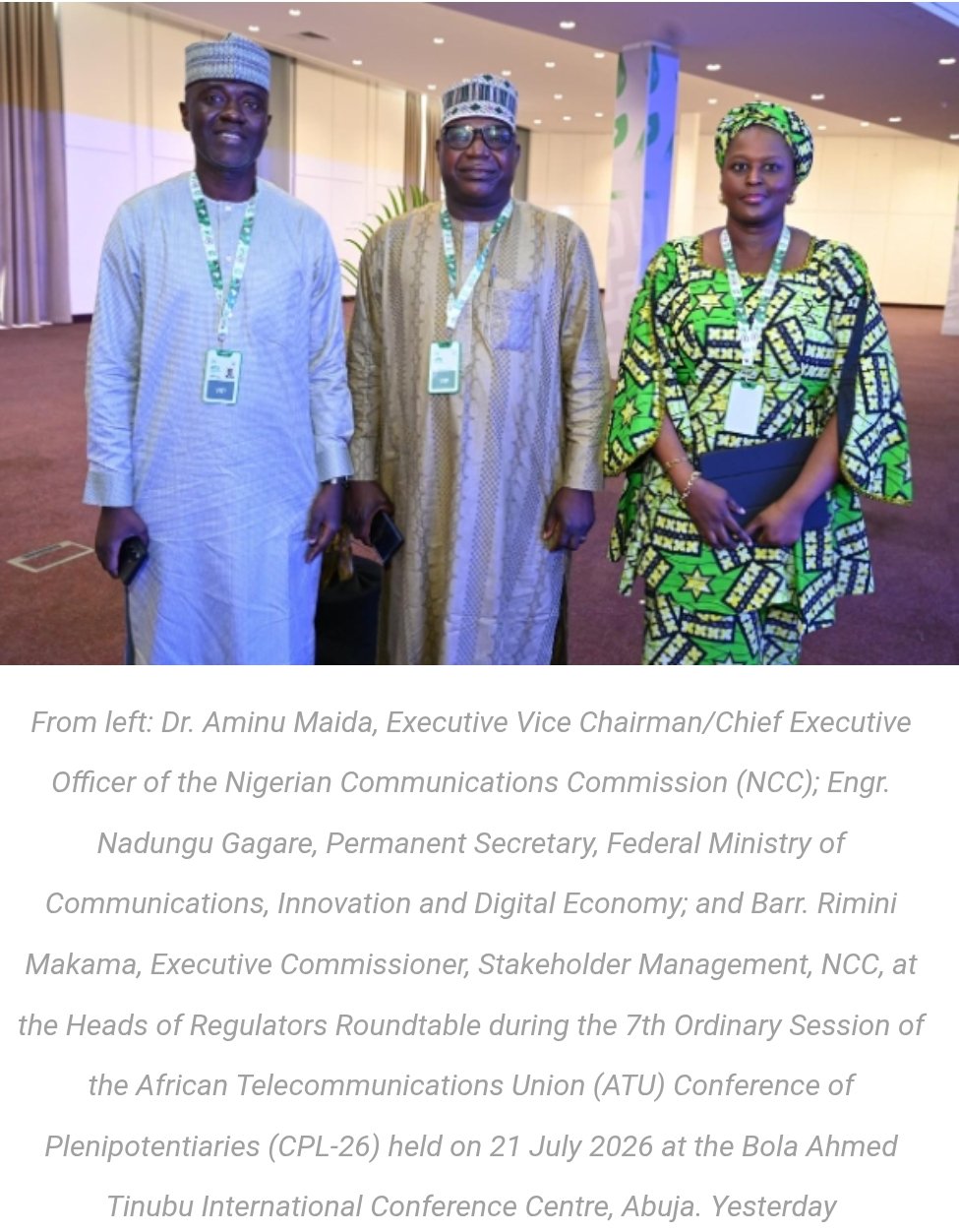
By Media360Impact
The Nigerian Communications Commission (NCC) has called for stronger collaboration among telecommunications regulators across Africa to improve the use of data, market intelligence and evidence-based policymaking in shaping the continent’s rapidly evolving digital economy.
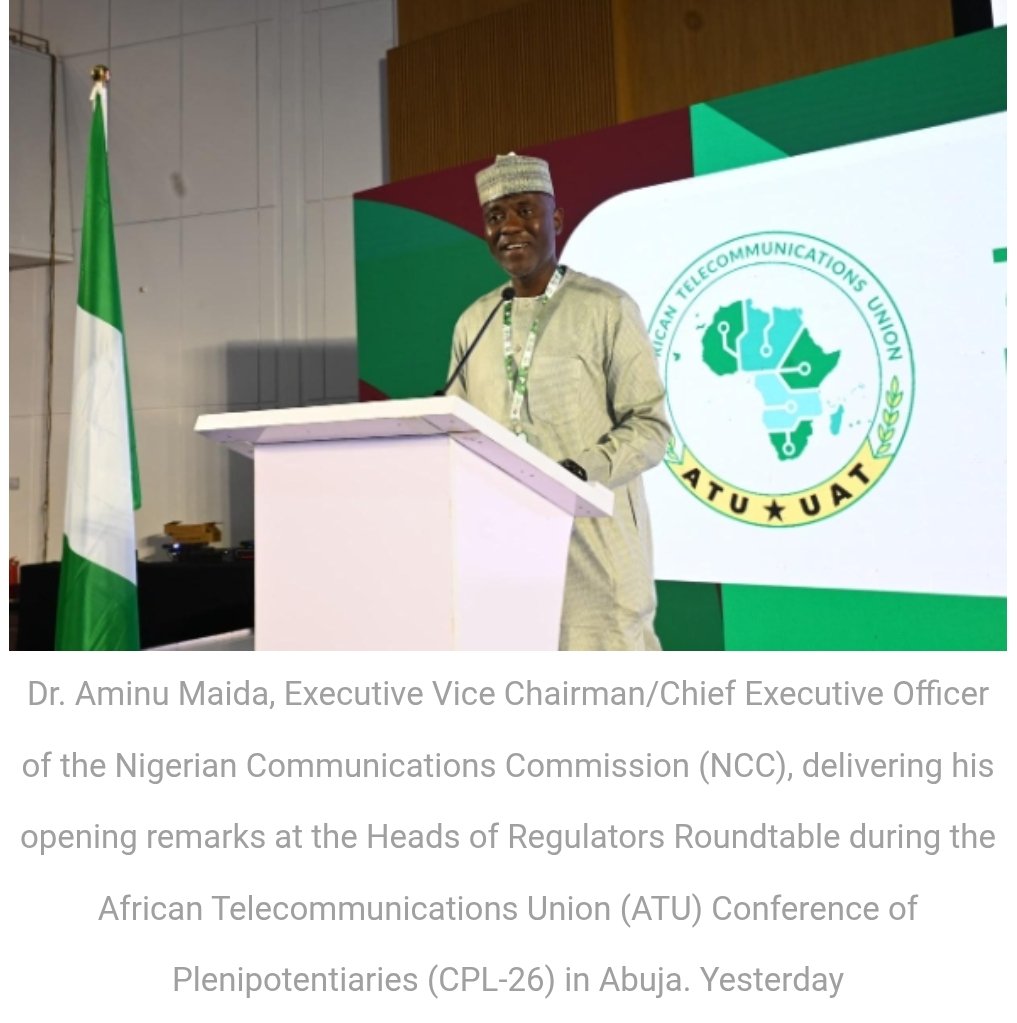
The Executive Vice Chairman and Chief Executive Officer of the NCC, Dr. Aminu Maida, made the call while speaking at the Heads of Regulators Roundtable held during the African Telecommunications Union (ATU) Conference of Plenipotentiaries (CPL-26) in Abuja.
Maida said communications regulation has become increasingly important to Africa’s economic growth, digital transformation and national development, noting that regulators across the continent face many of the same challenges despite operating under different legal and market environments.
According to him, issues such as broadband infrastructure expansion, cybersecurity, affordable digital access, satellite services, network resilience and the rapid emergence of artificial intelligence require regulators to work more closely and learn from one another.
He observed that many regulatory challenges confronting one country have often been addressed elsewhere on the continent, making collaboration and knowledge-sharing essential.
“Very often, the challenge one regulator is trying to solve has already been encountered, in one form or another, by a colleague elsewhere on the continent,” Maida said.
The NCC boss described the theme of the roundtable, “Building Africa’s Network Intelligence Ecosystem for Evidence-Based Regulation,” as timely, saying it provides an opportunity for African regulators to strengthen the use of reliable data and market intelligence in making better regulatory decisions.
“It gives us an opportunity to consider how better use of data, evidence and market intelligence can strengthen regulatory decisions, and how African regulators can learn more systematically from one another,” he added.
Chairing the session, the NCC’s Executive Commissioner for Stakeholder Management, Rimini Makama, said the rapid growth of broadband, satellite technology, artificial intelligence, cloud computing and digital public infrastructure has made communications regulation more complex than ever.
She noted that although regulators now have access to large volumes of technical, consumer and market data, the real task is transforming that information into practical intelligence that supports effective regulation and improves consumer outcomes.
Makama stressed that regulators must move beyond traditional approaches and embrace smarter, evidence-based regulatory models capable of responding to emerging technologies and changing market realities.
The Heads of Regulators Roundtable is part of broader efforts by African communications regulators to strengthen regional cooperation, promote evidence-based regulation and build more resilient, innovative and consumer-focused digital communications ecosystems across the continent.