
By Gabriel Ameh
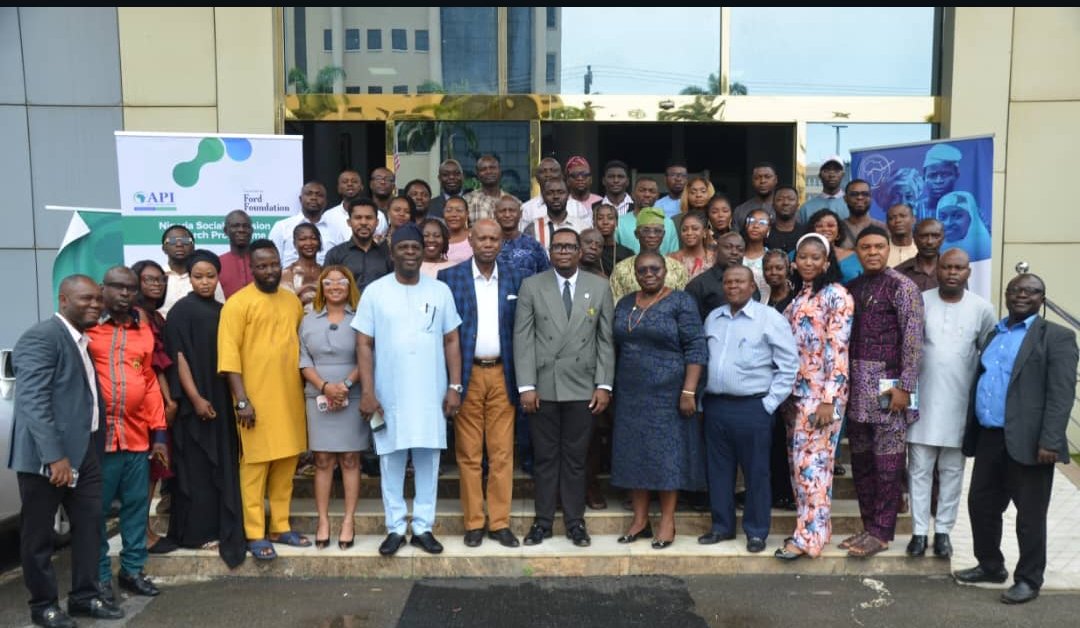
ABUJA – In a strategic effort to strengthen national unity, promote inclusive governance, and improve evidence-based public communication, the Africa Polling Institute (API) convened a high-level capacity-building workshop for policy executives and media practitioners on advancing social cohesion in Nigeria.
The workshop, themed around equipping participants as champions of social cohesion, brought together government officials, communication experts, editors, journalists, digital content creators, and development practitioners to explore practical approaches to fostering trust, inclusion, peaceful coexistence, and responsible public discourse in an increasingly polarized society.
Delivering a keynote presentation, the Executive Director of the Africa Polling Institute, Professor Bell Ihua, provided a comprehensive examination of the concept of social cohesion and its growing relevance in contemporary societies. He explained that social cohesion goes beyond peaceful coexistence and encompasses the strength of relationships among citizens, trust in public institutions, a shared sense of belonging, civic participation, inclusion, and collective commitment to national development.
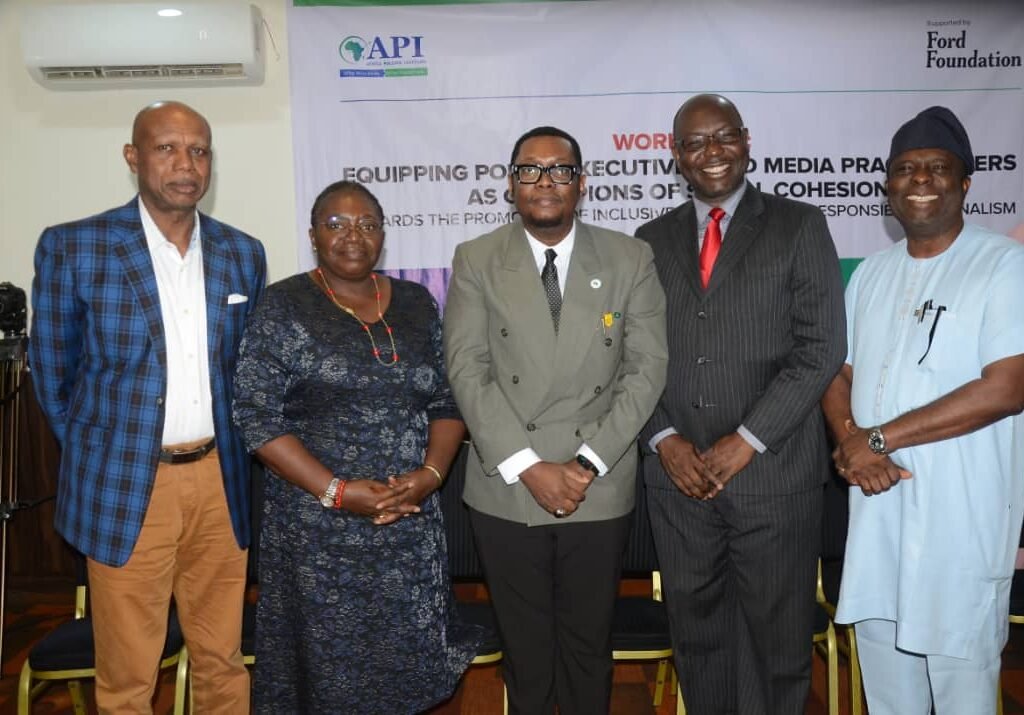
Professor Ihua highlighted how social cohesion has become a critical development indicator globally, particularly in societies experiencing economic hardship, insecurity, political polarization, misinformation, ethnic tensions, and declining public trust.
Drawing from regional and international experiences, he explored how countries across Africa, Europe, and Asia have approached social cohesion challenges through inclusive policies, responsive governance, citizen engagement, and strategic communication initiatives.
He also examined key indicators used in measuring social cohesion, including interpersonal trust, confidence in institutions, social inclusion, civic participation, perceptions of fairness and justice, tolerance of diversity, and citizens’ sense of national identity.
Using survey findings and data generated by the Africa Polling Institute, Professor Ihua presented evidence on public perceptions across different demographic groups, emphasizing the importance of data-driven policymaking and communication interventions. He noted that credible data can help governments, civil society organizations, and the media better understand emerging social dynamics and design interventions that strengthen social bonds rather than deepen divisions.
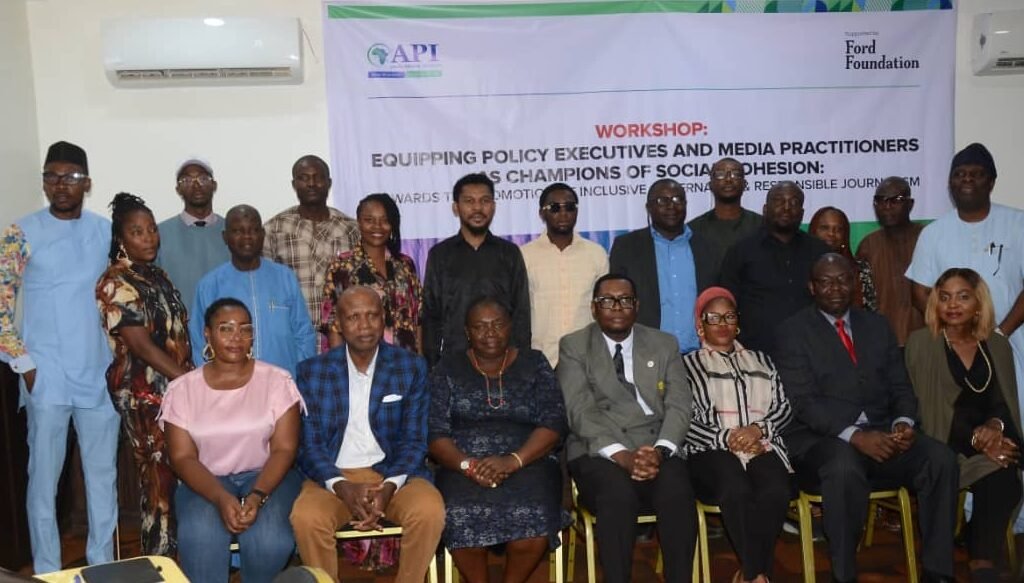
In another session, development communication expert Dr. Olusoji Adeniyi delivered an in-depth presentation on the intersection of social cohesion, digital technology, and institutional editorial practices.
Dr. Adeniyi examined how digital platforms have transformed public conversations and significantly influenced social cohesion outcomes. While acknowledging the opportunities provided by digital technologies for citizen engagement, information dissemination, and democratic participation, he warned that social media ecosystems have also amplified misinformation, disinformation, hate speech, online harassment, and divisive narratives.
According to him, newsrooms and communication institutions now face increasing pressure to balance speed with accuracy while ensuring that content does not unintentionally fuel social tensions.
He emphasized the need for institutional editorial frameworks that prioritize social responsibility, ethical journalism, fact-checking, context-driven reporting, diversity of voices, and conflict-sensitive communication.
The session further explored emerging digital tools that can assist journalists and communication professionals in monitoring public sentiment, identifying misinformation trends, tracking online narratives, verifying information, and promoting constructive engagement among citizens.
Participants were encouraged to integrate social cohesion principles into editorial policies, newsroom workflows, content moderation systems, and audience engagement strategies to ensure that media platforms become instruments for national unity and constructive dialogue.
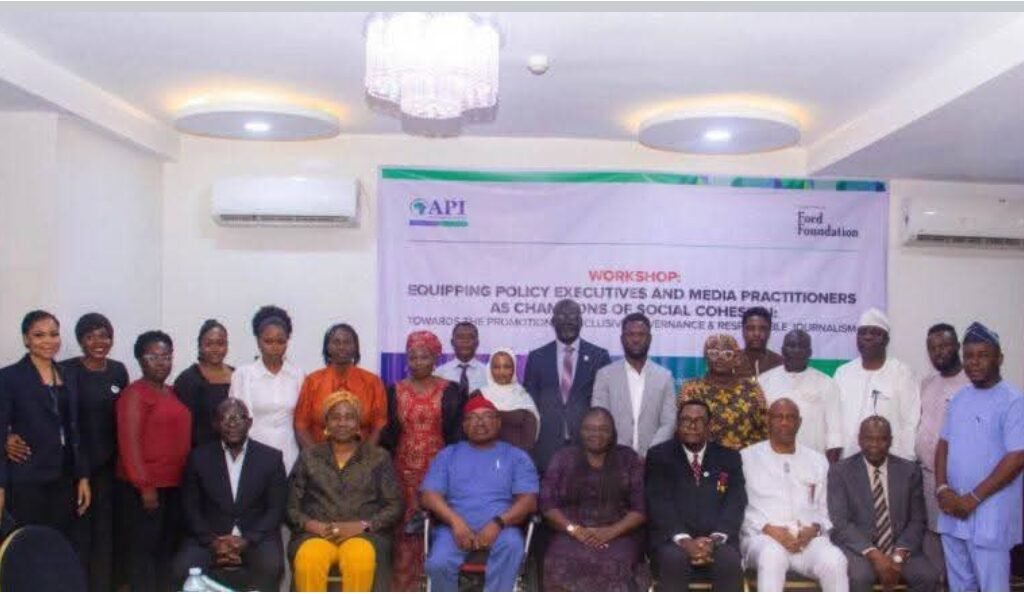
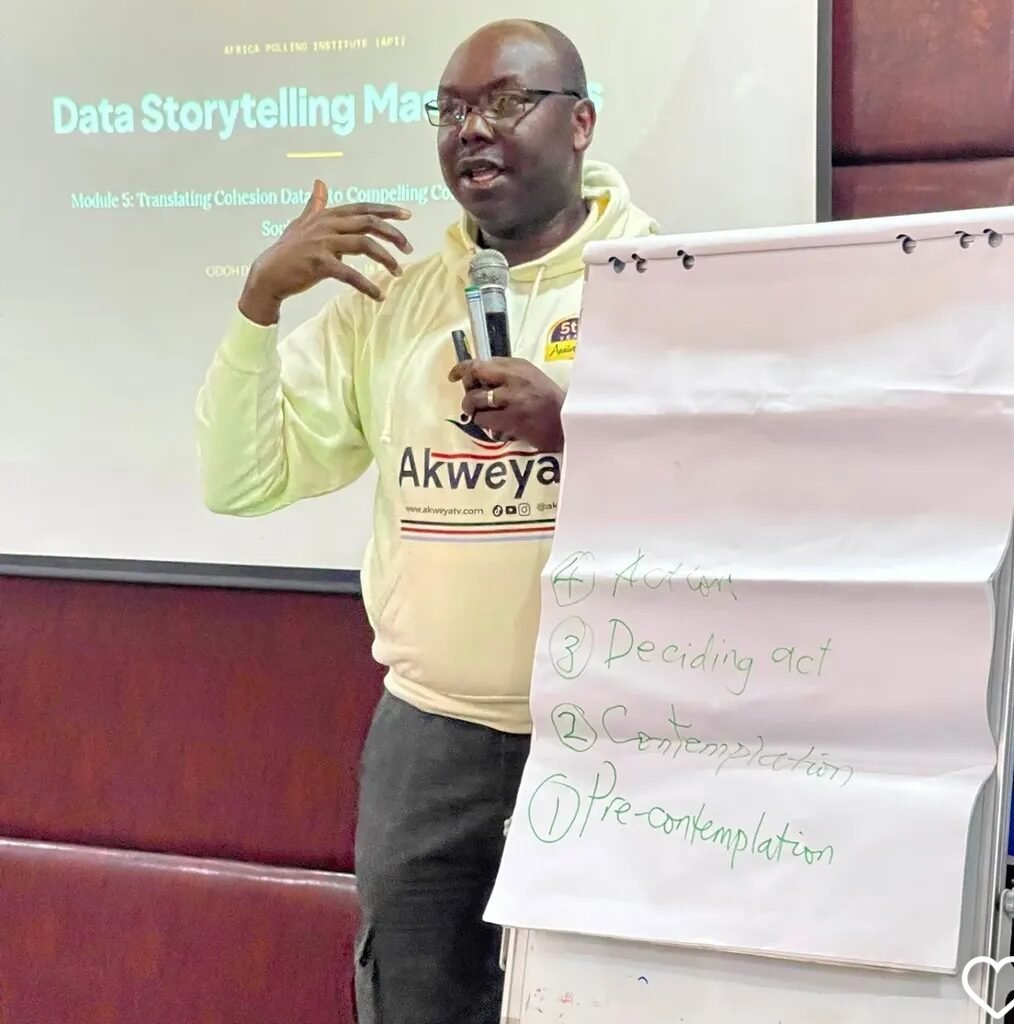
The workshop also featured a practical session on data storytelling for digital and social media platforms facilitated by media and communication specialist Odoh Diego Okeyondo.
Okeyondo focused on translating complex social cohesion survey findings into compelling, audience-friendly content capable of driving public engagement and informed conversations.
He demonstrated how journalists and digital storytellers can transform statistical data into impactful narratives through visual storytelling techniques, short-form videos, infographics, interactive graphics, explainers, social media threads, and multimedia content.
The session underscored the growing importance of making research findings accessible to broader audiences, particularly younger citizens who consume information primarily through digital platforms.
Participants were guided on techniques for identifying newsworthy insights from datasets, simplifying technical language without compromising accuracy, creating audience-centered narratives, and developing content that resonates emotionally while remaining evidence-based.
As part of the hands-on training, participants worked in groups to develop sample social media posts, short video scripts, infographic concepts, and data-driven digital campaigns using social cohesion survey data generated by the Africa Polling Institute.
The exercise enabled participants to apply newly acquired skills in transforming raw statistics into compelling stories capable of influencing public understanding and promoting positive social behaviour.
Another major highlight of the workshop was a newsroom management session facilitated by veteran journalist and media strategist Ismail Abdulaziz.
Abdulaziz led participants through a simulation exercise designed to test newsroom decision-making under production pressure, particularly during periods of heightened social tension, political contestation, or public crises.
The exercise replicated real-life newsroom scenarios where editors and reporters must make rapid editorial decisions while balancing accuracy, public interest, ethical considerations, and potential social consequences.
Participants examined how headlines, framing choices, source selection, visual content, and publication timing can significantly influence public perceptions and either strengthen or undermine social cohesion.
Abdulaziz stressed the importance of editorial leadership in shaping responsible narratives and preventing the amplification of harmful stereotypes, inflammatory rhetoric, or unverified information.
He further encouraged newsroom leaders to institutionalize crisis communication protocols, strengthen verification processes, promote diversity within editorial teams, and create mechanisms for monitoring the social impact of published content.
Throughout the workshop, participants repeatedly emphasized the crucial role of the media and policymakers in building public trust, promoting inclusion, and fostering constructive civic engagement.
Discussions also highlighted the need for stronger collaboration among government institutions, civil society organizations, development partners, academia, and the media in addressing societal divisions and strengthening democratic resilience.
At the end of the workshop, participants expressed confidence that the knowledge and practical skills acquired would enhance their ability to communicate social cohesion issues more effectively and contribute meaningfully to national development.
The workshop reinforced the Africa Polling Institute’s commitment to advancing evidence-based dialogue, promoting social cohesion, and strengthening the capacity of stakeholders to build more inclusive, resilient, and united communities across Nigeria and the African continent.