
0-2944x2944-0-0-{}-0-12#
By Gabriel Ameh
Religious leaders and technology experts have called for stronger ethical safeguards and inclusive safety standards as Artificial Intelligence (AI) continues to expand across Nigeria and Africa.
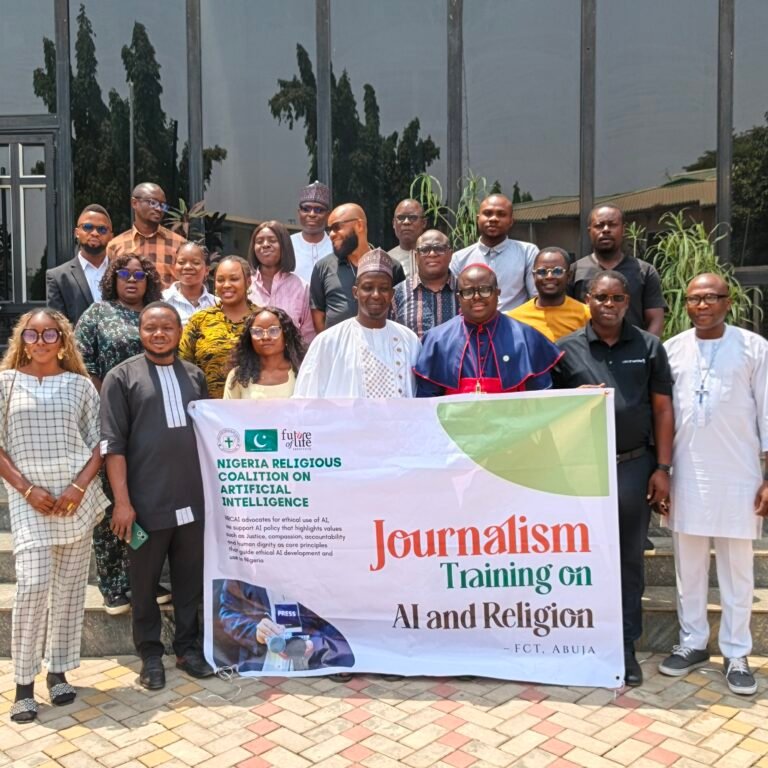
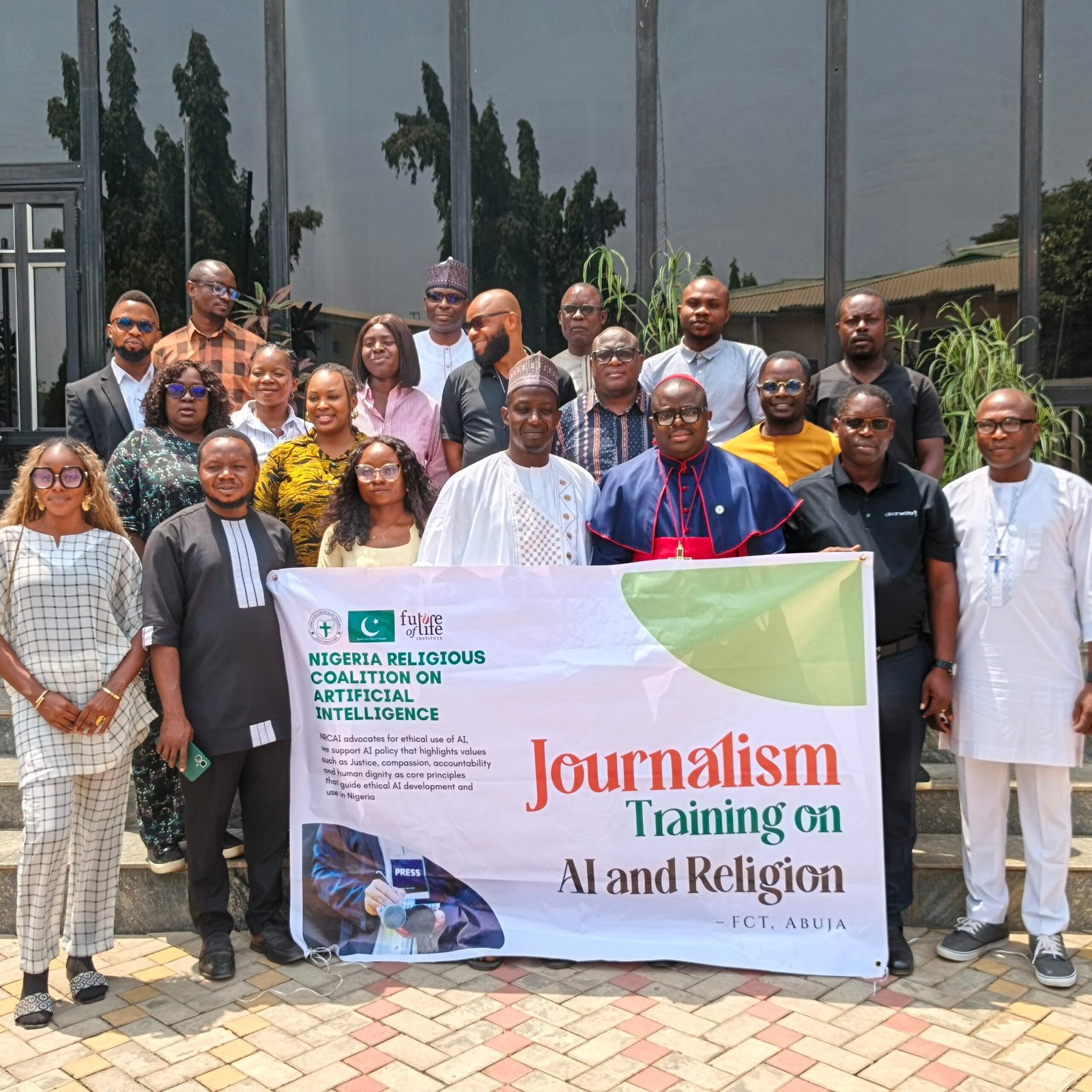
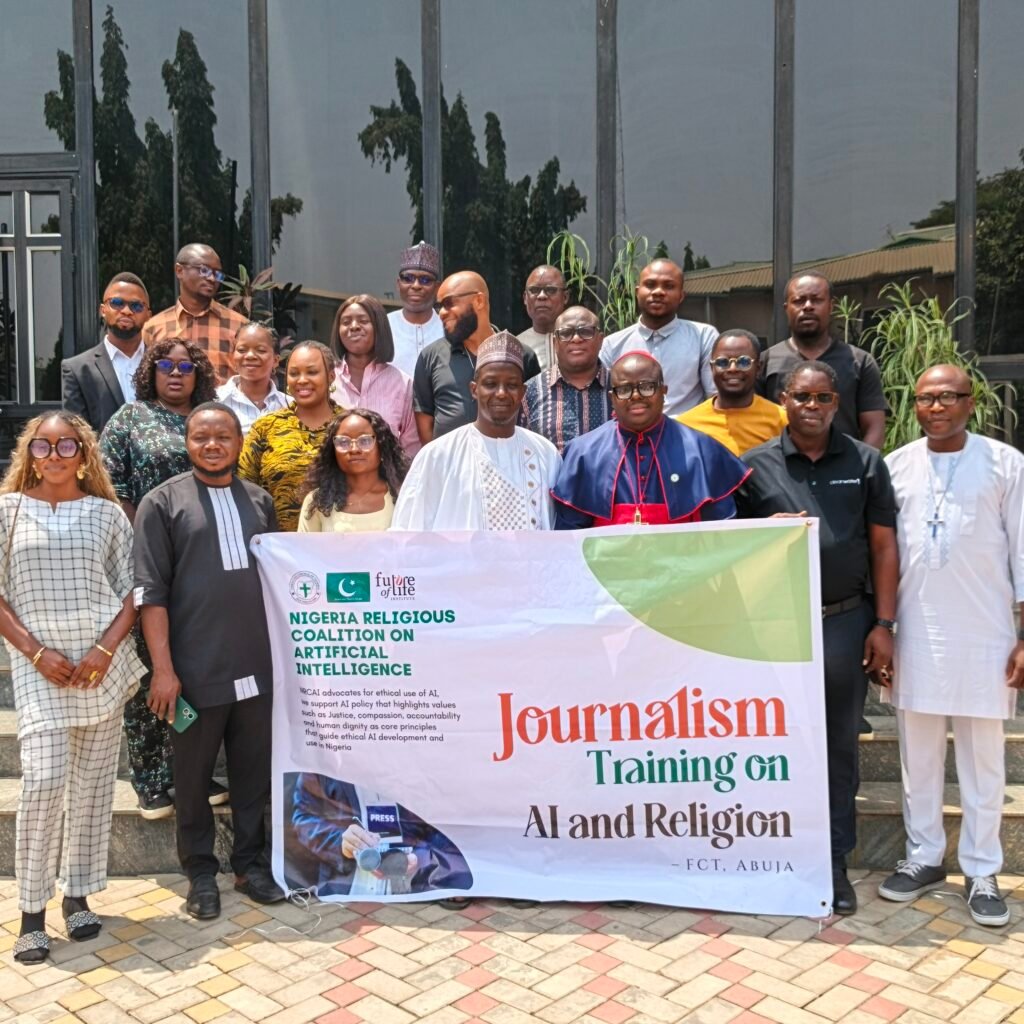
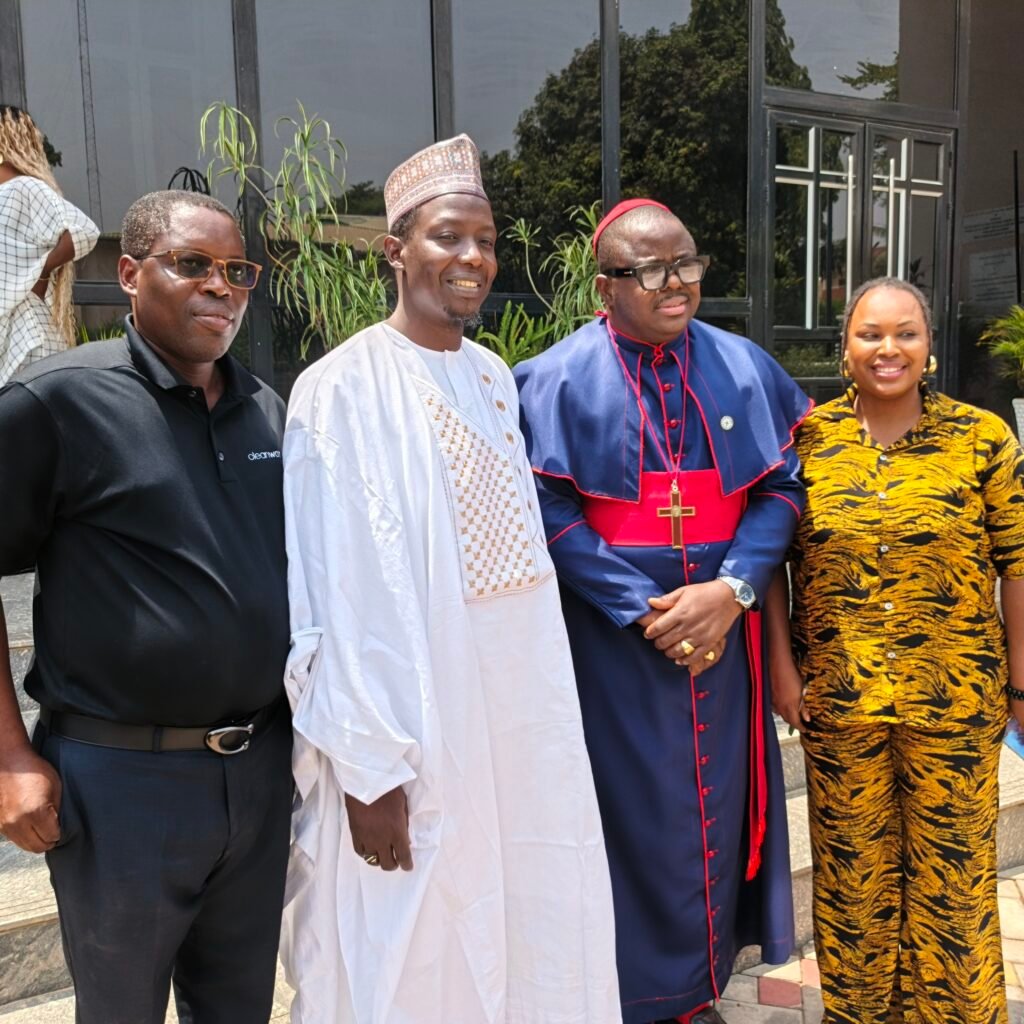
The call was made during a training on Artificial Intelligence Ethics, designed to equip participants with practical knowledge on responsible AI use, ethical considerations, and emerging digital standards.
The training brought together stakeholders from religious institutions, technology research communities, and the media to examine how ethical values and technological safeguards must evolve alongside the rapid growth of AI systems.
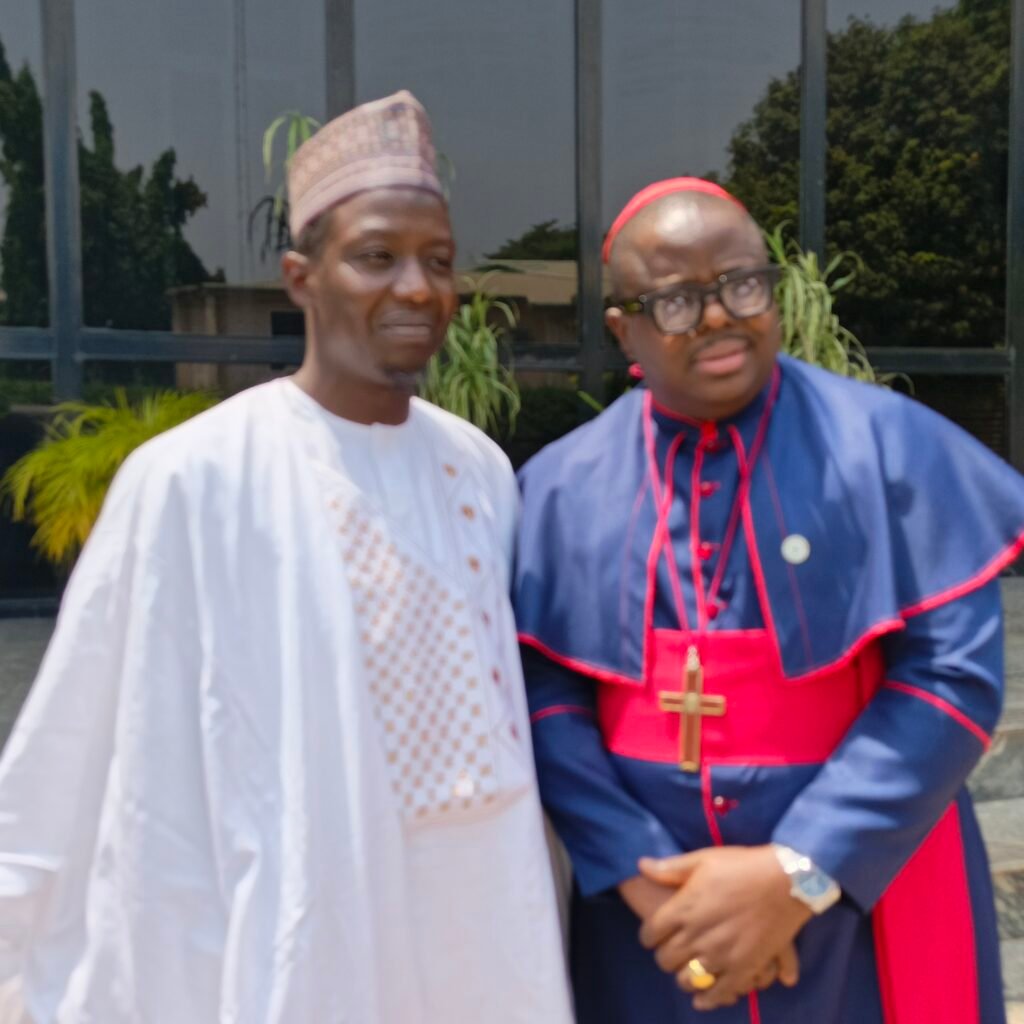
Speaking during the session, Mallam Yusuf Ahmed Bida, Administrative Secretary of the Jama’atu Nasril Islam (JNI), emphasized that ethics remains fundamentally tied to the wellbeing of society.
According to him, ethical conduct must always promote societal benefit and avoid harm.
“Anything that will be beneficial to society and not harmful to humanity is what constitutes ethics,” he said.
From the Islamic perspective, Bida explained that ethical principles known as Al-Akhlaq Al-Islamiyyah are anchored on four major foundations.
The first, he noted, is Taqwa, or God-consciousness, which requires individuals to remain morally accountable in their actions.
Secondly, ethical decisions must be guided by fairness and justice, particularly in human interactions and social systems.
He also stressed the importance of Amanah, meaning trustworthiness, which requires integrity and responsibility in engagements involving technology and information.
Finally, he highlighted Rahmah, or compassion, noting that ethical practices must prioritize human wellbeing and avoid creating hardship for society.
“Anything that will bring unnecessary hardship to humanity cannot be considered ethical,” Bida said, referencing Islamic teachings that emphasize ease, mercy, and societal harmony.
Complementing the faith-based perspective, Godwin Faruna Abuh, an AI Safety Researcher with the LSR Dashboard Center, raised concerns about emerging safety gaps in AI systems used in Nigeria and across Africa.
Abuh warned that many artificial intelligence models currently deployed on the continent have safety instructions and refusal mechanisms written primarily in English.
This, he explained, creates a significant vulnerability when users interact with AI systems in indigenous languages.
“Most of the safety patterns guiding AI systems are written in English, and that is concerning because these technologies can now understand and communicate in several local languages,” he said.
According to him, individuals could potentially bypass built-in safeguards by issuing harmful prompts in languages such as Yoruba, Igbo, Hausa, Igala, and other African dialects.
“An AI model may refuse harmful instructions when prompted in English, but the same instruction in a local language might not trigger the same safety response,” he explained.
Abuh noted that this gap could enable misuse of AI technologies for activities such as generating harmful content, misinformation, or deepfakes.
The AI researcher added that while artificial intelligence holds immense potential to transform economies and reduce poverty, particularly in developing regions, the technology must be deployed responsibly.
“We are currently at a crossroads between optimism and pessimism about the rise of AI,” he said.
“If properly used, AI can revolutionize industries and even help address global poverty. But without proper safeguards, it can also be misused.”
To address the challenge, Abuh revealed that he has developed a tool known as the Refusers Project, aimed at strengthening safety guardrails in advanced AI models.
The project focuses on retraining frontier AI systems to improve their ability to detect and refuse harmful requests across multiple languages.

He also called on journalists and media practitioners to play a critical role in raising awareness about ethical AI development and ensuring stakeholders remain accountable.
Experts at the training concluded that collaboration between policymakers, faith communities, technology developers, and the media will be essential in ensuring that artificial intelligence evolves in ways that protect society while maximizing its benefits.
As AI adoption accelerates across Africa, they stressed that ethical frameworks, cultural awareness, and language-inclusive safety systems must form the foundation of responsible digital innovation