
By Gabriel Ameh
Nigerian households struggling with rising cooking gas prices may soon get answers as the Senate moves to investigate why Liquefied Petroleum Gas (LPG) continues to leave the country despite shortages in the domestic market.
The Senate Committee on Petroleum Resources has resolved to summon the Group Chief Executive Officer of the Nigerian National Petroleum Company Limited (NNPCL) and the Managing Director of Chevron to explain their companies’ continued involvement in LPG exports.
The decision followed the failure of both executives to attend an investigative hearing on the matter at the National Assembly.
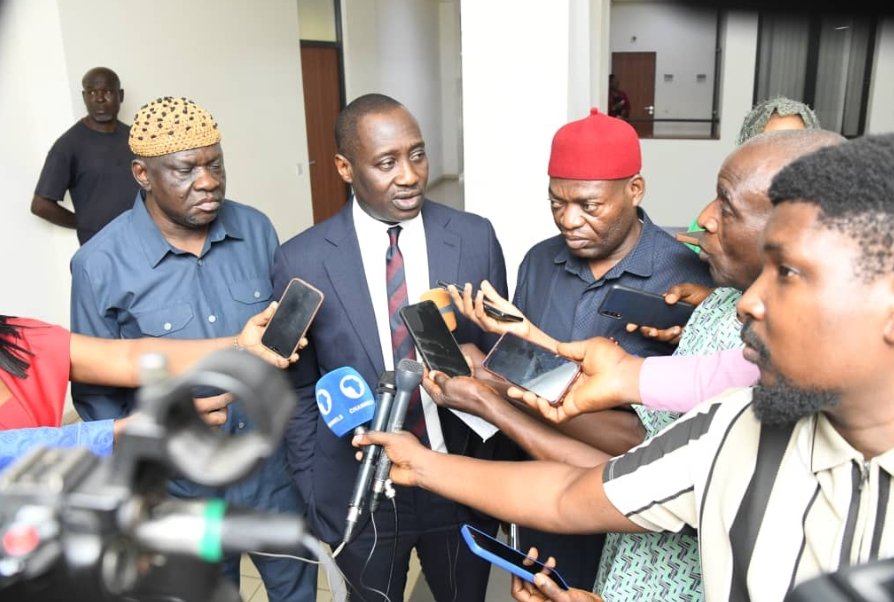
Chairman of the committee, Senator Jarigbe Agom Jarigbe, disclosed this while speaking with journalists after an interactive session on Wednesday. He described the absence of the two officials as a confrontation with parliament.
He said the committee had directed both executives to appear at its next sitting on December 1, 2026, to provide explanations on the issue.
A major concern for the lawmakers is the continued issuance of export licences for LPG by the Nigerian Upstream Petroleum Regulatory Commission (NUPRC) at a time when local consumers are facing inadequate supplies.
Jarigbe said the committee was determined to establish why a product needed by Nigerian households was being exported while domestic demand remained unmet.
He maintained that sufficient LPG should be made available within the country to ease the burden on ordinary Nigerians, referencing President Bola Tinubu’s Executive Order 9, which he said was intended to address the difficulties facing consumers.
“We think that LPG has to be supplied to the domestic market for the good of the common man. And that’s why Mr President came up with Executive Order 9 to ameliorate the sufferings of our people,” the senator said.
The committee is also investigating allegations of possible irregularities surrounding the exports, although Jarigbe said no conspiracy had been established.
He disclosed that lawmakers would examine revenues generated from LPG exports between 2023 and 2026, as well as whether the proceeds were properly repatriated into the Consolidated Revenue Fund.
“We don’t know if there is a conspiracy, but we are going to look at the revenues generated from the exported LPG from 2023, 2024 to date. And then we are going to look at the repatriation of the funds because they are exported to the consolidated revenue fund,” he said.
Another issue the lawmakers intend to examine is the technical explanation provided by industry operators regarding the composition of LPG exported from Nigeria and the product supplied to the domestic market.
According to Jarigbe, operators had argued that the exported LPG contained 80 per cent propane and 20 per cent butane.
However, he questioned whether the product could be blended to make it suitable for local consumption, suggesting that an 80 per cent butane and 20 per cent propane mixture could help improve domestic availability.
The senator expressed confidence that addressing supply shortages would eventually bring down cooking gas prices, noting that increased availability could ease pressure on consumers.
“We’ll make sure that the price of gas goes down because when there is adequate supply in response to demand, the price will naturally go down,” he said.
The committee also raised concerns about an administrative lapse involving the Standards Organisation of Nigeria (SON), which reportedly was not invited to participate in the engagement.
Jarigbe described the omission as an administrative flaw and called on the leadership of relevant agencies to improve coordination to avoid similar occurrences.
He, however, maintained that the committee had received the necessary information from the agencies and industry stakeholders who attended the session, adding that its decisions were based on the submissions presented.
The planned summons is expected to give lawmakers an opportunity to question the major industry players and regulatory authorities on LPG exports, domestic supply challenges and the financial transactions surrounding the trade.