
By Emeka Uga
ABUJA — Akwa Ibom has emerged Nigeria’s cleanest state for 2026, scoring 82 per cent in the latest environmental cleanliness ranking, while Nasarawa and Kwara recorded the lowest scores at 21 per cent each.
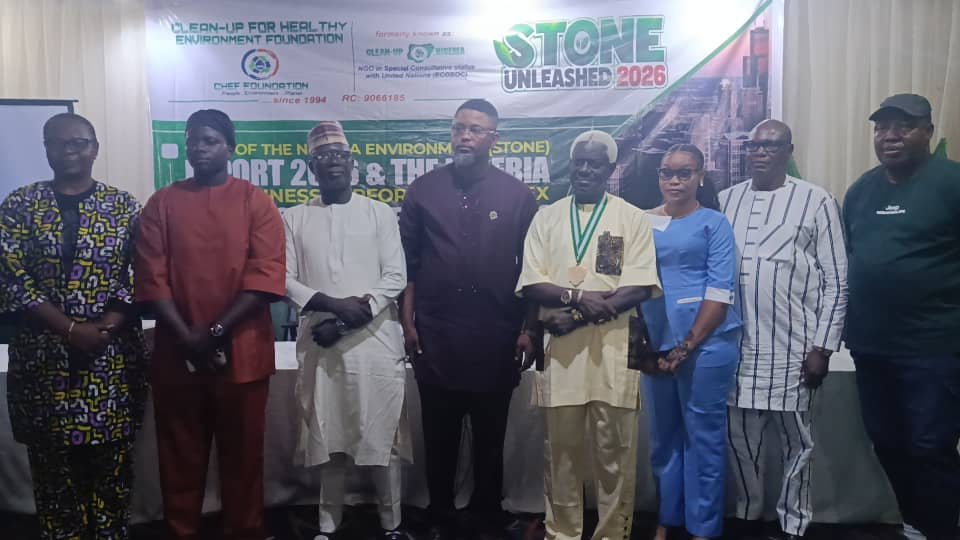
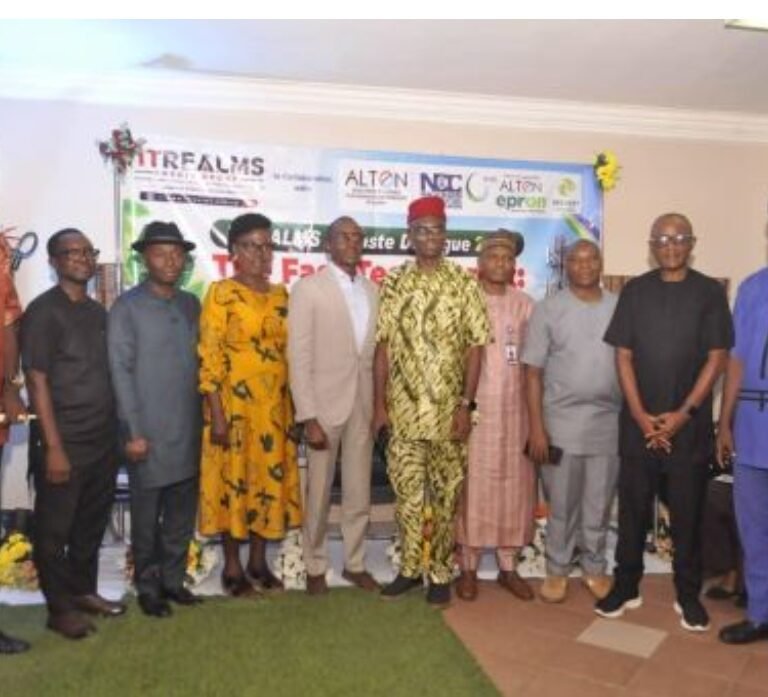
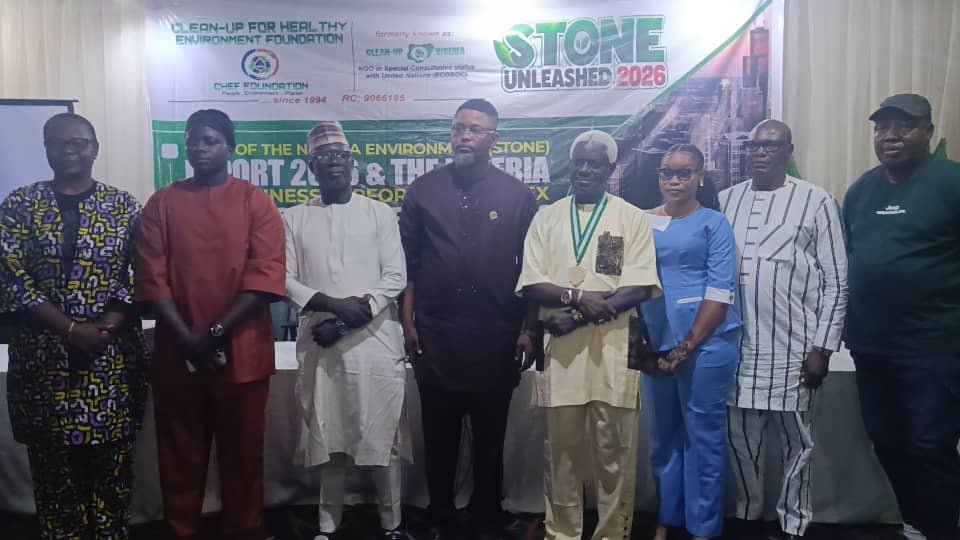
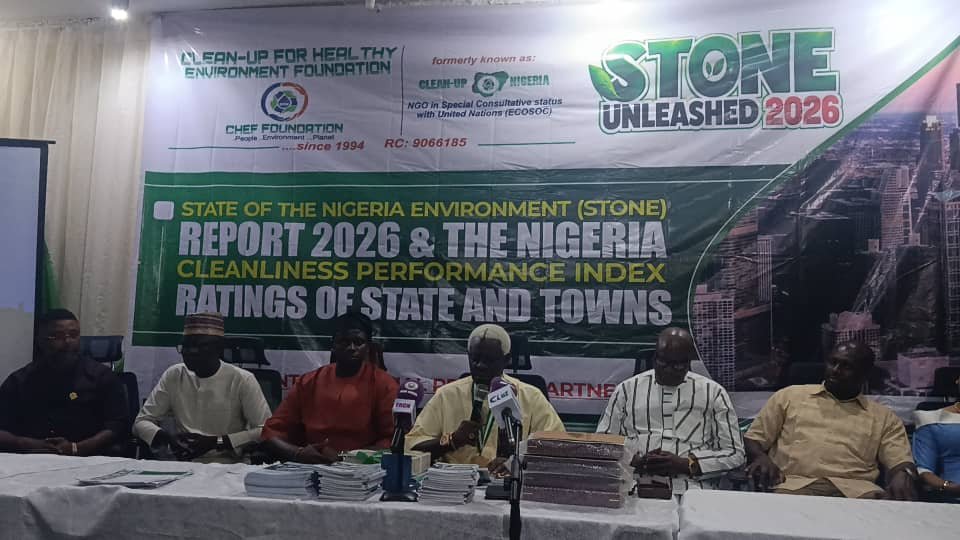
The findings were contained in the 2026 State of the Nigerian Environment Report (STONE 2026 – Unbroken), presented in Abuja by Clean-Up Nigeria, which assessed environmental cleanliness, sanitation and waste management across the country.
The report ranked Enugu second with 68 per cent, followed by Cross River with 66 per cent. Bauchi and Plateau also performed strongly, scoring 63 and 61 per cent respectively.
At the bottom of the ranking, Nasarawa and Kwara recorded 21 per cent each, while Kogi, Zamfara and Kebbi scored 22, 23 and 25 per cent respectively.
Kano was placed 32nd with a score of 25 per cent.
Nine states and the Federal Capital Territory were identified as having attained clean status in the 2026 assessment. They include Akwa Ibom, Enugu, Cross River, Bauchi, Plateau, Abia, Lagos, Ebonyi and the FCT.
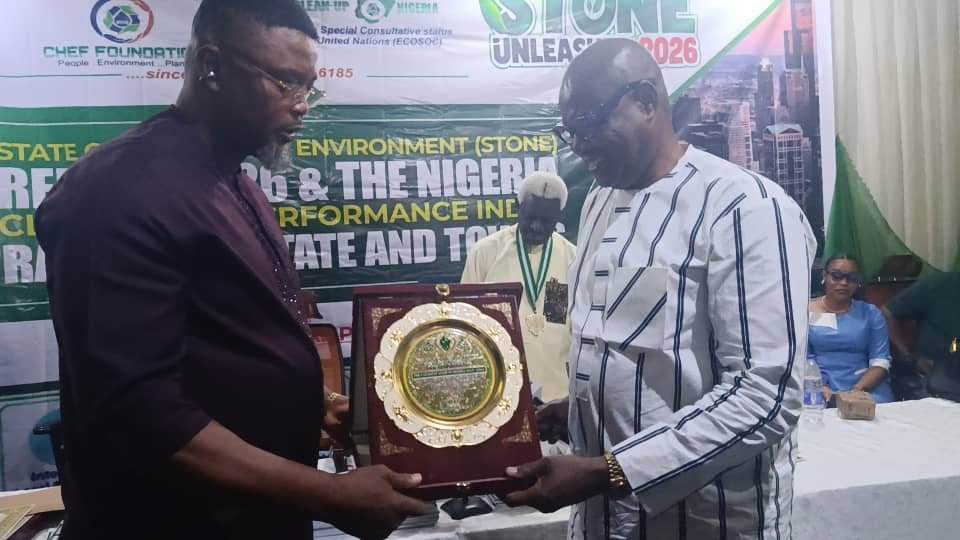
Akwa Ibom maintained its position as Nigeria’s cleanest state for the ninth consecutive year, from 2018 to 2026, earning the Green Crystal Award and a medal of service.
The 15-member National Technical Study Group, chaired by Professor Solomon Balogun, conducted the assessment between November 2025 and November 2026.
The evaluation combined satellite imagery and environmental data with public opinion surveys and assessments of sanitation practices. The study examined five major areas: street and road cleanliness, vegetation and drainage control, waste management services, public opinion, and residents’ knowledge, attitudes and practices on sanitation and hygiene.
The report also highlighted some improvements in sanitation indicators across the country. Hygiene and sanitation practices increased from 36 per cent in 2025 to 42 per cent in 2026, while open defecation declined from 19 per cent to 12 per cent.
However, sanitation-related diseases increased from 43 per cent to 47 per cent, while the health status of sanitation workers improved marginally from 28 per cent to 31 per cent.
According to the report, an estimated 181.2 million Nigerians out of a projected population of 240 million lived in unclean environments in 2026, compared with 187.2 million in 2025.
The report also identified top-performing states across the six geopolitical zones, with Akwa Ibom leading the South-South at 82 per cent, Enugu topping the South-East at 68 per cent, Lagos leading the South-West at 55 per cent, Bauchi leading the North-East at 63 per cent, Plateau topping the North-Central at 61 per cent, and Kaduna leading the North-West at 49 per cent.
Presenting the findings, the National Coordinator of Clean-Up Nigeria, Prince Ene Baba-Owoh Jr., urged governments at all levels to increase investment in waste management infrastructure, sanitation facilities and environmental protection.
He called for more public toilets, environmental and health clubs in schools, and stronger partnerships among government agencies, private organisations, civil society groups and communities to improve sanitation and hygiene.
Baba-Owoh said the report was designed to go beyond environmental rankings and serve as a tool for accountability, helping states identify weaknesses, measure progress and invest in practical solutions that improve public health and living conditions.
He also announced plans to transition Clean-Up Nigeria into the Clean-Up for Healthy Environment Foundation (CHEF Foundation), with a broader focus on environmental management, clean water, climate resilience, sanitation and community development.
He commended Akwa Ibom Governor, Umo Eno, for sustained environmental performance and Abia State for its improvement in the cleanliness index.
Akwa Ibom received the Green Crystal Prize as the best-performing state in environmental projects, while Abia was recognised as the most improved state.
The award to Akwa Ibom was particularly linked to its environmental initiatives, including the recovery and transformation of land associated with the Arise Palm Resort project in Uyo.
Receiving the award on behalf of Governor Eno, the Chairman of the Akwa Ibom State Environmental Protection and Waste Management Agency, Obong Prince Akpan Ikim, attributed the state’s progress to the administration’s commitment to environmental development and public participation.
Ikim encouraged Nigerians to visit Akwa Ibom to witness the state’s ongoing development and environmental transformation.
Clean-Up Nigeria reaffirmed its commitment to working with stakeholders across the country to promote cleaner communities, improve sanitation and reduce public health risks associated with poor environmental conditions.