
By Gabriel Ameh
The Diplomatic Correspondents Association of Nigeria (DICAN) has warned that the credibility of the 2027 general elections will depend on the strength of political parties, democratic institutions and accountability mechanisms established before election day.
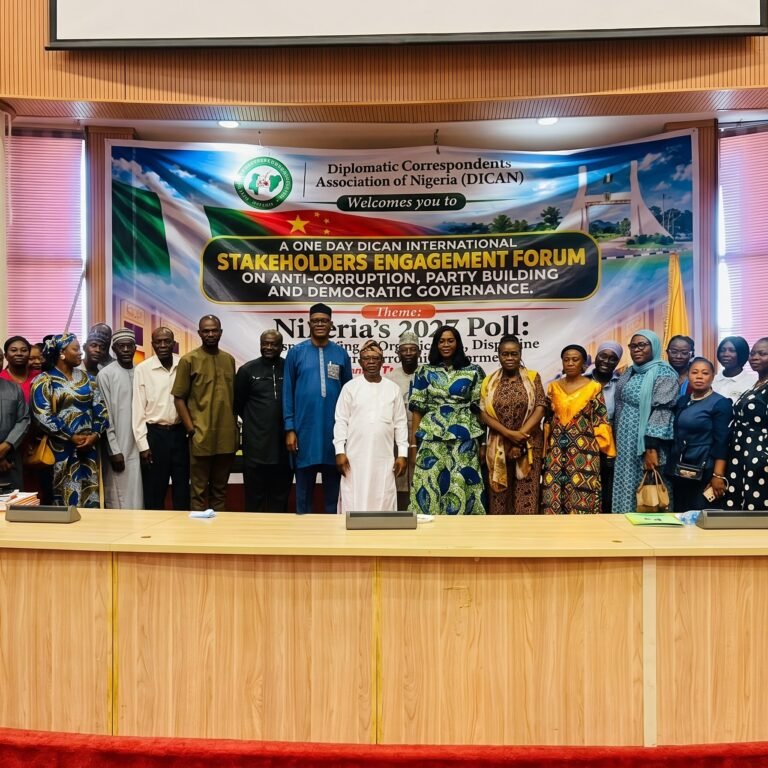
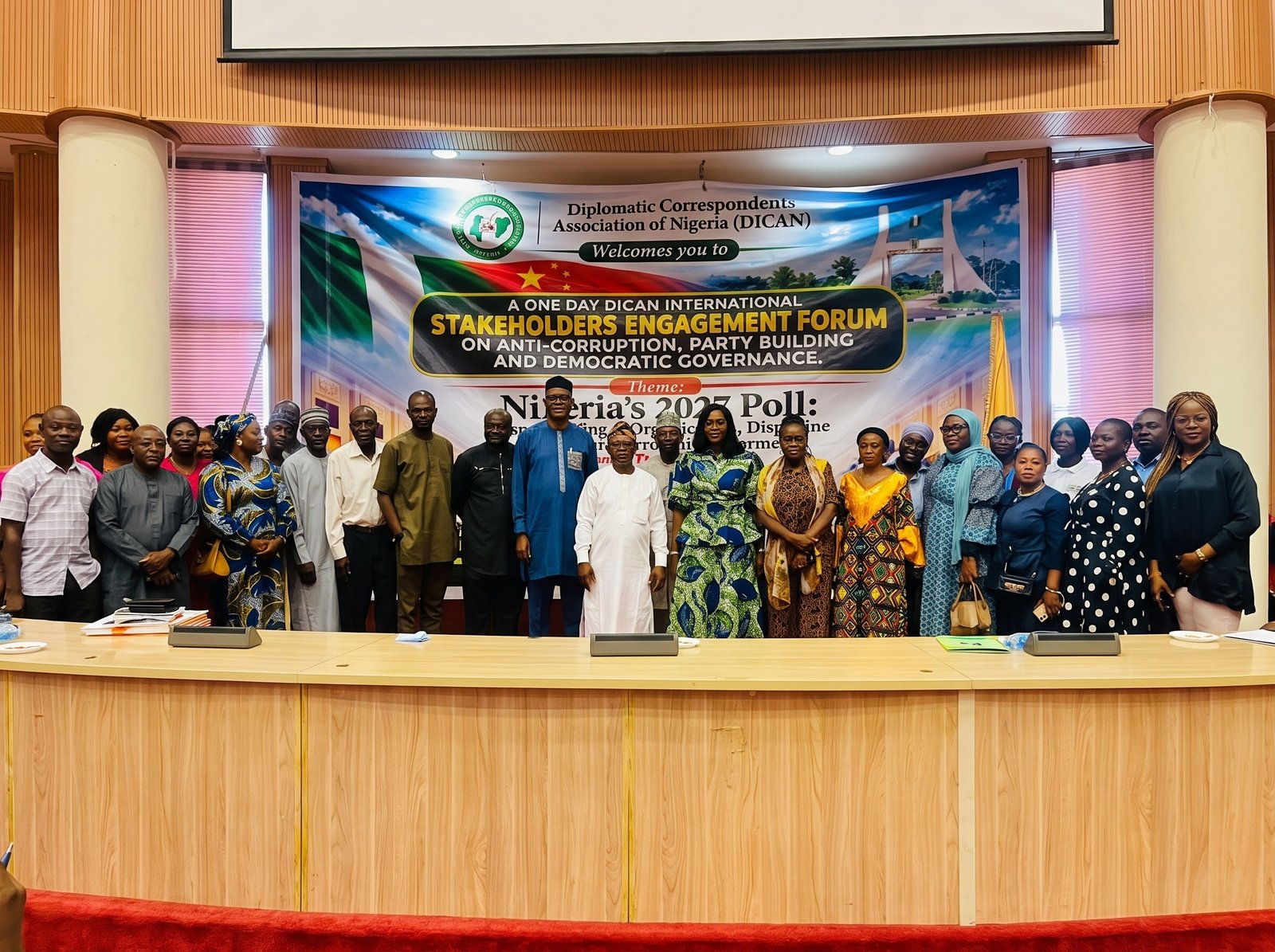
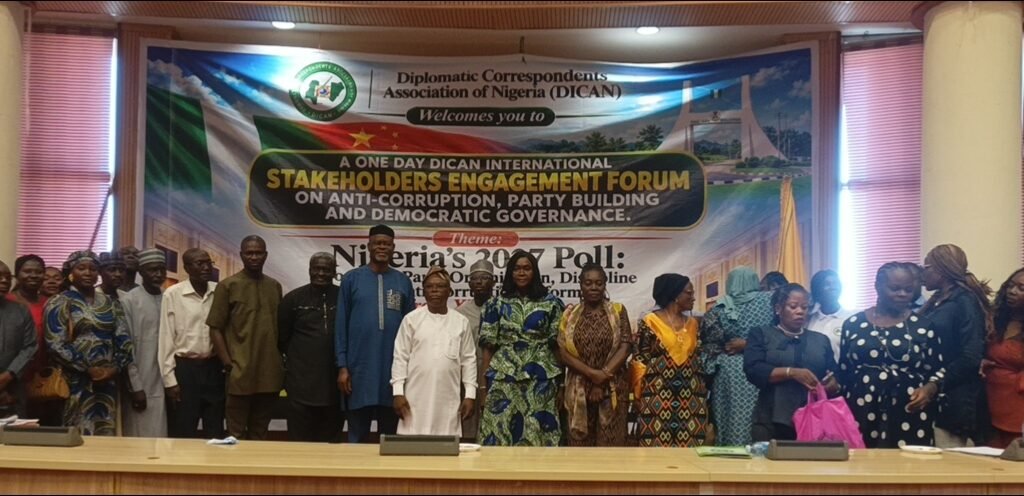
The association’s Chairman, Idehai Frederick, stated this during the International Stakeholders Engagement Forum on Anti-Corruption, Party Building and Democratic Governance held on Wednesday, November 18, 2026, at the Rotunda Hall of the Ministry of Foreign Affairs, Abuja.
Frederick said Nigeria’s democratic development required more than periodic elections, stressing that political parties must operate with clear principles, internal discipline and respect for the rule of law.
He said democracy could only thrive when institutions were strong, political parties practised internal democracy and public officials remained accountable to citizens.
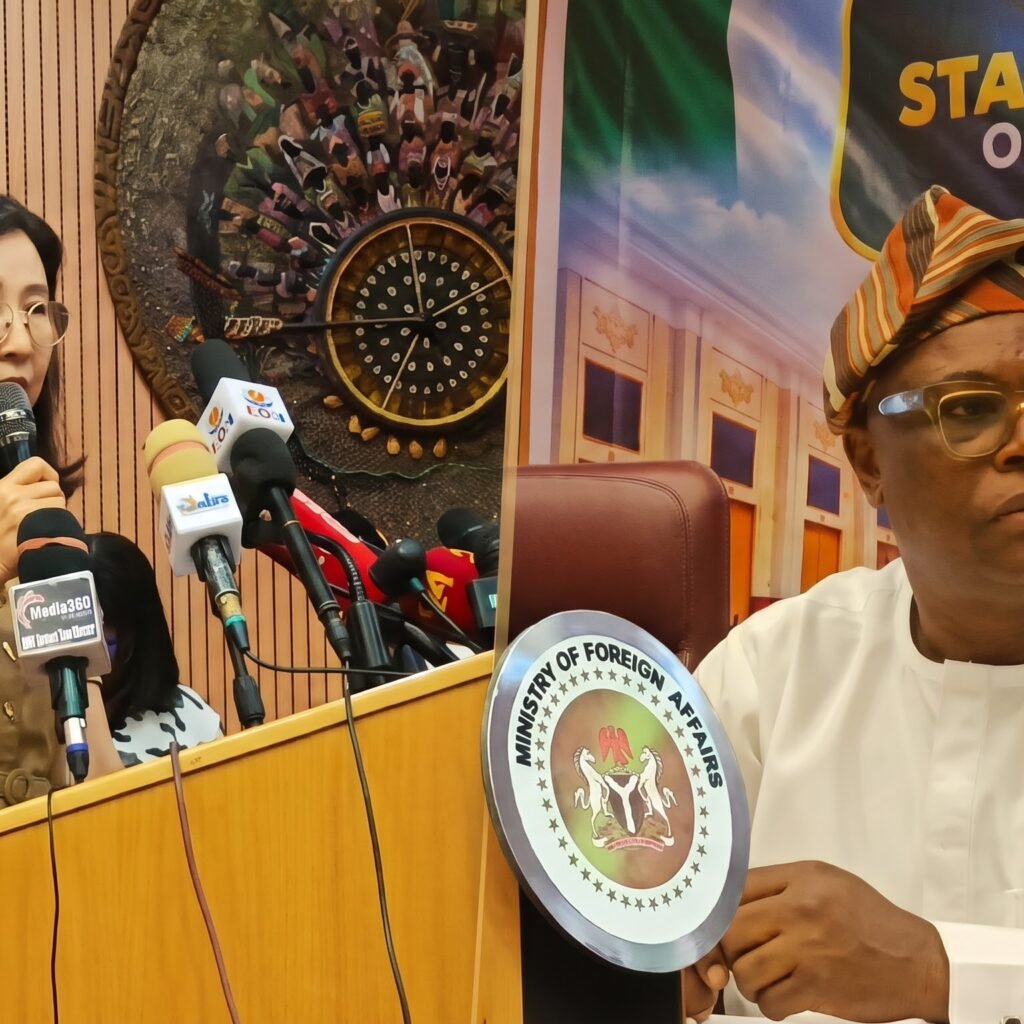
The DICAN chairman explained that the forum was organised to provide a platform for policymakers, diplomats, political actors, academics, civil society organisations and anti-corruption advocates to exchange ideas on strengthening democratic governance.
With the theme, “Nigeria’s 2027 Poll: Promoting Party Organisation, Discipline and Anti-Corruption Reforms: Lessons from Xi Jinping Thought,” the engagement focused on identifying practical solutions to Nigeria’s governance challenges.
DICAN clarifies position on China’s governance model
Frederick said the forum provided an opportunity to examine governance experiences from different countries, particularly China’s approach to political party organisation, internal discipline and anti-corruption.
He clarified that China operates a political system officially described as multiparty cooperation and political consultation under the leadership of the Communist Party of China.
He explained that the CPC serves as the governing party, while other legally recognised political parties participate in consultation and policymaking within the country’s political framework.
However, he stressed that examining China’s governance experience did not mean Nigeria should abandon its constitutional multiparty democratic system.
According to him, Nigeria must remain committed to political competition, electoral choice, citizen participation and the rule of law.
He said the objective was to identify governance practices that could be adapted to Nigeria’s political realities, rather than replicate another country’s political arrangement.
Frederick also acknowledged China’s achievements in economic transformation, poverty alleviation, infrastructure development and long-term national planning as areas worthy of policy examination.
Media role in strengthening democracy
The DICAN chairman emphasised the responsibility of journalists in promoting transparency, accountability and informed public debate.
He said the media remained an important link between government institutions and citizens, particularly in promoting public understanding of governance and democratic processes.
He reaffirmed the association’s commitment to providing platforms for constructive dialogue and partnerships among government institutions, diplomatic missions, civil society organisations and development partners.
Frederick also commended Nigeria’s anti-corruption agencies, democratic institutions, political leaders and civil society advocates for their contributions to accountability and good governance.
Strong institutions needed before 2027 polls
The DICAN chairman said the quality of the 2027 elections would be determined not only by activities on election day but also by the foundations established before the polls.
He identified credible institutions, principled leadership, responsible political parties, active citizenship and commitment to national interest as essential elements of democratic consolidation.
He urged participants to move beyond general discussions and develop practical recommendations capable of strengthening Nigeria’s political institutions and promoting national cohesion.
Frederick said the forum should produce ideas that would contribute to political stability, democratic accountability and sustainable development.
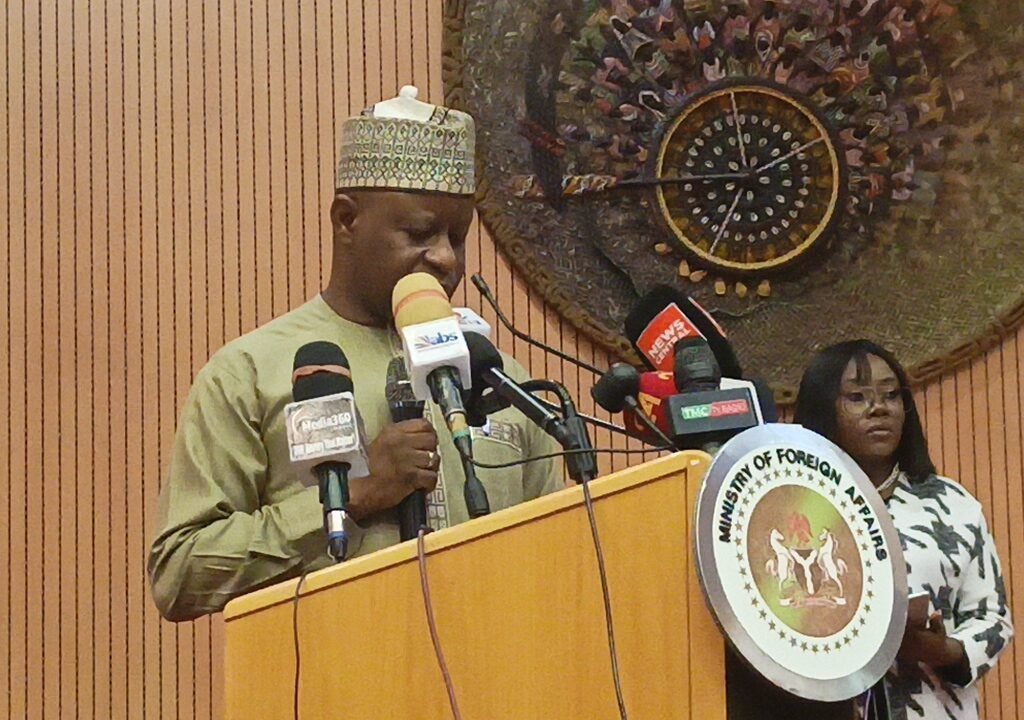
He encouraged stakeholders to engage openly and share practical solutions that could improve Nigeria’s democratic system ahead of the next general elections.
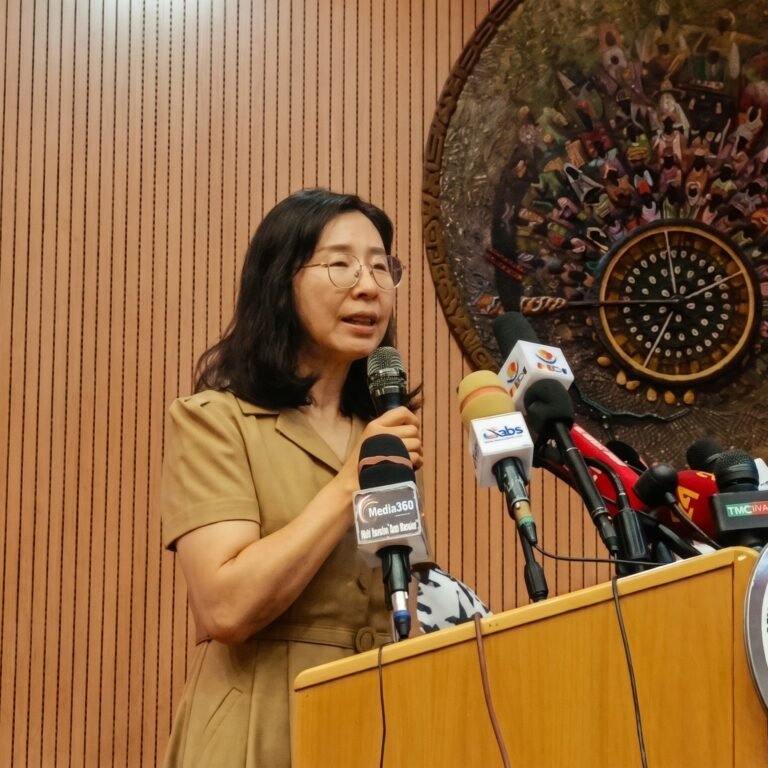
The engagement also featured contributions from the Ministry of Foreign Affairs, Chinese diplomatic representatives and former Inter-Party Advisory Council (IPAC) Chairman, High Chief Peter Ameh, who called for stronger internal party democracy, transparent political financing and continuous accountability of elected officials.