
By Gabriel Ameh
The National Human Rights Commission (NHRC) has pledged to work with civil society organisations and other stakeholders to push for Nigeria’s ratification of the African Union Convention on Ending Violence Against Women and Girls.
The commitment comes amid growing concerns over femicide, gender-based violence and technology-facilitated attacks against women and girls in Nigeria.
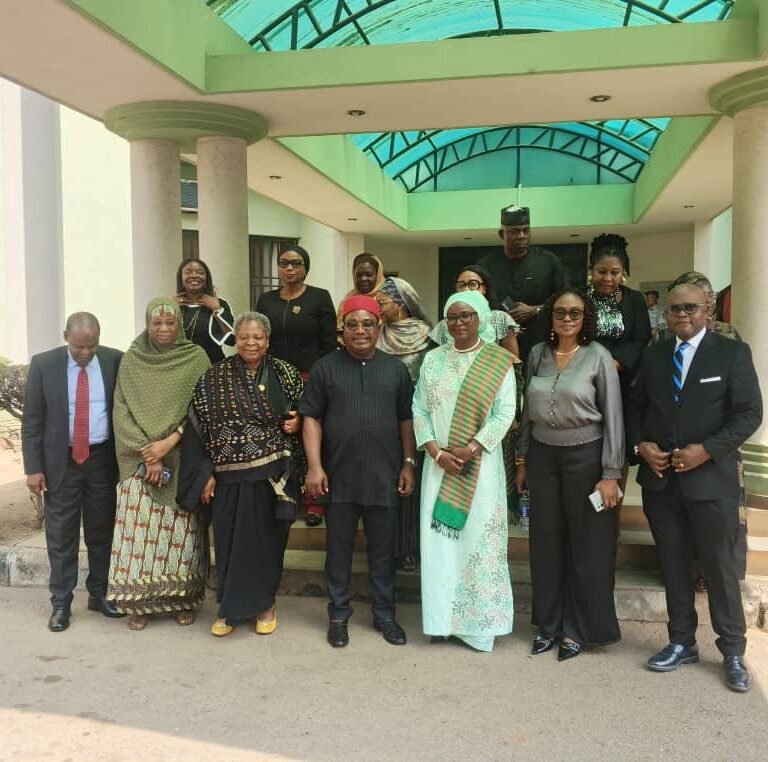
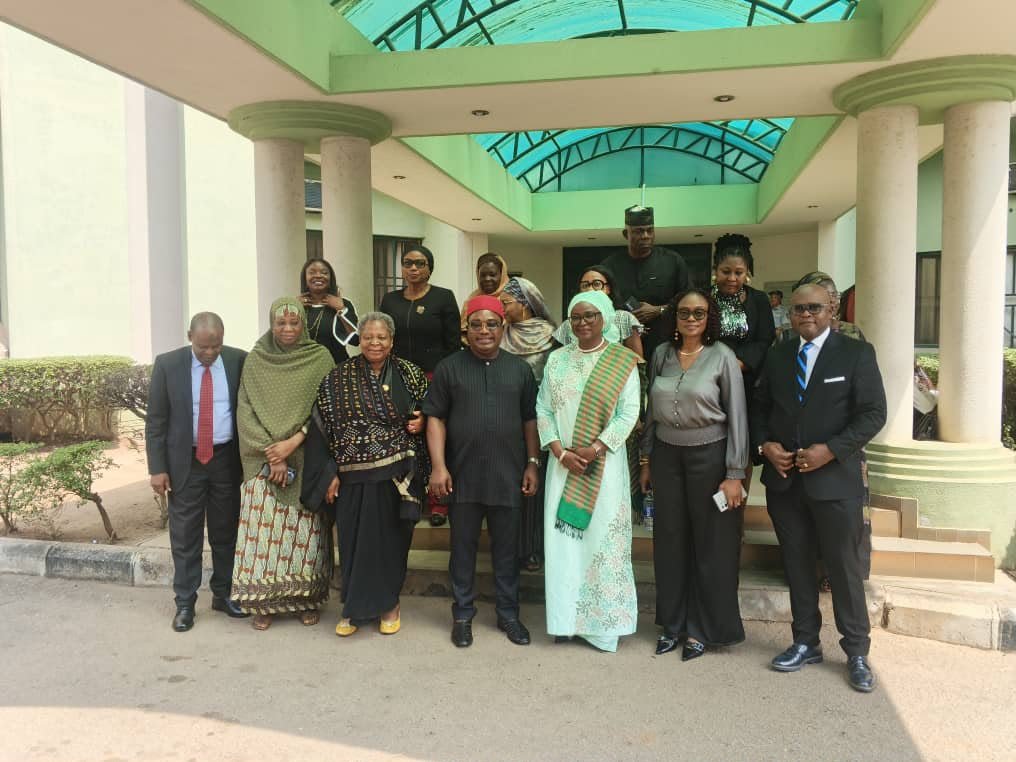
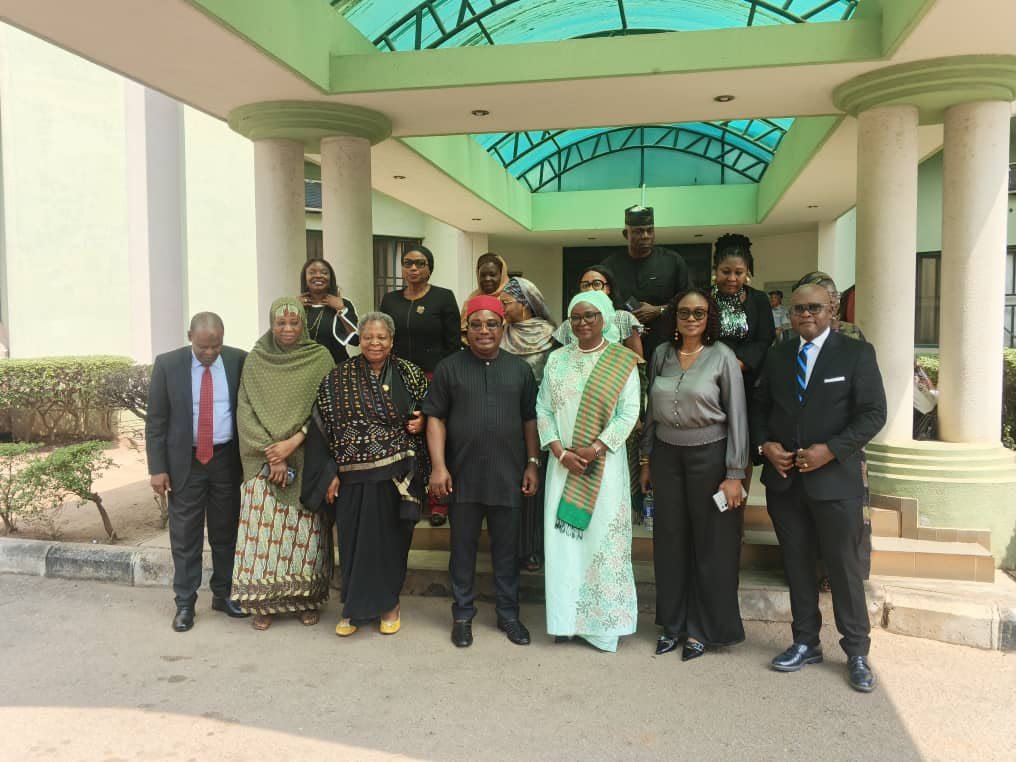
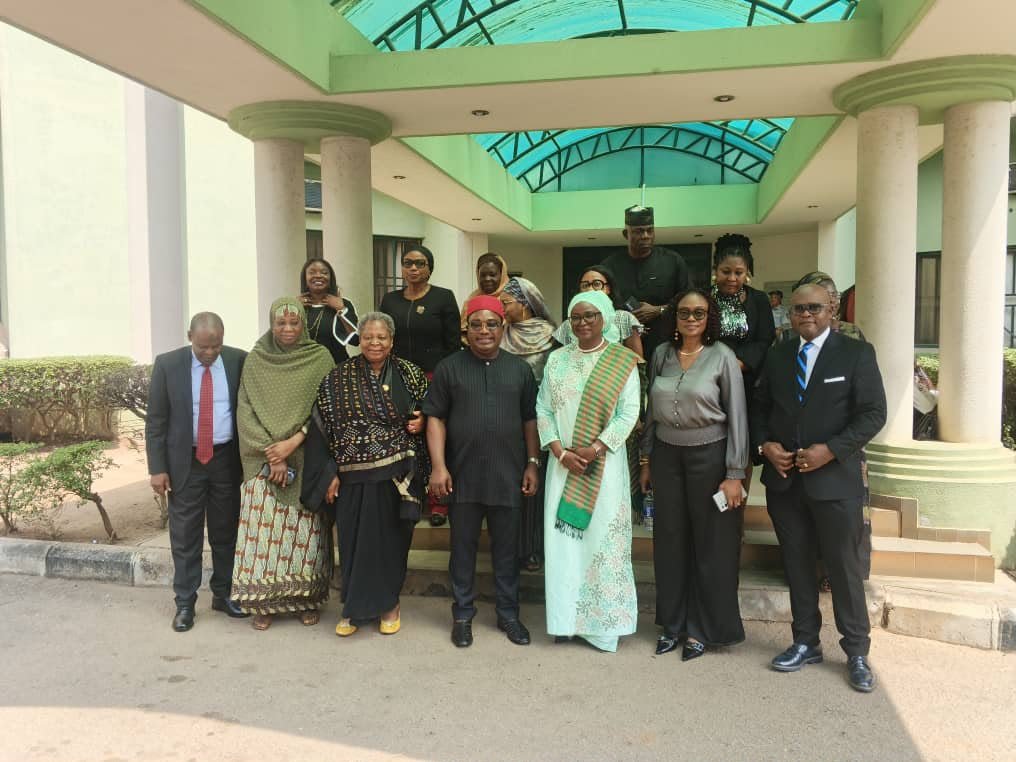
The Executive Secretary of the NHRC, Tony Ojukwu, gave the assurance during a visit by the African Commission on Human and Peoples’ Rights Special Rapporteur on the Rights of Women in Africa, Commissioner Janet Ramatula Sallah-Njie, to the Commission’s headquarters.
The engagement focused on strengthening Nigeria’s response to violence against women, improving the implementation of regional human rights instruments and promoting women’s participation in political leadership ahead of the 2027 general elections.
Ojukwu said the NHRC would work with relevant institutions and civil society groups to ensure that recommendations from the African Commission’s observations on Nigeria’s human rights reports translate into practical improvements.
He explained that the Commission would also intensify awareness campaigns and encourage relevant government agencies to fulfil their human rights reporting obligations.
According to him, observations by the African Commission have raised concerns about femicide and technology-facilitated violence against women, highlighting the need for stronger legal and institutional responses.
Ojukwu assured the delegation that the NHRC would support efforts to improve access to justice for victims of femicide and gender-based violence, while ensuring that violence carried out through digital platforms receives adequate attention.
He also pledged the Commission’s support for advocacy towards Nigeria’s adoption and ratification of the African Union Convention on Ending Violence Against Women and Girls.
The NHRC Executive Secretary disclosed that the Commission had established specialised departments, including a Department of Women and Children, to strengthen its response to human rights violations affecting vulnerable groups.
He said the restructuring was intended to move beyond a general approach to human rights protection and provide specialised attention to issues affecting women and children.
On women’s political participation, Ojukwu said the Commission would support initiatives aimed at increasing women’s representation in the executive and legislative arms of government.
He encouraged women to participate actively in the electoral process and support political candidates whose policies promote their rights and interests.
African Commissioner Calls for Nigeria’s Ratification
Earlier, Commissioner Sallah-Njie urged Nigeria to take concrete steps towards ratifying the African Union Convention on Ending Violence Against Women and Girls, describing the country as an important voice in advancing women’s rights across Africa.
She explained that the African Union adopted the convention in February 2025 to strengthen existing regional protections and address emerging forms of violence against women and girls.
According to her, Nigeria should be among the 15 countries whose ratification would facilitate the convention’s entry into force.
She expressed concern over the increasing incidence of femicide in Nigeria and called on the NHRC to lead advocacy efforts for the convention’s ratification, strengthen national reporting and monitor the implementation of laws protecting women and girls.
Sallah-Njie stressed that the explicit recognition and prohibition of femicide under the convention would provide an important framework for addressing the killing of women because of their gender.
She also called for stronger partnerships between governments, national human rights institutions and civil society organisations, noting that protecting women’s rights requires collective action.
The Special Rapporteur further raised concerns about technology-facilitated gender-based violence, particularly online harassment and intimidation targeting women seeking elective positions.
She warned that digital attacks often reinforce violence experienced by women offline, creating additional barriers to their participation in politics and public life.
2027 Elections: Commissioner Demands Greater Representation for Women
With Nigeria approaching the 2027 general elections, Sallah-Njie called for deliberate measures to increase women’s representation in political leadership.
She advocated temporary special measures, including affirmative action and reserved seats for women in parliament, arguing that equal legal rights alone had not removed the structural and cultural barriers limiting women’s participation.
According to her, women should scrutinise the voting records of their elected representatives, particularly on legislation affecting gender equality and women’s rights.
She also encouraged women to contest elections, support candidates committed to gender equality and stand in solidarity with those facing intimidation because of their political ambitions.
The Commissioner warned that attacks, harassment and sexual violence against women participating in political campaigns could discourage others from seeking elective positions.
She urged relevant authorities, including the NHRC, to monitor election-related sexual violence and establish safeguards that allow women to participate freely and safely.
Sallah-Njie also emphasised the importance of including women in peacebuilding and conflict-resolution processes, describing their participation as essential to inclusive governance and community security.
She maintained that women’s representation in leadership should not be treated as a favour but as an important requirement for inclusive decision-making.
Civil Society Organisations Back Advocacy
The Executive Director of Baobab for Women’s Human Rights, Yeyebu Mutiposalami, welcomed the visiting delegation and commended the Special Rapporteur for prioritising Nigeria in her engagement.
Mutiposalami praised the NHRC for establishing specialised departments and promoting women’s participation in leadership positions within the institution.
She also highlighted the importance of collaboration between human rights institutions and civil society organisations in advancing gender equality.
Recalling previous campaigns for special seats for women in the National Assembly, she said affirmative action remained an important tool for addressing historical inequalities and improving women’s representation in governance.
She acknowledged the resistance that previous proposals had faced among some lawmakers but expressed optimism that continued advocacy would produce progress.
Representatives of Baobab for Women’s Human Rights, the Women’s Advocacy Research and Documentation Centre (WARDC) and other stakeholders participated in the engagement.
The NHRC management and other officials also expressed support for the advocacy, pledging continued collaboration to strengthen women’s rights and political participation.
At the end of the meeting, Sallah-Njie expressed hope that Nigeria would demonstrate measurable progress before her next engagement with the African human rights community.
She disclosed that the outcome of the visit would feature in her next intersessional report, with particular attention to Nigeria’s progress on ratification, implementation and domestication of the convention.
The proposed ratification is expected to strengthen the regional framework for protecting women and girls against violence, provided Nigeria takes the necessary steps to give the instrument legal effect.