
By Raymond Na’anlep Delmut
Opinion | October 19, 2026
Nigeria has been urged to use its mineral resources as a foundation for industrialisation, job creation and technological development rather than remain dependent on exporting raw materials.
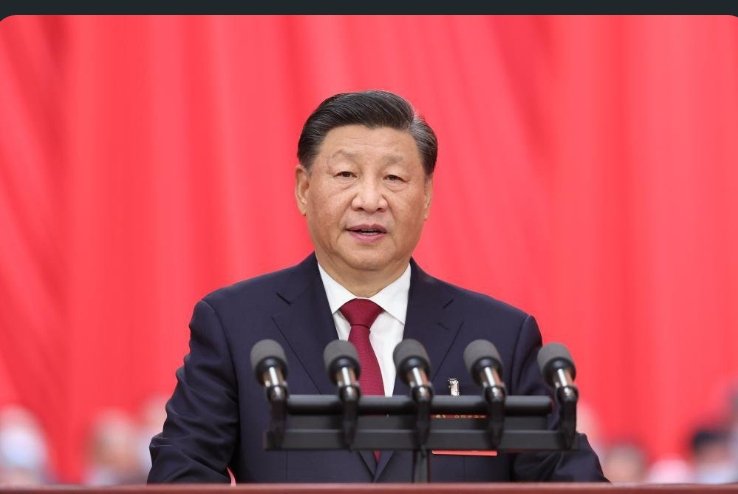
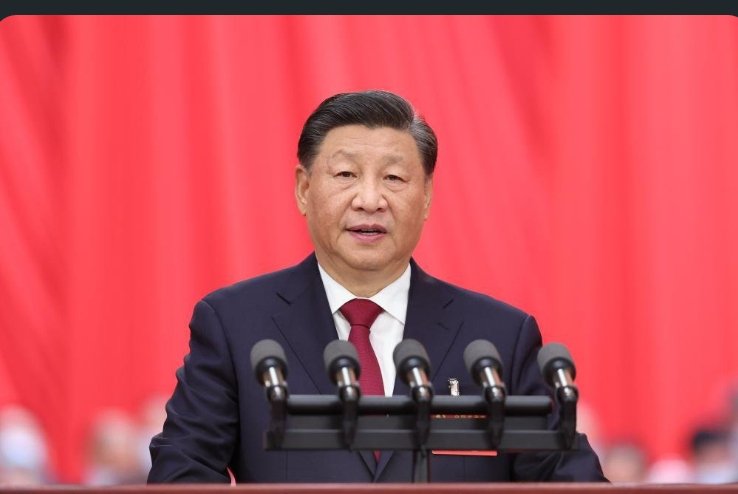
The call follows Chinese President Xi Jinping’s reported four-point proposition on China–Africa mining cooperation, which emphasises African ownership of mineral resources, mutual benefit, high-quality development and a fair international cooperation environment.
The proposal presents an opportunity for Nigeria to reconsider how it manages its solid minerals sector, attracts foreign investment and converts natural resources into lasting economic benefits.
Africa’s mineral wealth, industrial challenge
Africa possesses mineral resources essential to electric vehicles, renewable energy, telecommunications, advanced electronics and other emerging technologies. Yet many African economies continue to export raw materials while importing finished products manufactured from those resources.
This pattern limits opportunities for industrial growth, skilled employment, technology transfer and greater participation in global manufacturing.
For Nigeria, the challenge is particularly important as the country seeks to diversify its economy beyond oil. Its mineral resources include limestone, gold, iron ore, bitumen, lead, zinc, barite and other deposits with potential applications across manufacturing and construction.
However, geological uncertainty, inadequate infrastructure, financing constraints, illegal mining, weak enforcement and limited processing capacity continue to restrict the sector’s potential.
The central question is whether Nigeria can turn growing international demand for minerals into a stronger domestic industrial base.
Resource ownership must deliver public benefits
The first principle of the proposed framework is that African resources belong to Africans. But resource sovereignty involves more than legal ownership. It requires governments to determine how minerals are explored, extracted, processed and marketed, while ensuring that the resulting benefits reach citizens.
Nigeria could strengthen this capacity through improved geological mapping, reliable mineral assessments, digital licensing systems, modern laboratories and investment in local technical expertise.
Cooperation with Chinese institutions and companies could support these efforts. However, Nigeria must retain control of its geological information, strengthen regulatory oversight and develop the expertise required to assess and manage its own resources.
Host communities must also be part of the process. Mining projects should provide meaningful consultation, transparent benefit-sharing arrangements, environmental safeguards and effective channels for resolving disputes.
Without these protections, mineral development risks leaving communities with damaged land, polluted water and lost livelihoods while the economic benefits accrue elsewhere.
Foreign investment must create local value
The second principle centres on mutual benefit. For Nigeria, this should mean evaluating mining partnerships by more than the amount of foreign investment attracted or the volume of minerals exported.
Policymakers should ask how many skilled jobs are created, how much processing takes place locally, how Nigerian businesses participate in supply chains and whether local workers acquire transferable technical skills.
Chinese companies have experience in mineral processing, manufacturing, engineering, infrastructure and renewable energy technologies. These capabilities could support Nigeria’s industrial ambitions if partnerships are properly structured.
Technology transfer, however, is not automatic. It requires deliberate agreements, capable domestic institutions, investment in education and measurable commitments from participating companies.
Nigeria should therefore seek partnerships that support technical training, research collaboration, local supplier development and employment for Nigerian engineers, geologists, technicians and other skilled workers.
Universities, polytechnics and technical institutions could collaborate with industry to develop expertise in metallurgy, mineral engineering, industrial chemistry, environmental management and advanced manufacturing.
At the same time, foreign investors need predictable regulations, transparent licensing and fair commercial conditions. Sustainable partnerships must protect legitimate business interests while securing meaningful benefits for Nigeria.
From mineral extraction to industrialisation
The third principle, high-quality development, highlights the need to move beyond the extraction and export of raw materials.
Mineral processing, refining, component manufacturing, engineering services and research can create additional economic opportunities. Nigeria should therefore consider how its mineral resources can support interconnected industries rather than treating each deposit as an isolated export opportunity.
Lithium, for example, could create opportunities in mineral processing and selected battery-related supply chains, depending on the quality of deposits, energy availability, technology, investment costs and market conditions.
Limestone can support cement and construction-material industries, while iron ore could contribute to metallurgical development where the necessary infrastructure and commercial conditions exist.
However, local processing should be guided by economic feasibility rather than political ambition alone. Some industrial operations require substantial electricity, specialised equipment, chemicals, transport infrastructure and access to large markets.
Nigeria must identify value chains where it can compete and progressively expand its technological capabilities. Building expensive processing facilities without reliable power, efficient logistics or sufficient demand could create new financial burdens rather than deliver industrial growth.
China’s manufacturing experience offers lessons in infrastructure development, industrial clustering, skills acquisition and technological learning. Nigeria can adapt relevant lessons to its own circumstances without assuming that another country’s development model can be copied wholesale.
A practical strategy would connect mining locations to dependable electricity, transport networks, industrial facilities, technical institutions and domestic markets.
Regional cooperation could also help. Through the African Continental Free Trade Area, African countries have opportunities to develop complementary mineral-processing and manufacturing networks, allowing countries to specialise according to their capabilities.
Financing must support sustainable growth
Mining and mineral processing require substantial investment, while exploration involves considerable uncertainty. Nigeria must therefore ensure that financing arrangements do not create excessive public liabilities or expose the country to avoidable financial risks.
Joint ventures, private investment, development finance and carefully structured public-private partnerships may support viable projects. But financing decisions should follow independent feasibility studies, transparent procurement, clear contractual terms and credible environmental and social assessments.
Government must also account for commodity-price volatility, changing technologies and shifts in global demand. Mineral revenues should not be treated as guaranteed future income.
The objective should be to build a resilient productive economy, not simply maximise extraction during periods of high international prices.
Nigeria should welcome international investment while protecting its fiscal position, negotiating fair terms and ensuring that projects deliver measurable economic benefits.
Avoiding geopolitical dependence
The fourth principle calls for a fair and open international environment in which African mineral resources are not reduced to instruments of geopolitical competition.
China, the United States, the European Union, India, Gulf economies and other partners are increasingly interested in securing mineral supplies and developing strategic industries.
This competition can create opportunities for African countries by expanding investment choices, improving bargaining power and attracting technology partnerships. It can also produce pressure for exclusive agreements or arrangements that prioritise foreign strategic interests over domestic development.
Nigeria should pursue a diversified approach to international cooperation. China can remain an important partner in mining, infrastructure, manufacturing and technology, while Nigeria considers responsible investment from other countries and institutions.
The guiding principles should be national interest, transparency, fair competition and consistent regulation. Cooperation with one partner should not require hostility towards another.
The country must also provide a predictable investment environment, with credible dispute-resolution mechanisms and clear licensing rules. Strong governance can protect citizens while giving responsible investors greater confidence.
Tackling illegal mining and environmental damage
Illegal mining remains a major governance concern because unauthorised extraction, mineral smuggling and weak enforcement can undermine public revenue, damage the environment and create insecurity.
The original commentary refers to remarks attributed to Chinese Ambassador to Nigeria Yu Dunhai on October 15, 2026, concerning compliance by Chinese nationals and companies with Nigerian law and cooperation against illegal mining. These remarks should be independently verified against the original statement before publication.
Nigeria must enforce its laws consistently against offenders, regardless of nationality. Foreign governments and companies should cooperate with lawful investigations and responsible sourcing initiatives.
Improved mineral traceability, transparent licensing, beneficial ownership disclosure and stronger monitoring could help authorities identify illicit activities and follow minerals from licensed mines to processing facilities and export points.
Environmental protection must also be central to mining policy. Extraction and processing can consume large quantities of water and energy, generate waste and damage local ecosystems.
Nigeria should enforce environmental assessments, pollution controls, waste-management standards and land-restoration obligations. Where technically and commercially feasible, cleaner production systems and renewable energy could reduce the environmental footprint of mining operations.
Communities must have access to credible environmental information and effective channels for reporting violations. Green technology should produce measurable environmental improvements rather than serve as a label for projects that fail to meet required standards.
What Nigeria must do next
The proposed four-point framework provides an opportunity for Nigeria to establish a more coherent mineral industrialisation strategy.
First, the government should identify mineral resources and value chains with credible commercial potential. Geological data, investment requirements, infrastructure needs, domestic demand and export opportunities should inform these choices.
Second, Nigeria should strengthen coordination among the institutions responsible for solid minerals, trade, investment, energy, education, environmental protection and infrastructure.
Third, major investment agreements should include measurable commitments on local processing, Nigerian employment, technical training, supplier development, environmental compliance and community benefits.
Fourth, Nigeria should expand partnerships between universities, research institutions and industry to develop expertise in geology, mineral processing, metallurgy and cleaner production technologies.
Fifth, the government should publish regular information on project performance, including employment created, processing capacity developed, fiscal revenue generated and compliance with environmental obligations.
Pilot projects could provide a practical starting point. Nigeria and China could identify selected opportunities that combine responsible extraction, local processing, skills development and participation by Nigerian businesses. Independent monitoring would help establish whether these projects deliver the intended benefits before similar arrangements are expanded.
The government must also ensure that women, young people, small businesses and host communities have meaningful opportunities to participate in the sector’s development.
Ultimately, the success of mineral policy should be measured not by the quantity of ore extracted but by the productive capacity, technological knowledge, employment and sustainable prosperity created.
Turning mineral wealth into national prosperity
China–Africa mining cooperation could contribute to Nigeria’s economic transformation, but diplomatic commitments alone cannot guarantee success.
Nigeria’s outcomes will depend on the strength of its institutions, the quality of its investment agreements, the consistency of its policies, the skills of its workforce and its ability to enforce environmental and commercial rules.
The reported four-point proposition offers a useful framework for discussing resource sovereignty, mutually beneficial investment, industrial upgrading and fair international cooperation. Its value will depend on whether these principles translate into transparent agreements and measurable improvements in people’s lives.
Nigeria faces a choice: remain primarily a supplier of raw materials or use growing international demand for minerals to strengthen its position in manufacturing, technology and global trade.
The second path will require sustained investment, credible regulation, disciplined leadership and long-term planning. It will also require Nigeria to negotiate partnerships that expand domestic capabilities instead of deepening dependence.
Africa’s mineral wealth can support a more prosperous future, but resources beneath the ground are only part of the equation. Knowledge, institutions, infrastructure, industrial capacity and human ingenuity determine how much value a country ultimately creates.
For Nigeria, the priority must be to ensure that mineral development builds industries, creates decent jobs, protects communities and supports lasting national prosperity.
The future of China–Africa mining relations should be judged not simply by how much mineral wealth leaves African shores, but by how much productive capacity, technological knowledge and sustainable economic value remains.
Author: Raymond Na’anlep Delmut is a Dongfang Scholar, Nigerian diplomat, policy analyst and author. His interests include diplomacy, governance, leadership, modernisation, development policy, comparative public administration and South–South cooperation.
Source credit: Adapted and reworked from the opinion commentary supplied by the author, attributed in the original material to Raymond Na’anlep Delmut. Verify the original publication and the reported October 2026 statements before publication.