

By Gabriel Ameh
ABUJA — Human rights lawyer and activist Deji Adeyanju has called on President Bola Ahmed Tinubu to urgently intervene in the worsening flooding and environmental challenges confronting the Federal Capital Territory (FCT), warning that continued encroachment on Abuja’s planned green spaces, drainage corridors, canals and waterways could pose a serious threat to the capital city.
In an open letter to the President, Adeyanju described the situation as an emergency, arguing that the flooding recently witnessed across several parts of Abuja can no longer be viewed simply as the result of heavy rainfall.
He noted that Abuja was originally conceived as a planned modern capital, with green areas, parks, gardens, recreational spaces, drainage corridors, canals and waterways incorporated into the city’s Master Plan to support environmental protection, flood control and ecological balance.
According to him, the increasing frequency and spread of flooding across areas that historically experienced little or no serious flooding raise concerns about the impact of uncontrolled development and the alteration of the city’s original planning structure.
Adeyanju referenced areas identified by the FCT Emergency Management Department as flood-prone, including Lokogoma, EFAB and iPent Estates, Galadimawa, Dogon-Gada, Lugbe, Maitama, Wuse, Garki, the Central Business District, Asokoro, Guzape, Gwarinpa, Nyanya, Kubwa, Wari, Gwagwalada, Damagaza, Mabushi, Anthony Ikem Street, the Blue Cabana axis, Kuje, Kwali, Abaji and Yangoji.
He argued that Abuja should not become a city where ordinary rainfall can quickly render major residential and commercial districts inaccessible or expose homes and businesses to flooding.
The activist further alleged that some areas originally preserved under the Abuja Master Plan as green spaces, gardens, parks, drainage corridors and waterways have been converted or allocated for residential and other developments.
He cited, among others, the green area opposite Blake’s in Area 11, the area around Rita Lori Hotel, where he alleged housing was developed for magistrates, the green area around MTN in Maitama and the area around the former Customs Office in Wuse Zone 3.
Adeyanju also raised concerns over what he described as the covering of a major canal in the Maitama area to facilitate residential construction, alleging a connection to the Chairman of the Senate Committee on the Federal Capital Territory, Senator Ibrahim Mohammed Bomai.
These claims, however, are allegations contained in Adeyanju’s open letter and would require independent verification and responses from the relevant authorities and individuals named.
He argued that previous FCT administrations and ministers who resisted pressure to convert every available piece of land into development opportunities understood the long-term importance of preserving spaces that may not appear economically productive but are critical to the survival of a modern city.
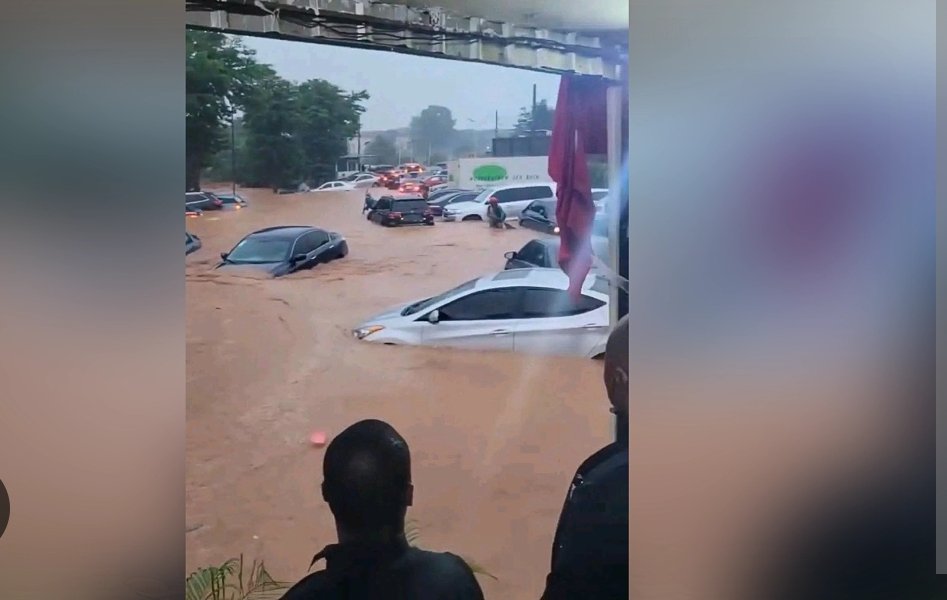
Adeyanju therefore appealed to President Tinubu to direct a comprehensive review of land allocations and developments across designated green areas, parks, gardens, drainage corridors, canals and waterways in the FCT.
He stressed that Abuja’s importance extends beyond its residents, noting that the city hosts the Presidency, National Assembly, judiciary, foreign embassies, international organisations, diplomats and millions of Nigerians who live and work within the capital.
According to him, the environmental and infrastructural condition of Abuja therefore has implications for the country as a whole.
Adeyanju warned that continued construction over green spaces, drainage corridors, canals and waterways could worsen the capital’s vulnerability to flooding, raising concerns about the safety of even areas traditionally regarded as relatively secure from such risks.
He urged the Federal Government to act before the situation becomes more difficult and costly to reverse.