
By Gabriel Ameh
The Independent National Electoral Commission (INEC) has projected that Nigeria’s voter register will exceed 100 million registered voters ahead of the 2027 general elections.
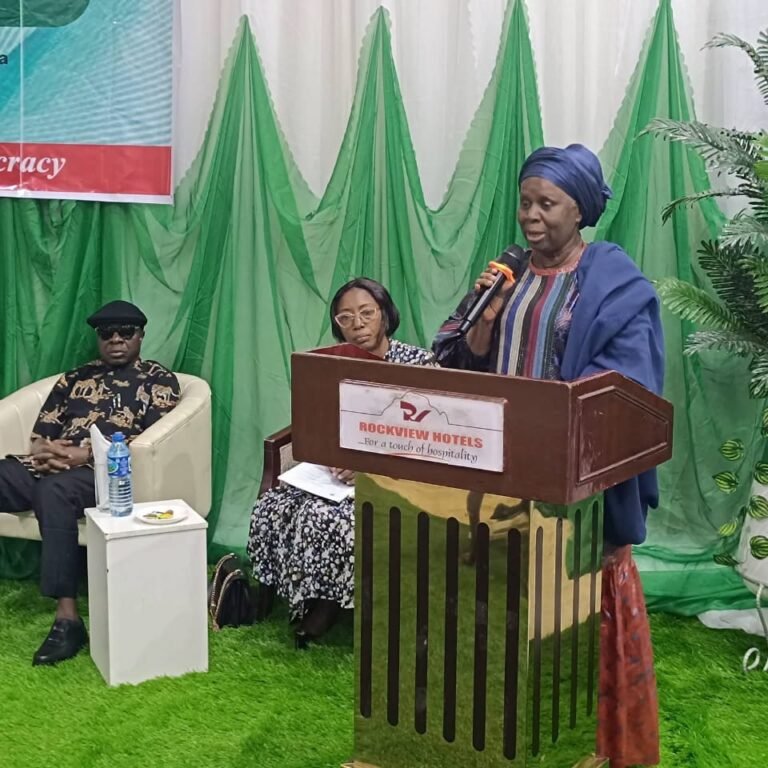
INEC National Commissioner and Chairman of the Information and Voter Education Committee (IVEC), Mallam Mohammed Haruna, disclosed this on Monday at the commission’s Joint Implementation Meeting of the Departments of Voter Education and Publicity (VEP) and Gender and Inclusivity (G&I) for the 2027 elections.
The meeting was convened to develop a communication and inclusivity roadmap aimed at ensuring that the 2027 elections are free, fair, credible, peaceful and inclusive.
Haruna said the voter register currently contains more than 93 million registered voters and is expected to surpass 100 million after the recently concluded Continuous Voter Registration (CVR) exercise is finalised.
He noted that the projected figure would further position Nigeria as the largest electoral democracy in Africa.
With the 2027 general elections approaching, Haruna tasked INEC information officers with strengthening public communication and mobilising all eligible Nigerians to participate actively in the electoral process.
He stressed that communicating effectively with more than 100 million voters would require professionalism, clarity and a strong understanding of Nigeria’s legal and electoral framework.
According to him, INEC officials must communicate in simple and civil language while having adequate knowledge of the Constitution, electoral laws, INEC guidelines, the Freedom of Information Act and the Data Protection Act.
Haruna also urged the commission to build on lessons from recent off-cycle elections, including the Osun governorship election, in its preparations for the 2027 general elections.
He said the objective should be to deliver elections that are among the freest, fairest and most credible in Nigeria’s history.
Also speaking, Adedayo Oketola, Chief Press Secretary and Media Adviser to the INEC Chairman, Prof. Joash Amupitan, reaffirmed the commission’s commitment to credible and inclusive elections.
Oketola described the meeting as timely, saying its outcome would help establish an actionable communication and inclusivity strategy ahead of the 2027 elections.
He said while technology and logistics remain critical to electoral administration, voter education and publicity departments serve as the human face and voice of INEC by building public trust, simplifying electoral procedures and ensuring eligible citizens are not excluded.
Oketola identified misinformation and disinformation as major threats to voter confidence and participation ahead of the elections.
He said INEC’s response must go beyond traditional announcements to sustained civic education that explains electoral technologies, including the Bimodal Voter Accreditation System (BVAS) and INEC Results Viewing (IReV), while strengthening public understanding of the open secret ballot system.
On inclusivity, Oketola said electoral access for persons with disabilities, women, youths and elderly voters remains a constitutional right.
He pointed to measures including Braille ballot guides, magnifying glasses, priority queues for vulnerable voters and increased youth participation through CVR as part of efforts to make the 2027 elections more accessible.
The Director of Voter Education and Publicity, Victoria Eta-Messi, said effective grassroots voter sensitisation would depend largely on the capacity of VEP officials to implement INEC programmes across the states.
She said the joint meeting would provide participants with clearer guidance on approved activities, implementation strategies, timelines and expectations for the two departments.
Eta-Messi noted that with the recent off-cycle governorship elections concluded, attention must now shift fully to the 2027 general elections.
The meeting therefore marks another step in INEC’s preparations for an election expected to involve more than 100 million registered voters and require extensive public education, inclusive electoral access and sustained efforts to protect voter confidence.